
Europe Plans Arctic Cable to Strengthen Digital Security and Strategic Independence

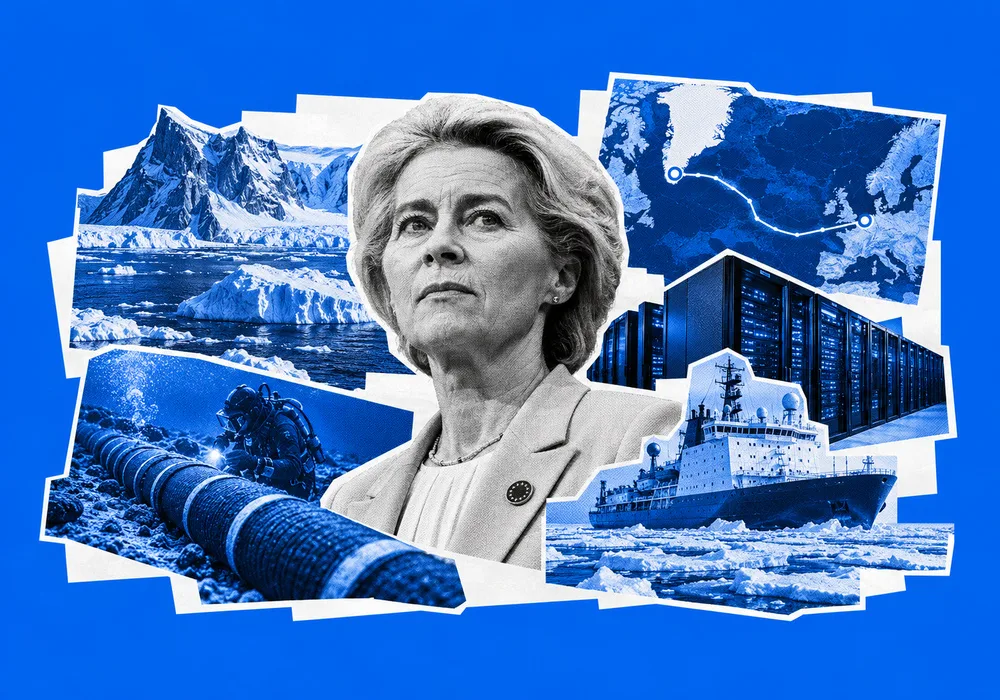
The European Union is considering a secure submarine cable linking Greenland directly to Europe, with a longer-term ambition to connect the continent to Japan and South Korea through Canada. The proposal reflects growing concern over the vulnerability of critical undersea infrastructure, Russia’s expanding military presence in the Arctic and Europe’s dependence on digital networks that could be disrupted during a geopolitical crisis.
The European Union is considering a new submarine telecommunications cable connecting Greenland directly to Europe, seeking to strengthen the continent’s digital resilience as the Arctic becomes increasingly important to international security. The proposal, reported by Euronews on 19 October 2026, forms part of a broader effort to protect critical infrastructure and diversify the routes carrying data between Europe, North America and Asia. Brussels is also examining the longer-term possibility of a Pan-Arctic Cable network extending through Canada towards Japan and South Korea, potentially creating an additional digital corridor between Europe and East Asia.
The initiative reflects a shift in how European policymakers approach telecommunications infrastructure. Submarine cables are no longer viewed solely as commercial assets carrying internet traffic between countries. They are increasingly treated as strategic infrastructure whose disruption could affect financial transactions, government communications, industrial operations and military capabilities. As geopolitical competition intensifies, the ability to maintain reliable data connections is becoming an increasingly important element of Europe’s wider security planning.
The Arctic is particularly significant because of its geographical position between Europe, North America and Asia. As environmental changes reshape access to northern waters, the region is attracting greater attention from governments interested in emerging maritime routes, natural resources and strategically important infrastructure. Russia maintains a substantial military presence in the High North, while growing American interest in Greenland has added another dimension to the region’s geopolitical importance. For the EU, strengthening digital connections in the Arctic would provide an opportunity to protect its economic interests while deepening cooperation with partners across the North Atlantic.
Why submarine cables have become a security priority
Submarine cables carry the overwhelming majority of international data traffic and underpin the functioning of modern economies. They support financial markets, cloud computing, communications between businesses and governments, and the digital services used by millions of people every day. Although satellites can provide alternative communications in some circumstances, they cannot simply replace the capacity and role of submarine cable networks.
Damage to a major cable can interrupt communications, reduce network capacity and force data traffic onto alternative routes. The consequences depend on the location of the damage, the availability of backup connections and the speed of repairs. However, simultaneous disruptions affecting several links could place considerable pressure on telecommunications networks and create wider problems for financial institutions, public authorities and businesses dependent on uninterrupted data transmission.
European concerns have grown following incidents involving critical undersea infrastructure in northern European waters. Damage to telecommunications and electricity cables in the Baltic Sea has highlighted the difficulty of monitoring extensive maritime areas and determining whether incidents result from accidents, negligence or deliberate interference. These cases have encouraged European governments to strengthen surveillance, improve information-sharing and develop more effective mechanisms for responding to potential threats.
The EU has already been working to improve the security and resilience of submarine cables, including through initiatives designed to identify risks, coordinate responses and support the development of alternative connections. The proposed Greenland link would complement these efforts by adding another potential route for international data traffic. Its value would not depend solely on the amount of information it could carry but also on the additional options it could provide if existing connections were damaged or disrupted.
The Arctic presents particular operational challenges. Vast distances, severe weather, ice conditions and limited repair capabilities can make it difficult to inspect infrastructure and restore damaged connections quickly. A cable route designed for long-term resilience would therefore need to account not only for deliberate interference but also for the practical difficulties of maintaining critical infrastructure in one of the world's most demanding maritime environments.
For European policymakers, the objective is to reduce the consequences of a disruption rather than assume that every incident can be prevented. Additional connections can provide redundancy, allowing data to travel through alternative routes if one cable becomes unavailable. This principle is central to the proposed Greenland link and the broader vision of a network connecting Europe with North America and East Asia.
Greenland’s strategic position in the North Atlantic
Greenland's importance extends well beyond its population and remote location. As an autonomous territory within the Kingdom of Denmark, it occupies a strategically significant position between Europe and North America, close to important transatlantic routes and areas of growing military and commercial interest. Stronger digital links with Europe could improve connectivity for Greenlandic communities while giving the EU a more direct role in the infrastructure supporting the region.
The proposed cable could also help diversify existing international connections. Major technology companies and telecommunications operators have invested in submarine cable systems across the North Atlantic, but individual routes remain vulnerable to damage and disruption. Adding connections through Greenland could increase the number of available pathways for European networks and strengthen links with North America. A future extension through Canada towards Japan and South Korea would be considerably more ambitious, requiring international coordination, substantial investment and agreement on how the infrastructure would be financed, operated and protected.
For Greenland itself, the potential benefits extend beyond geopolitics. Reliable digital connectivity can support public services, businesses and future investment, particularly in remote communities where infrastructure is expensive to build and maintain. Better connections could also improve the conditions for digital services and economic activity in a territory where geographical isolation presents persistent challenges.
The project therefore has both a strategic and an economic dimension. Greenland would not simply serve as a transit point for European data but could benefit from improved connectivity and closer cooperation with European institutions. However, these benefits would depend on the final route, the capacity made available locally and the commercial arrangements governing the infrastructure.
The financial and operational challenges
Despite its strategic ambitions, the Pan-Arctic Cable remains a proposal whose practical details have yet to be fully established. The initiative does not, by itself, establish a final construction timetable, a definitive route or a complete budget for a network connecting Greenland, Europe, Canada and East Asia. Implementation would require technical assessments, commercial commitments, financing arrangements and cooperation with partners outside the EU.
Existing European investments provide a foundation for further development. The EU has supported connectivity projects involving Greenland, while initiatives such as Far North Fiber have explored new submarine cable routes across the Arctic and North Atlantic. These projects demonstrate the interest in diversifying international communications infrastructure, although existing investments should not be confused with a final financing commitment for the proposed wider network.
The cost of building and maintaining submarine cables in northern waters could be substantial. Installation requires specialised vessels, technical equipment and extensive surveying, while repairs can be complicated by adverse weather, ice and long distances between damaged sections and available repair facilities. Operators must also assess whether projected demand and commercial revenue can justify the investment, particularly when a route is being developed partly for security reasons.
These considerations create a challenge for European policymakers. The most strategically valuable infrastructure is not always the most commercially attractive. A cable may provide important redundancy during a crisis while generating insufficient revenue to justify its construction on purely market-based terms. Public funding, partnerships with private operators and cooperation between governments could therefore be necessary to make the project viable.
Security requirements would add another layer of complexity. Protecting the cable would involve monitoring maritime activity, coordinating with national authorities and telecommunications operators, and ensuring that repairs could be carried out when necessary. Investment in the physical connection would have limited value if Europe lacked the capabilities to detect interference or restore service quickly after damage.
Europe expands its Arctic security ambitions
The proposed cable forms part of a broader European effort to strengthen its position in the Arctic. Digital connectivity is only one element of the region's strategic importance, which also encompasses maritime security, energy infrastructure, defence capabilities and economic cooperation with Arctic partners.
Protecting submarine cables requires a combination of surveillance, information-sharing and practical response capabilities. European countries need to understand what is happening around critical infrastructure, identify suspicious activity and coordinate action when disruptions occur. Cooperation with Norway, Iceland, Denmark and other regional partners is particularly important because undersea networks cross national jurisdictions and operate in waters that cannot be monitored effectively by one country alone.
Maritime capabilities are equally relevant. Icebreakers and specialised vessels can support navigation, monitoring and access to remote infrastructure in difficult conditions. The ability to reach damaged cables and carry out repairs is an essential part of resilience, particularly in the Arctic, where weather and geographical constraints can delay operations. European investment in these capabilities would therefore complement the development of new digital connections.
The wider strategic shift is significant because it links Europe's digital security with its industrial and maritime capacity. Submarine cables, satellite systems, surveillance technologies and repair vessels are interconnected elements of the infrastructure supporting modern economies and defence operations. Building new routes without investing in monitoring and maintenance would leave important vulnerabilities unresolved.
Strategic autonomy will depend on implementation
For Europe, the proposed Greenland cable offers an opportunity to strengthen digital resilience and reduce dependence on a limited number of international connections. Additional routes could help maintain communications during disruptions, improve links with North America and potentially establish a new corridor towards East Asia. The initiative could also deepen cooperation with Greenland, Denmark, Canada and other partners whose participation would be essential to its success.
However, infrastructure diversification is not the same as complete strategic independence. A cable may connect European partners while still relying on international suppliers, private operators, specialised repair vessels and equipment manufactured elsewhere. Its security would also depend on operational control, maintenance arrangements and the availability of alternative connections. The EU would therefore need to consider ownership, financing and long-term management alongside the route itself.
The project also illustrates the relationship between European security and economic policy. Reliable digital infrastructure supports financial markets, industrial competitiveness, public administration and defence capabilities. A serious disruption to international data connections could create costs far beyond the telecommunications sector, particularly if several critical routes were affected simultaneously. Investment in redundancy and protection can consequently serve as a form of economic preparedness, even where commercial returns alone might not justify the full cost.
The decisive question is whether Brussels can turn the proposal into a funded and technically viable project supported by international partners. The announcement does not yet guarantee a new connection or establish when it could become operational. Nevertheless, the initiative reflects a broader change in European priorities: the Arctic is increasingly being treated not only as an environmental and diplomatic concern but also as a region where digital infrastructure, economic resilience and security interests converge. Europe's ability to protect its northern connections will depend not simply on laying new cables but on developing the industrial, maritime and institutional capabilities needed to keep them operational.
Sources: European Commission, Euronews