
Balkan States Deepen Military Cooperation Amid Rising Security Pressures

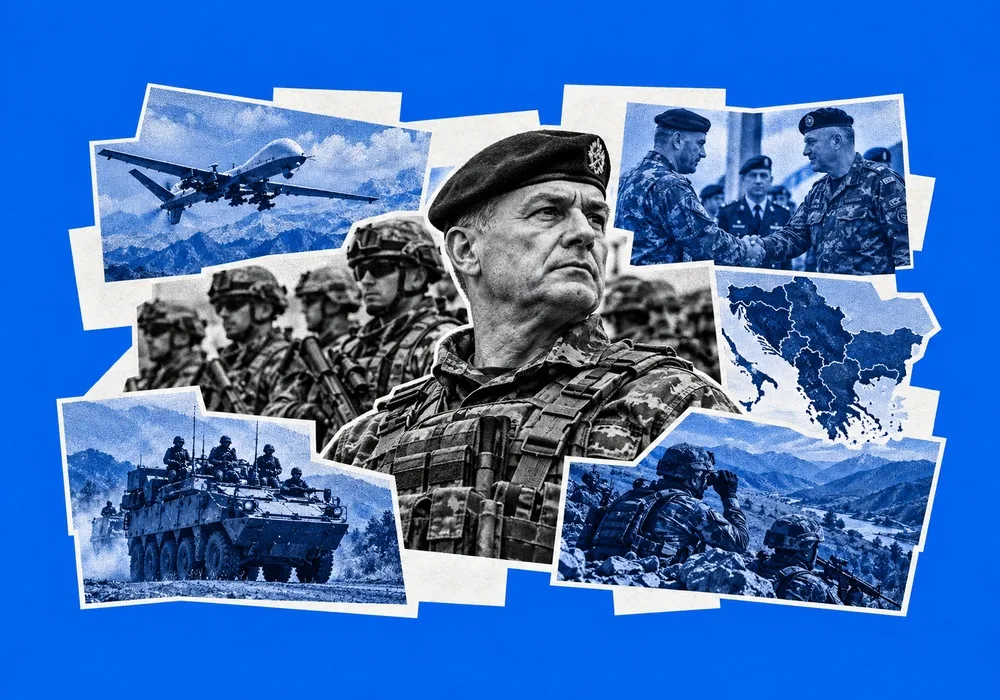
Balkan states are expanding military cooperation through regional forums and smaller defence partnerships, with Albania, Croatia and Kosovo developing joint exercises and industrial cooperation as governments across Southeast Europe strengthen military readiness and interoperability.
Balkan countries are expanding military cooperation as governments across Southeast Europe seek to strengthen defence capabilities, improve interoperability and adapt their armed forces to a security environment increasingly shaped by drones, hybrid threats and rapid technological change. The process is developing through several overlapping regional and bilateral formats rather than through a single new security alliance.
Albania, Croatia and Kosovo are among the countries pursuing closer trilateral cooperation, while defence chiefs from across the region continue to coordinate through broader Balkan frameworks. At the same time, the EU and NATO are strengthening their engagement with Western Balkan countries on defence, resilience and security, adding a wider European dimension to the region's military cooperation.
Albania, Croatia and Kosovo expand defence cooperation
Albania, Croatia and Kosovo have been building a trilateral defence framework since signing a Joint Declaration on Defence Cooperation in Tirana in March 2025. The agreement covers military training and exercises, interoperability, defence capabilities, technology and cooperation between defence industries, with the three countries seeking to translate the political commitment into more regular operational cooperation.
The framework gained a more practical dimension in February 2026, when the chiefs of defence of Albania and Croatia and the commander of the Kosovo Security Force met in Shkodër. The sides discussed mechanisms for joint training and coordination and agreed to develop trilateral exercises during 2026 and beyond. The focus reflects a broader effort to make regional forces more capable of operating together rather than limiting cooperation to political consultations.
Defence-industrial cooperation is also becoming part of the relationship. Albania and Croatia have discussed closer links between their defence sectors, including cooperation in areas such as unmanned systems, counter-drone capabilities, mine-clearing equipment and ballistic protection. For countries with relatively limited domestic defence markets, such cooperation can provide a way to share expertise and develop capabilities that would be more difficult to build independently.
The trilateral framework is politically sensitive because Kosovo remains at the centre of a long-running dispute between Pristina and Belgrade. Serbia does not recognise Kosovo's independence and has opposed initiatives that it believes strengthen Kosovo's security structures. Croatia and Albania, both NATO members, have nevertheless continued to present their cooperation with Kosovo as part of efforts to reinforce regional security and stability.
Regional military cooperation is becoming more operational
The trilateral arrangement is developing alongside broader mechanisms bringing together defence establishments from across Southeast Europe. The Balkan Countries Chiefs of Defence Conference provides a platform for military leaders from countries including Albania, Bosnia and Herzegovina, Bulgaria, Greece, Montenegro, North Macedonia, Romania, Serbia, Türkiye, Croatia and Slovenia to discuss common security challenges and military cooperation.
The agenda of these meetings has increasingly reflected changes in modern warfare. Unmanned systems, artificial intelligence, electronic warfare and other emerging technologies have become important areas of discussion, while interoperability and joint exercises remain central to regional cooperation. The experience of recent wars has increased the importance of relatively inexpensive unmanned systems and counter-drone capabilities, making technological adaptation a priority even for countries with smaller defence budgets.
This is changing the practical meaning of regional military cooperation. Joint exercises can improve communication between armed forces and expose personnel to different procedures and equipment, while closer coordination on procurement and technology can help countries address capability gaps. Cooperation between defence industries could also create opportunities for joint production and maintenance rather than relying entirely on separate national procurement programmes.
Serbia remains part of the wider framework
The expansion of military cooperation has not removed the political divisions that continue to shape the Western Balkans. Serbia remains involved in broader regional defence mechanisms and participates in meetings of Balkan defence chiefs, but its position differs sharply from that of Albania and Croatia on Kosovo and from the objectives of the trilateral arrangement involving Pristina.
This creates several overlapping layers of security cooperation across the region. Some formats include countries with substantially different political positions, allowing military authorities to maintain communication and coordinate on common challenges. Others are more closely aligned around NATO membership or shared strategic priorities, producing smaller defence groupings that can move more quickly on exercises, procurement and capability development.
The distinction is particularly important as regional governments increase defence spending and modernise their armed forces. Croatia, Albania, Montenegro and North Macedonia are NATO members, while Kosovo remains outside the Alliance and Bosnia and Herzegovina is a NATO partner. Serbia maintains a policy of military neutrality while developing its own defence capabilities and maintaining military cooperation with a range of partners.
EU and NATO add another layer
The expansion of regional defence cooperation is taking place alongside deeper European engagement with the Western Balkans. The EU has increasingly linked its relationship with the region to security and defence, including support for resilience against hybrid threats, closer foreign and security-policy coordination and the use of European instruments to strengthen partner countries' defence capabilities.
For EU candidate countries, this creates an additional incentive to align their defence structures and security policies more closely with European partners. Albania has repeatedly emphasised the importance of regional cooperation and European integration, while Croatia has used its NATO and EU membership to support closer defence links with neighbouring countries.
NATO provides a parallel framework. Croatia and Albania are both members of the Alliance, while their forces are involved in regional security operations and cooperation. The Alliance's continued presence in Kosovo through KFOR also means that military cooperation in the Western Balkans takes place alongside an established international security structure.
The result is an increasingly interconnected security environment in which national armed forces operate through several overlapping networks. Regional defence forums, NATO structures, EU initiatives and smaller bilateral and trilateral partnerships are becoming complementary elements of the same broader security landscape.
Defence industry becomes increasingly important
Defence-industrial cooperation is likely to become one of the more significant practical areas of this process. European governments are under pressure to expand domestic production, secure supply chains and increase access to equipment after years in which defence industries across the continent operated with relatively limited production capacity.
For Balkan states, closer industrial cooperation offers a way to participate in this wider European effort while reducing the cost of developing specialised capabilities. Croatia and Albania have already identified defence production and technology as areas where closer cooperation could be developed, while the wider regional focus on drones and counter-drone systems points to areas where demand is likely to continue growing.
The industrial dimension also has implications for interoperability. Countries using compatible equipment, training together and developing common technical standards can integrate more easily into multinational operations. Over time, this could make regional cooperation less dependent on individual political initiatives and more embedded in defence planning and procurement.
A more connected Balkan security environment
The expansion of military cooperation does not eliminate the political divisions that have traditionally complicated security relations in Southeast Europe. Instead, it is producing a more layered security architecture in which inclusive regional forums operate alongside smaller partnerships based on shared strategic interests.
The immediate priorities are increasingly practical: improving interoperability, strengthening military readiness, developing responses to drones and other emerging technologies, and building stronger domestic defence-industrial capabilities. These priorities are also increasingly connected to wider European efforts to strengthen defence production and resilience.
For the Western Balkans, the result is a gradual shift from a security environment centred primarily on post-conflict stabilisation towards one in which military preparedness and defence capability are becoming more prominent. How these new forms of cooperation develop alongside NATO and EU structures, while managing the region's unresolved political disputes, will remain an important factor in Southeast Europe's security architecture.
Sources: Albanian Ministry of Defence, , The Asian Age, Croatian Ministry of Defence, EU Council