
AfD in Talks with Putin’s Envoy Over Restarting Russian Gas to Germany

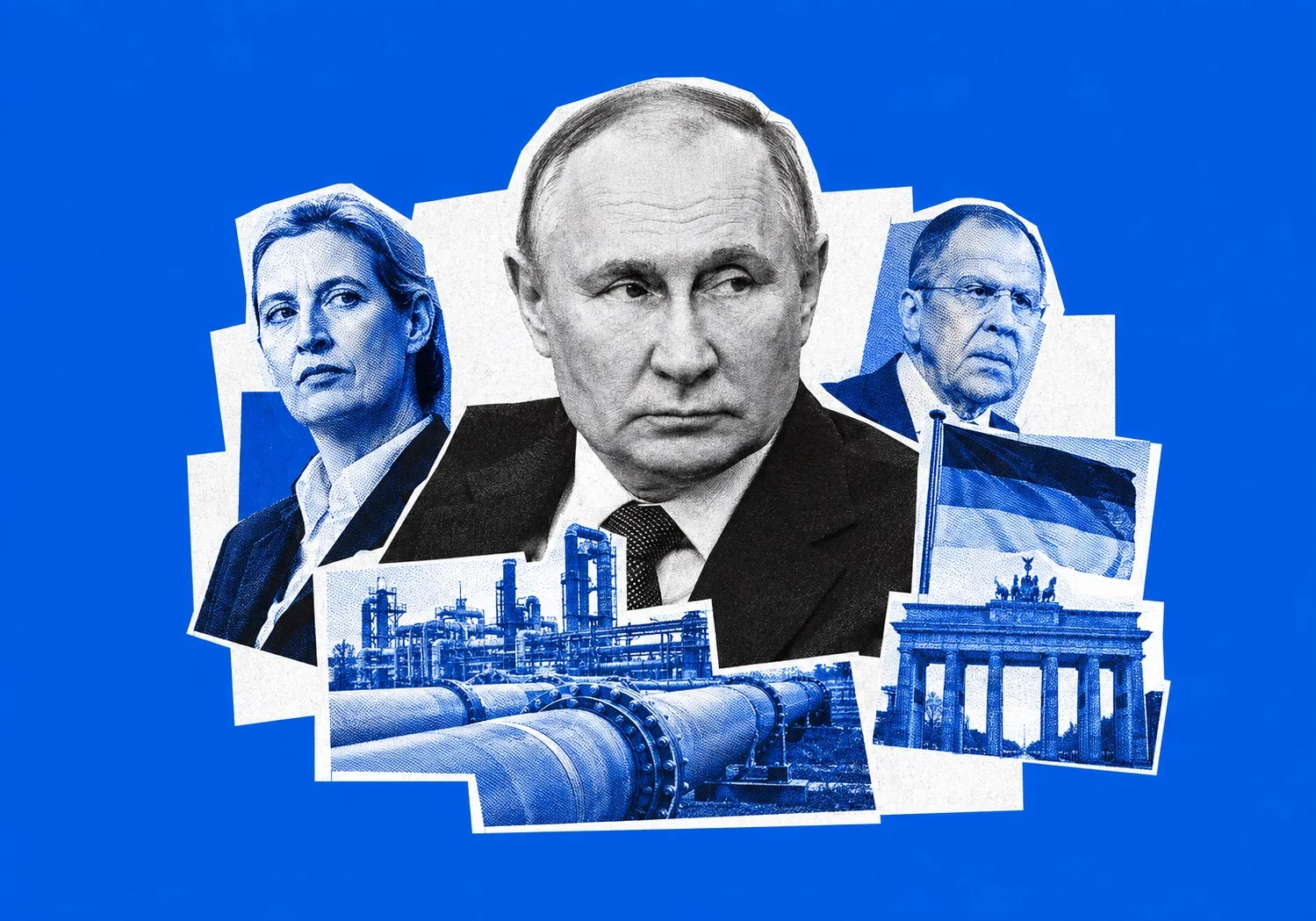
Plans for secret or March 2027 talks between Putin’s economic adviser Kirill Dmitriev and AfD leaders Alice Weidel and Tino Chrupalla signal a push to reopen Nord Stream and resume Russian gas supplies. The initiative puts Germany’s economic ties with Moscow back on the political agenda, testing Berlin’s strategic resilience.
The proposed talks, potentially in a neutral venue such as Israel, the United Arab Emirates or India, would only proceed if Russia and Ukraine first agree on a peace framework.
That condition makes the meeting hypothetical. The political signal behind it is not.
The initiative points to an increasingly fragmented contest over Europe's post-war energy order, in which the question of Russian gas is being pushed not only through governments and formal diplomacy, but through domestic political movements seeking to turn energy costs into a broader argument about Germany's economic and foreign policy.
Moscow does not need Berlin's approval yet
The AfD has no role in Germany's federal government. Yet its growing electoral strength gives it an increasingly prominent platform from which to challenge the assumptions underpinning Berlin's energy policy since Russia's full-scale invasion of Ukraine.
The party has consistently argued that inexpensive Russian oil and gas were central to German industrial competitiveness. Its political case rests on a simple proposition: if Russian energy helped build the country's manufacturing model, restoring access to it could help repair the economic damage caused by the rupture with Moscow.
That argument has particular resonance in eastern Germany, where scepticism about military support for Ukraine and sympathy for closer relations with Russia remain stronger than in many western states. The AfD's recent victory in Saxony-Anhalt has added political weight to that position, while Mecklenburg-Western Pomerania offers another significant test. It is also the German state where Nord Stream's infrastructure reaches the country's Baltic coast.
The significance of the proposed Dmitriev-AfD meeting therefore lies less in its immediate ability to change German policy than in its attempt to change the political terms of the debate.
A question that was largely settled after 2022 - whether Germany should remain structurally dependent on Russian fossil fuels - can instead be reframed as an economic question about the price of abandoning them.
That is a more difficult argument for Berlin to contain, particularly when energy costs and industrial competitiveness remain politically sensitive.
The return of energy as political leverage
Before the full-scale invasion, Russia supplied more than half of Germany's natural gas imports and over a third of its crude oil imports. Breaking that dependence required a rapid restructuring of Germany's energy system, with an estimated €50 billion spent on adaptation and intervention.
The physical destruction of the Nord Stream pipelines in September 2022 ended direct pipeline gas deliveries through the system. But the infrastructure has retained political value precisely because it represents something larger than a collection of damaged pipelines: the possibility of restoring an economic relationship that Germany spent years building.
That makes Nord Stream useful even before a single cubic metre of gas could flow again.
For Moscow, the political debate over whether the pipelines should return to service creates a channel through which the broader question of normalising relations with Russia can be discussed. For the AfD, it offers a concrete symbol around which to argue that Berlin's current energy strategy has imposed unnecessary costs on German households and industry.
The two interests overlap.
Dmitriev is particularly suited to such a channel. As head of the Russian Direct Investment Fund and a close economic adviser to Vladimir Putin, he has served as an intermediary in back-channel economic diplomacy, including contacts with American representatives. His role is less that of a conventional European energy negotiator than of an economic interlocutor operating outside the established architecture of EU-Russia relations.
That distinction matters. The proposed meeting is not a negotiation between Berlin and Moscow. It is an attempt to create political space in Germany for the possibility of a future economic reset.
Peace first, energy second
The requirement for a Russia-Ukraine peace framework is both the initiative's most important condition and its greatest limitation.
No energy agreement is being presented as immediately executable. The proposed talks belong to a post-conflict scenario in which the political environment surrounding Russian trade with Europe would have changed.
That sequencing also exposes the strategic logic of the initiative. Energy normalisation is being attached to the idea of a future settlement rather than treated as an isolated commercial question.
For Germany and its European partners, this would create a difficult political problem. If the reopening of economic channels becomes part of the post-war conversation, the distinction between a peace settlement and the subsequent restoration of trade could become increasingly blurred.
Ukraine would face the risk that political support for a settlement could become entangled with expectations of European economic normalisation.
The question for the EU would be even broader: whether sanctions and energy policy remain matters of common European strategy or become increasingly vulnerable to national political campaigns seeking exemptions, cheaper supplies or renewed commercial links with Moscow.
The Brandmauer meets energy politics
The initiative also tests Germany's political Brandmauer, the barrier mainstream parties have maintained against cooperation with the AfD.
Energy provides an unusually potent pressure point because it connects foreign policy to domestic economic grievances. A debate about Russia can quickly become a debate about electricity, gas, industrial production and the future of German manufacturing.
That puts mainstream parties in an awkward position.
Green politician Michael Kellner has warned against repeating what he describes as the mistakes of the previous energy model, putting the cost of Germany's energy adjustment at €50 billion and accusing Putin of using the AfD for his own purposes. CDU lawmaker Roderich Kiesewetter has called a Nord Stream reopening a disaster for European security and argued that it would isolate Germany.
Those positions show that the response from established parties is not simply a disagreement over energy prices. It is a dispute over whether economic interdependence with Russia should again be treated as compatible with German and European security.
The counterargument is already visible outside the German political mainstream. Robert Agee, president of the American Chamber of Commerce in Moscow, described the proposed initiative as a positive and timely step towards a broader dialogue platform.
The divide is therefore not confined to Russia policy. It concerns what kind of economic relationship Europe should permit after a future settlement and who gets to define the boundaries of that relationship.
Nord Stream is now a political asset before it is an energy asset
There is an important practical constraint beneath the political rhetoric. The proposed reopening of Nord Stream is not simply a matter of deciding that gas should flow again. The briefing provides no established timetable or agreed mechanism for restoring the damaged infrastructure, nor does it establish the legal framework under which such a resumption would take place.
That uncertainty is central rather than incidental.
The pipelines were physically damaged in 2022, while Germany's energy relationship with Russia was fundamentally reconfigured afterwards. Any future restoration of flows would therefore have to address both the physical condition of the infrastructure and the political and legal environment governing Russian energy imports.
For now, the prospect of reopening Nord Stream functions primarily as a political proposition.
And that may be enough.
Europe’s energy map is becoming a domestic political battlefield
The larger change is that European energy diplomacy is no longer operating solely through governments negotiating with governments.
The proposed Dmitriev-Weidel-Chrupalla meeting offers a different model: a Russian economic intermediary engaging with a powerful domestic opposition movement that seeks to influence national policy from outside the federal governing coalition.
That creates a different route back into European political debate.
The Kremlin does not need Germany to reverse its energy policy immediately. It benefits from keeping the question of reversal politically alive. The AfD does not need to control the federal government to use that question either. It can turn the cost of Germany's energy transition, the competitiveness of its industry and the political geography of east and west into an argument for changing course.
The proposed involvement of US figures Steve Witkoff and Jared Kushner would have given the meeting an additional international dimension. But a senior US official said neither had been informed of or invited to the proposed gathering, removing that element from the initiative as currently described.
What remains is more revealing.
A Russian economic envoy, a rising German opposition party and a discussion about restoring an energy relationship once regarded as central to Germany's industrial model are preparing to occupy the same political space - but outside the formal channels through which Berlin and Brussels have managed relations with Moscow since 2022.
If a Russia-Ukraine peace framework eventually creates room for economic normalisation, the first battle may not be over whether Germany can physically receive Russian gas again. It may be over whether Europe can maintain a common political framework for deciding when, how and under what conditions that relationship can return.
Read also:
- As the Kremlin tests Western boundaries through diplomatic signaling and escalation threats, European security hinges on decisive military support for Ukraine. Speaking on Russia Unmasked, British political analyst Professor Tony Meehan details why internal political fractures in the EU are failing to stop Russia - and what NATO must do to force a fundamental shift in Moscow’s calculations.
- Following the AfD’s historic 43.8% election victory in Saxony-Anhalt and mass weekend protests across Germany, Chancellor Friedrich Merz faces an unprecedented crisis. As Germany’s political mainstream struggles to maintain its strict Brandmauer (firewall), the far-right party is becoming too large for the parliamentary system to isolate - forcing a fundamental shift in European politics.
- Following a state election victory over Chancellor Friedrich Merz’s CDU, the Alternative for Germany is using its national platform to echo Vladimir Putin’s narrative on Ukraine and European security.
Sources: DW Reuters English Pravda