Top news

Oct 8, 2026, 08:30 PM UTC

← Latest news

01
ContinuingAI-generated
Russian front-line progress stalls as Moscow targets Ukrainian energy grid

Russian front-line progress stalls as Moscow targets Ukrainian energy grid

Independent mapping shows minimal Russian gains in September as Moscow resumes heavy strikes against Kyiv's energy infrastructure ahead of winter.

Russian military forces achieved minimal territorial progress in September despite official claims from Moscow, according to tracking data from independent analysts including DeepState and the Institute for the Study of War. While minor Russian advances continued in specific sectors, Ukrainian forces launched localized counterattacks, particularly in the Oleksandrivka region where significant territory has been reclaimed this year.

With ground movements largely stalled, Moscow renewed heavy long-range bombardments targeting Ukraine’s energy infrastructure ahead of the winter season. Ukrainian officials confirmed major strikes on electrical and thermal power facilities in and around Kyiv, describing them as the largest since last winter. Simultaneously, monitoring reports indicate that Ukrainian air defense interception rates for incoming Russian drones dropped to 83 percent in September, down from 92 percent in May.

Sources: Deník N, Ekonomický deník, Respect, Seznam Zprávy

Read more
02
ContinuingAI-generated
Swedish daily details aerial weapon tactics in Russia-Ukraine conflict

Swedish daily details aerial weapon tactics in Russia-Ukraine conflict

A technical analysis by Dagens Nyheter outlines how ballistic missiles, cruise missiles, and drones present distinct tactical challenges in the ongoing Russia-Ukraine war.

Swedish newspaper Dagens Nyheter has published a technical breakdown comparing the primary aerial weapons utilized in the ongoing Russia-Ukraine conflict, highlighting why each presents unique interception hurdles for modern defenders.

Ballistic missiles reach extreme velocities and high altitudes, leaving ground crews with minimal reaction time before impact. Conversely, low-flying cruise missiles use terrain contours to evade early radar detection until reaching their targets. Uncrewed aerial vehicles present a different challenge, often deployed in large, inexpensive swarms designed to saturate sensor networks and force defenders to expend limited, high-cost interceptor missiles. The report notes that mitigating these diverse aerial hazards requires a multi-layered, integrated air defense network capable of engaging threats at various altitudes and speeds.

Sources: Dagens Nyheter

Read more
03
ContinuingAI-generated
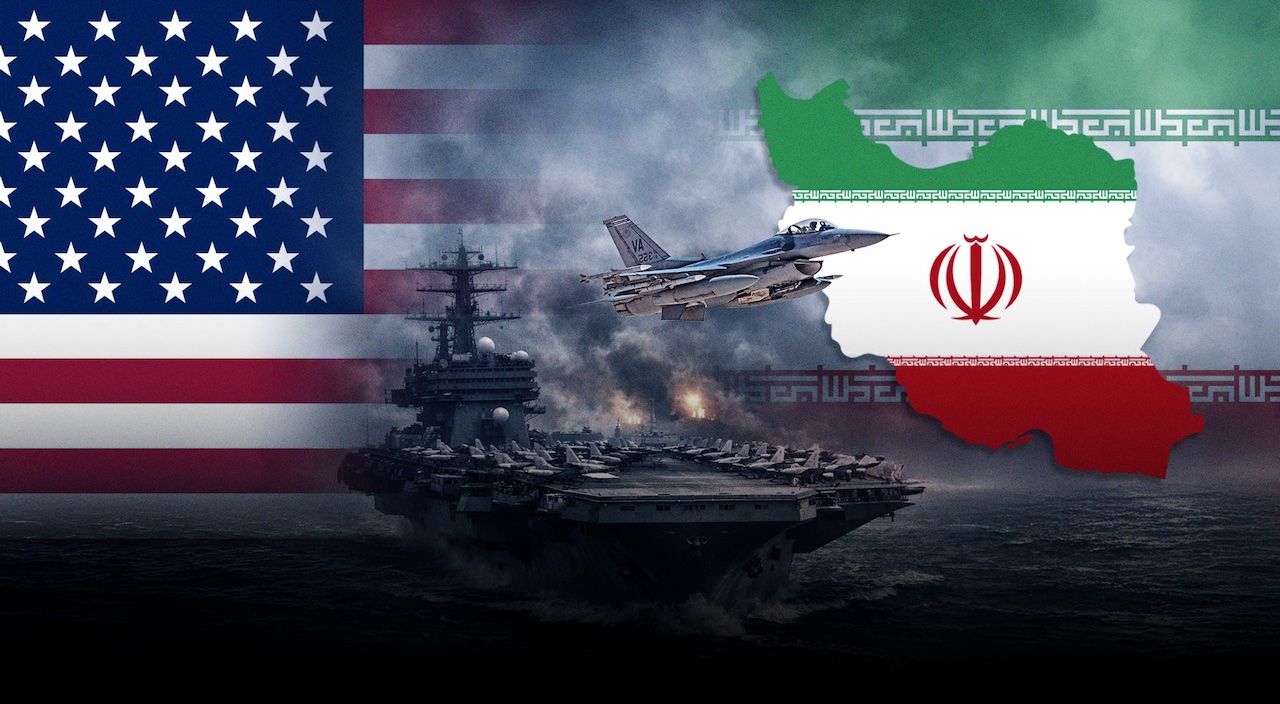
Iran adopts offensive military posture as US peace talks stall

Iran adopts offensive military posture as US peace talks stall

Iran has transitioned to an offensive military strategy following stalled peace negotiations with the US and maritime clashes near the Strait of Hormuz.

Iran has shifted to a "completely offensive" military strategy after peace talks with the United States broke down and Washington declined to extend a 60-day temporary ceasefire memorandum. Iranian military officials declared they would not yield until achieving the "complete defeat" of American forces in the region and restoring national rights.

The diplomatic collapse coincides with escalating naval clashes in the Middle East. US Central Command reported targeting five Iranian oil tankers, sinking one vessel, following Iranian strikes against an American warship. Analysts warn that growing US economic sanctions, coupled with maritime skirmishes near the Strait of Hormuz, significantly heighten the risk of a broader regional conflict.

Sources: Adevărul, Digi24, HotNews, Moldova1, Ziarul de Gardă.

Read more
04
ContinuingAI-generated
Global consensus reached on autonomous weapons definition as Germany builds sovereign AI

Global consensus reached on autonomous weapons definition as Germany builds sovereign AI

Over 120 nations defined autonomous weapons in Geneva amid moral warnings, while Germany moves to develop independent military AI systems.

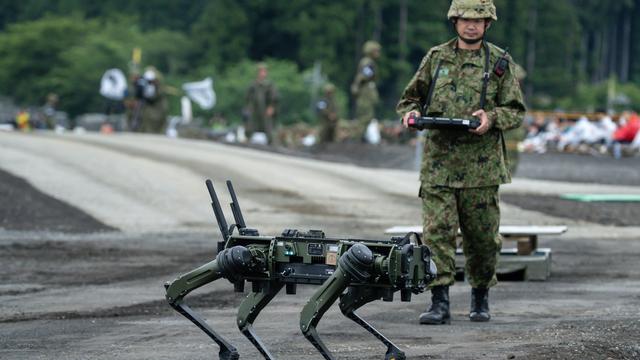
In Geneva, 128 countries agreed on a formal definition for autonomous weapon systems, marking an initial breakthrough toward potential international regulation. The consensus coincides with urgent warnings from the United Nations and the International Committee of the Red Cross, who cautioned that allowing machines to autonomously target humans risks crossing a "moral red line."

Concurrently, Germany clarified its operational guidelines regarding military artificial intelligence. While the Defence Ministry affirmed that "the decision on the use of military force remains with humans," officials acknowledged that semi-autonomous functions may execute without continuous human intervention depending on specific operational contexts. To ensure data sovereignty and independence, the Bundeswehr rejected commercial software from US contractor Palantir in favor of an in-house analytical platform. Strategic analysts underscored that sovereign decision-making tools are becoming crucial to maintain strategic autonomy under high-speed operational pressures.

Sources: Correctiv, Der Spiegel, Der Standard, Die Zeit, ESUT.

Read more
05
ContinuingAI-generated
Croatia weighs wage growth and industrial plans amid economic warning signs

Croatia weighs wage growth and industrial plans amid economic warning signs

Croatian Prime Minister Andrej Plenković announced wage increase targets through 2028 alongside a €3 billion industrial plan, as economists warn of lagging productivity.

Croatian Prime Minister Andrej Plenković announced plans to raise the country's average net monthly wage to €1,600 by 2028, alongside upcoming consultations in October to adjust the current €1,050 gross minimum wage. The announcement coincides with the government unveiling its National Industrial Development Plan through 2034, which commits nearly €3 billion to expand manufacturing's GDP share and modernise technological infrastructure.

Although Croatia registered its 22nd consecutive quarter of GDP expansion, experts expressed caution regarding long-term sustainability. Mislav Balković, head of the Croatian Employers' Association, emphasized that rising labor costs continue to outpace productivity gains. Meanwhile, economist Ljubo Jurčić described the economy as floating "without an engine and without a rudder," arguing that growth exceeding five percent is necessary to ensure stability.

Sources: HRT Vijesti, Index, Poslovni dnevnik, Vijesti.

Read more
Share