Nexus Europa

Top news

Sep 15, 2026, 04:30 PM UTC

← Latest news

01
ContinuingAI-generated
Experts analyze motives behind CIA director's unannounced Moscow visit

Experts analyze motives behind CIA director's unannounced Moscow visit

Analysts assess the strategic motives behind CIA Director John Ratcliffe's unannounced visit to Moscow to establish firm boundaries on Ukraine.

Analysts have outlined several strategic motives behind the unannounced visit by Central Intelligence Agency Director John Ratcliffe to Moscow. The primary objective reportedly involved setting explicit boundaries with Russian counterparts regarding the ongoing war in Ukraine. According to regional analysis, Washington's warnings focused specifically on discouraging Moscow from attempting to overthrow Ukrainian President Volodymyr Zelenskyy or pursuing a total military conquest of the country.

The covert engagement highlights a reliance on intelligence backchannels while formal diplomatic lines remain stalled. Beyond establishing red lines regarding political leadership in Kyiv, observers note that direct contact between high-ranking intelligence officials serves to mitigate miscalculation risks between Washington and Russia. Maintaining functioning intelligence dialogue remains a crucial mechanism for managing broader European security escalation during prolonged conflict.

Sources: G4Media.
Read more
02
ContinuingAI-generated
Heavy fighting persists across Ukrainian front lines as operational claims conflict

Heavy fighting persists across Ukrainian front lines as operational claims conflict

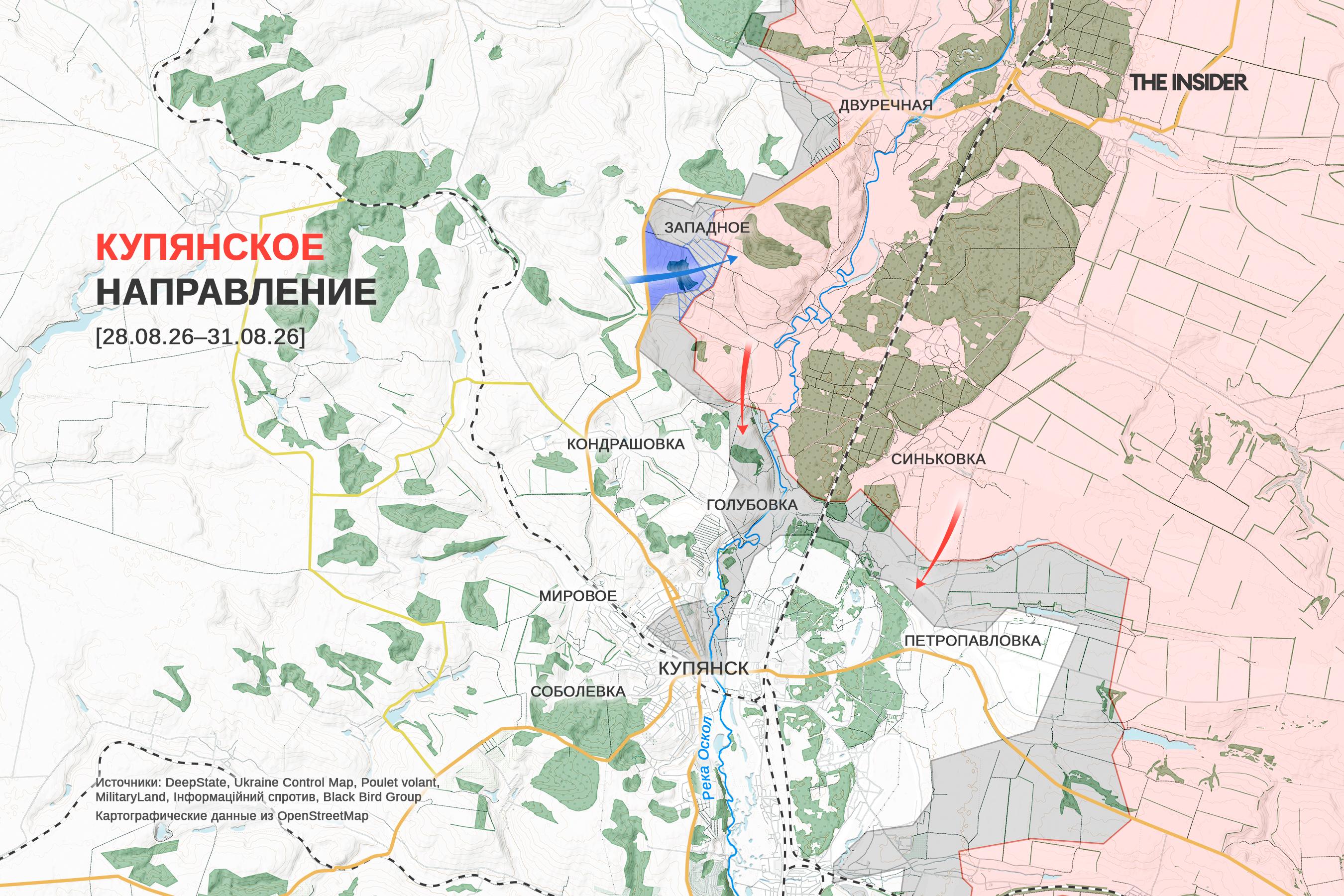
Intense combat continues across Ukraine's front lines, with Ukrainian forces making tactical gains near Kupiansk while facing dozens of Russian assaults near Pokrovsk.

Ukrainian forces have conducted tactical clearing operations north of Kupiansk along the right bank of the Oskil River after suppressing Russian drone capabilities, according to battlefield reports. In the Lyman sector, reports indicate Ukrainian counter-advances could encompass up to 200 square kilometers.

Ukraine's General Staff reported intense combat across the front, recording over 250 clashes within 24 hours. Russian assault attempts remained heavily concentrated around Pokrovsk, Lyman, and Kostiantynivka, where Ukrainian troops repelled dozens of infantry pushes.

Operational claims between opposing forces remain conflicting. While Ukrainian reports highlight tactical progress, Russia's Defense Ministry claimed control over several settlements near Sumy. Additionally, Russian General Staff Chief Valery Gerasimov publicly denied assertions of Ukrainian advances in Zaporizhzhia.

Sources: NV, Radio Svoboda, The Insider, Ukrainska Pravda.

Read more
03
ContinuingAI-generated
European security services track hybrid threats and Chechen paramilitary activity

European security services track hybrid threats and Chechen paramilitary activity

European security agencies are investigating hybrid provocations against defense contractors in Lithuania and Czechia, alongside Chechen paramilitary violence targeting exiled critics.

European security services are responding to parallel transnational threats involving hybrid operations against defense infrastructure and state-linked violence targeting political dissidents.

In Lithuania and the Czech Republic, law enforcement agencies are investigating incidents where funeral wreaths were placed outside military manufacturing facilities. The provocations follow prior cyberattacks against the same companies, leading Lithuanian authorities to detain one suspect and advise defense contractors to strengthen security measures.

Concurrently, reporting details the evolution of Chechen paramilitary units loyal to Ramzan Kadyrov. Originally formed as a personal protection force, these groups expanded into specialized units linked to physical assaults and targeted assassinations against exiled critics in Sweden, Austria, and Poland. European security officials regard both the physical intimidation of defense infrastructure and targeted attacks against dissidents as critical national security challenges.

Sources: 15min, LSM.

Read more
04
ContinuingAI-generated
European defense sector faces challenges as EU pushes for technological independence

European defense sector faces challenges as EU pushes for technological independence

European efforts to reduce defense reliance on American technology face criticism from industry experts warning of operational and cybersecurity risks.

European Union efforts to reduce reliance on American defense technology face mounting scrutiny from industry leaders who warn against rapid decoupling. European policymakers aim to strengthen domestic arms production amid shifting transatlantic priorities and trade disagreements. However, defense representatives caution that excluding United States systems could lead to inferior capabilities, heightened cybersecurity risks, and impaired coordination within NATO.

These structural challenges coincide with operational pressures along NATO's eastern flank, where military forces incur substantial financial costs using million-euro interceptor missiles against low-cost reconnaissance drones. Simultaneously, foreign arms deliveries face potential delays as Washington prioritizes replenishing its own depleted weapon stockpiles, particularly Patriot air defense missiles.

As Washington focuses on internal supply chains and Europe seeks strategic autonomy, defense planners must balance long-term self-reliance against immediate security requirements.

Sources: Belsat, NEXTA, Point, The Insider

Read more
05
ContinuingAI-generated
Hungary recovers 2.3 billion forints in toll system audit

Hungary recovers 2.3 billion forints in toll system audit

Hungarian Transport Minister Dávid Vitézy announced the recovery of 2.3 billion forints from a fund linked to Lőrinc Mészáros following an audit of state toll contracts.

Hungarian Transport and Investment Minister Dávid Vitézy announced that a private equity fund connected to businessman Lőrinc Mészáros has refunded 2.3 billion forints to the state.

The reimbursement stems from an audit into transactions made under former minister János Lázár, during which the previous administration spent 64.5 billion forints acquiring three corporate entities involved in the national electronic toll collection system. Vitézy framed the refund as a key step in recovering state assets.

Following the repayment, investigative reports indicate that the ministry is expanding its probe into the toll system's long-term private beneficiaries, including tech entrepreneur Gábor Emőri, who played a central role in developing and operating the infrastructure for over a decade.

Sources: 444, HVG, Telex.

Read more
Share
Nexus Europa — Sep 15, 2026, 04:30 PM UTC — Nexus Europa