Nexus Europa

Top news

Sep 15, 2026, 02:00 PM UTC

← Latest news

01
ContinuingAI-generated
Spain sets up temporary shelters in Ceuta for remaining migrants

Spain sets up temporary shelters in Ceuta for remaining migrants

Spanish authorities have moved roughly 2,000 remaining migrants into temporary shelters in Ceuta following July's mass border crossing.

Spanish authorities have completed the relocation of roughly 2,000 migrants into two newly constructed temporary shelters in the North African enclave of Ceuta. The initiative seeks to clear public areas, including beaches and city streets, where hundreds had been sleeping since late July's mass border crossing. While the vast majority of the estimated 72,000 initial arrivals have returned to Morocco, nearly 2,000 people remain in the enclave while administrative processing continues.

Reinforced joint security efforts between Spanish and Moroccan forces successfully prevented secondary crossing attempts rumored for mid-August. Moroccan authorities deployed dozens of police vehicles along the border, while Spain maintained heightened security presence. Despite the temporary stabilization, local residents continue to voice frustration over persistent social disruptions and ongoing political tension in the enclave.

Sources: Correctiv, Die Zeit, FAZ, ORF, Tagesschau.
Read more
02
ContinuingAI-generated
Slovak cabinet proposes referendum mechanism for early elections

Slovak cabinet proposes referendum mechanism for early elections

Slovakia's cabinet approved a constitutional draft to allow referendums for early elections, while opposition protests and nuclear buyout negotiations continue.

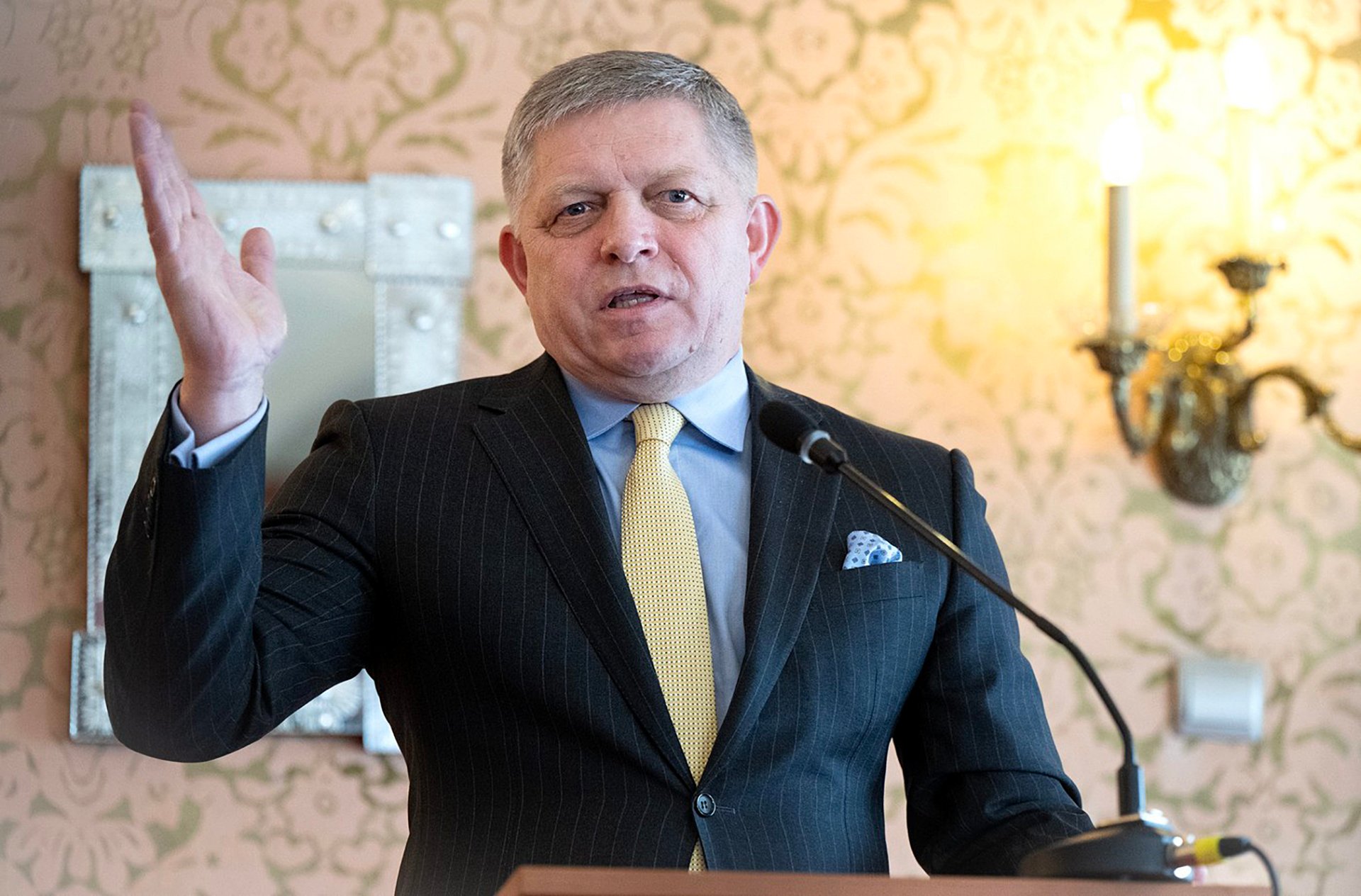
Slovak Prime Minister Robert Fico’s cabinet has approved a draft constitutional amendment that would allow citizens to shorten parliamentary terms and trigger early elections via a public referendum. The proposed mechanism would apply only to future legislative periods, though the ruling coalition currently lacks the three-fifths parliamentary majority required to pass constitutional changes.

The legislative effort comes amid broader political friction. Opposition leader Igor Matovič is conducting a nationwide campaign tour featuring public debates aimed at challenging the administration. Concurrently, the governing coalition faces scrutiny over regional election pacts with the far-right Republika movement, whose youth wing recently drew criticism for provocative membership forms. Meanwhile, negotiations over buying out Czech utility ČEZ's stake in the Jaslovské Bohunice nuclear plant remain unresolved.

Sources: Denník N, Hospodářské noviny, iROZHLAS, Respect, Seznam Zprávy

Read more
03
ContinuingAI-generated
Czech officials focus on Ukraine ties and illegal labor enforcement

Czech officials focus on Ukraine ties and illegal labor enforcement

Czech Deputy Speaker Barbora Urbanová met parliamentary leaders in Kyiv, while EU updates protection rules and domestic task forces address labor market fraud.

Czech Deputy Speaker Barbora Urbanová visited Kyiv for meetings with Ukrainian parliamentary leadership, following an earlier rejection of her travel request by the Czech parliamentary steering committee. Meanwhile, Czech Chief of General Staff Miroslav Hlaváč awaits authorization from the Ministry of Defence to attend an upcoming security conference alongside European military leaders in Ukraine.

At the European Union level, updated regulations have extended temporary protection status for displaced Ukrainians until March 2028. However, the revised rules newly condition eligibility on individuals fulfilling their military service obligations to Ukraine.

In Czechia, parliamentary discussions highlighted findings from the Kobra 26 task force. Officials reported that illegal labor agency networks and unpaid social security contributions involving Ukrainian workers cost the state billions of crowns.

Sources: Ekonomický deník, iROZHLAS, Respect, Seznam Zprávy

Read more
04
ContinuingAI-generated
European schools and experts strengthen safeguards against youth AI misuse

European schools and experts strengthen safeguards against youth AI misuse

European educational authorities and safety experts are implementing strict regulations and analog teaching methods to combat student AI misuse and psychological risks.

European educators and policymakers are intensifying efforts to mitigate the risks associated with generative artificial intelligence among students.

In Denmark, newly introduced regulations require secondary school students to orally defend their written coursework to counter AI-generated fraud and ensure academic integrity. Danish authorities are also increasing classroom supervision and shifting more assignments directly into schools.

In Germany, educators are increasingly integrating analog teaching methods to prevent students from relying on AI tools for critical thinking. Concurrently, child development experts and government advisors are raising concerns about the psychological impact of highly empathetic chatbots on young users. Critics warn that tech industry proposals to deploy automated AI monitoring for child protection fail to address the core mental health risks posed by artificial companionship.

Sources: Correctiv, Der Spiegel, Der Standard, FAZ, Tagesschau

Read more
05
ContinuingAI-generated
Czech Republic faces rising child abuse cases alongside education reforms

Czech Republic faces rising child abuse cases alongside education reforms

Czech child abuse cases hit a 20-year high while the government advances major preschool facility expansions and primary education deferral reforms.

Czech child welfare authorities registered over 10,000 cases of child abuse, neglect, and exploitation over the past year, marking a 20-year high. Official data shows 3,616 children were removed from their families, an increase of 300 compared to the previous period. Experts and child advocates point to a shortage of specialized preventative social services and a lack of standardized evaluation guidelines across regional offices.

Concurrently, the government is completing structural reforms in early education. The Ministry of Labour and Social Affairs finalized a seven-billion-koruna initiative under the National Recovery Plan, funding more than 300 new childcare facilities. In primary education, the Ministry of Education is tightening rules on school entry deferrals, restricting them strictly to medical grounds starting next year to reduce historically elevated deferral rates.

Sources: Český rozhlas Plus, Deník N, Hospodářské noviny, iROZHLAS, Seznam Zprávy.

Read more
Share
Nexus Europa — Sep 15, 2026, 02:00 PM UTC — Nexus Europa