
US Enacts New Tariffs on Over 60 Countries, Including Major Trading Partners

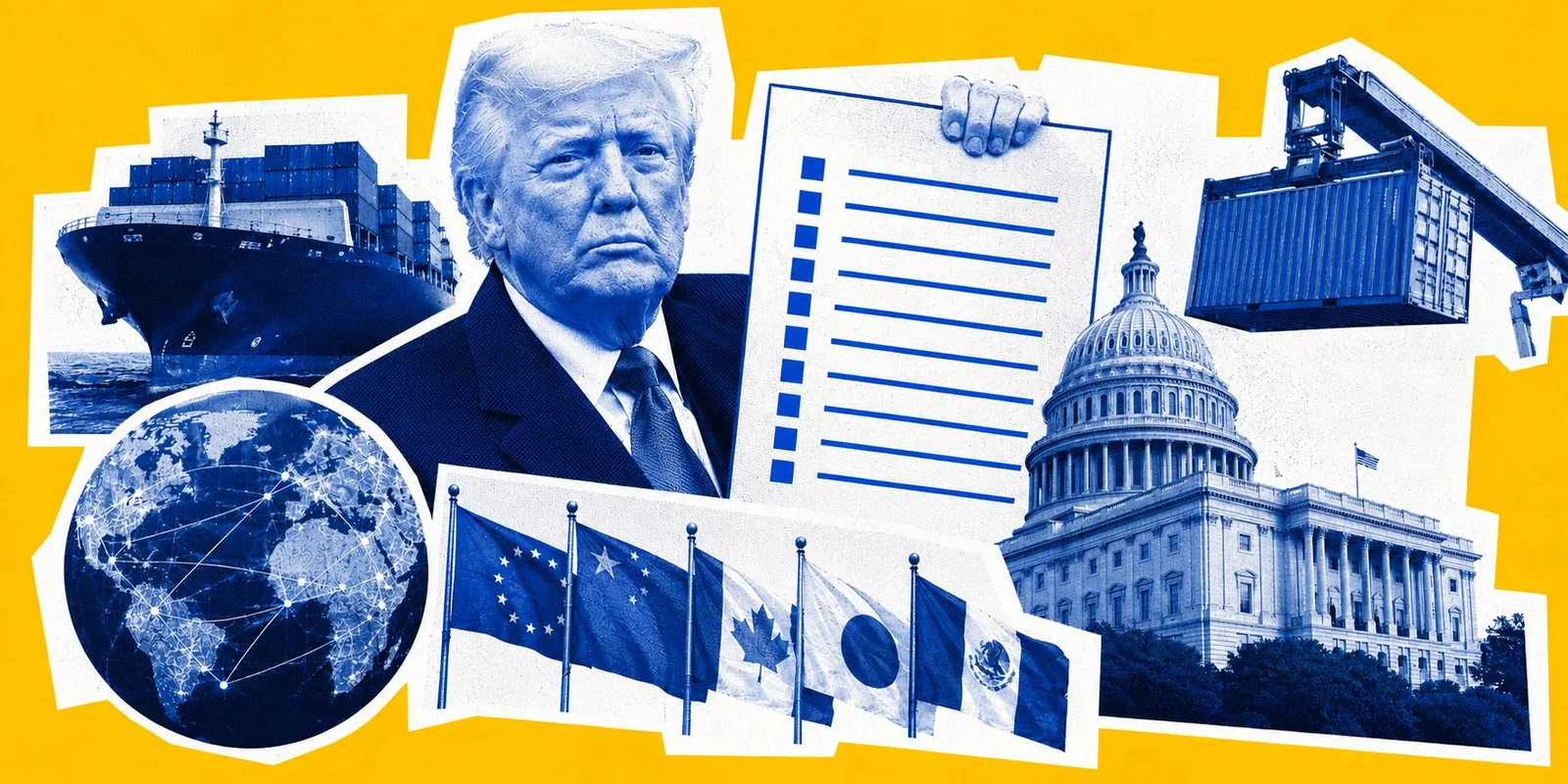
In its latest trade move, the Trump administration has announced a new wave of tariffs targeting more than 60 countries, levying import duties between 10% and 12.5%.
Announced late Thursday by US Trade Representative Jamieson Greer, the new duties directly replace a temporary 10% blanket tariff that expired at midnight on Friday. The list of affected trading partners includes key allies and economic powerhouses such as the United Kingdom, Canada, Mexico, Australia, India, China, and the 27 member states of the European Union.
Stated Reason
The US administration is invoking Section 301 of the Trade Act of 1974, framing the action around forced labor standards. According to US officials, the tariffs aim to penalize countries that fail to rigorously ban imports made with forced labor or that engage in unfair trading practices.
"The United States has had a forced labor import ban for nearly a century, and rigorously enforces it; it's well past time for our trading partners to do the same," said US Trade Representative Jamieson Greer in an official statement.

\ The announcement, which was anticipated, affects U.S. purchases from 60 nations that the administration says are importing goods produced with forced labor rather than buying products made by higher-paid American workers.
Nations that do not have laws barring such goods — such as China, the United Kingdom and Japan — will face tariffs of 12.5%. Those that have such laws, including the European Union, will be hit with 10% levies if they fail to enforce them.
Some U.S. imports, such as products governed by the U.S.-Mexico-Canada Agreement and oil and gas, are exempt from the new levies.
This pivot marks the latest chapter in an ongoing legal battle over executive authority.
Supreme Court Ruling
In February 2026, the US Supreme Court ruled 6–3 that using the International Emergency Economic Powers Act (IEEPA) to impose broad peacetime tariffs was unconstitutional, reasserting that tariff power belongs to Congress.
In response, President Trump implemented a temporary 10% global tariff under a secondary 150-day statutory authority.
As that 150-day window expired at midnight, the administration rolled out Section 301 tariffs to ensure duties remained uninterrupted.
Global Backlash from Key Allies
The announcement drew swift condemnation and pushback from trade partners worldwide, many of whom questioned both the timing and the underlying justification.
Canadian trade officials and business leaders pushed back strongly, pointing out Canada's leadership against forced labor and calling the timing "suspect" given the expiration of the previous tariff regime.
EU Foreign Policy Chief Kaja Kallas stated the bloc was seeking immediate clarification, calling the decision a shock given existing transatlantic trade commitments.
Australian officials labeled the levies unjustified and announced intentions to challenge or seek removal of the tariffs.
The Japanese government on Friday said it regretted the new tariffs, while China has previously said it opposed any form of unilateral tariff, and denied allegations of forced labour.
US Politics and Economic Debates
At home, the tariffs remain a point of intense political friction. Legal scholars from policy institutes note that Section 301 is being stretched beyond its traditional intent, predicting potential court challenges regarding presidential overreach.

Analysts say the latest tariffs once again raise the question of whether the president has the legal authority to determine and implement U.S. tariff policy.
Only Congress has the authority, under the U.S. Constitution, to impose taxes. Last April, Trump, however, invoked the International Emergency Economic Powers Act, which grants the president certain powers in national emergency.
A Harris Poll survey, conducted for the Guardian, recent polling indicates roughly 70% of Americans report paying higher prices due to ongoing tariff policies, with widespread concern over elevated consumer costs. This belief persisted even among Republican voters: 64% agreed that Trump’s tariffs had led to higher prices.
But Trump and his administration are adamant that his policies have only improved the lives of American consumers and core inflation in the US fell.
During recent Senate hearings, administration officials maintained that core inflation remained controlled, denying that tariffs were driving broader consumer price increases.
As affected nations assess their response options—ranging from formal protests to potential retaliatory duties—the new tariff structure takes effect immediately, setting up another high-stakes clash over international trade policy and executive power.
Sources: Financial Times,The Washington Post, The Guardian