
Trump Has Found a New Way to Keep the Tariff War Alive

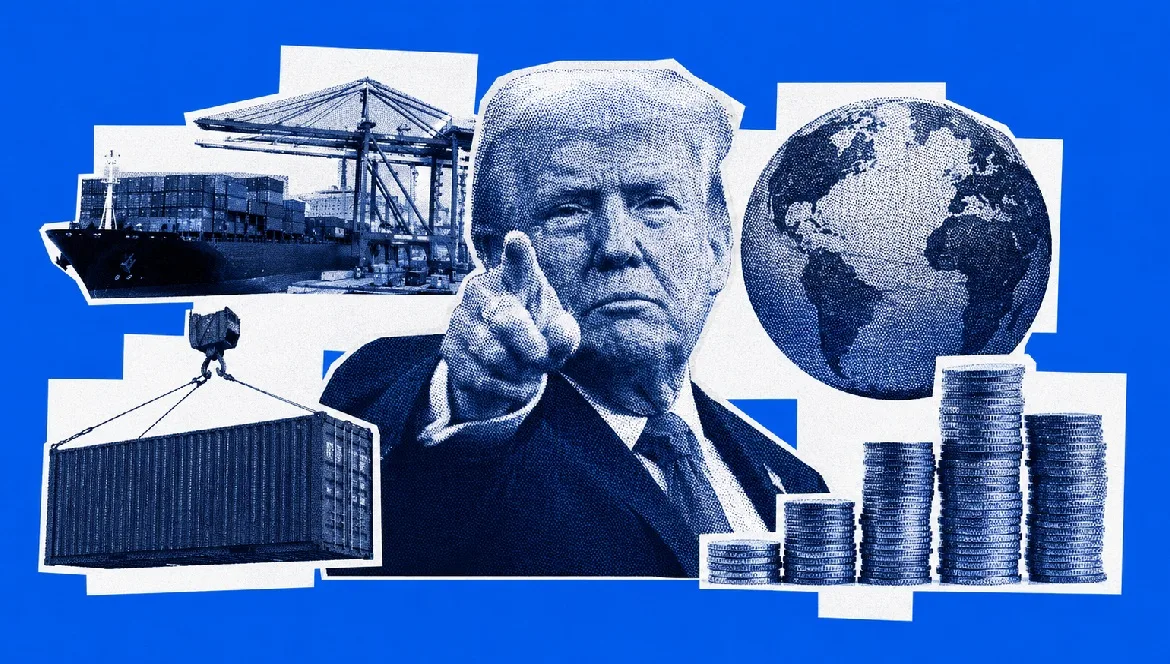
Washington is rebuilding its tariff strategy after the courts challenged Trump's original approach. The new system is less dramatic, but potentially more permanent — turning trade pressure into a collection of legal mechanisms that can be expanded, renewed and redirected long after the latest tariff announcement disappears from the headlines.
The United States has just replaced one global tariff regime with another. On July 24, the Trump administration imposed new duties of 10% and 12.5% on imports from 60 trading partners, including the European Union and China, as a temporary 10% global tariff expired. The immediate effect was to preserve much of the pressure created by Trump's previous trade policy while changing the legal mechanism used to impose it.
The administration says the new tariffs are aimed at countries that have failed to prevent goods produced with forced labour from entering their supply chains. But the broader significance lies in the legal architecture being built around the measures. After the US Supreme Court struck down Trump's previous global tariff regime, the White House has begun rebuilding its trade strategy through a series of narrower legal instruments that may be more difficult to challenge as a single system.
The result is not the end of Trump's tariff policy. It is its institutionalisation.
The legal route has changed
The previous global tariffs relied on emergency powers that the Supreme Court ruled could not be used to impose such duties. The new measures are being introduced under Section 301 of the Trade Act of 1974, which allows the United States to respond to what it considers unfair or harmful foreign trade practices. That distinction is important because Washington is no longer trying to create one sweeping tariff system through a single declaration of emergency. Instead, it is constructing a collection of separate investigations and tariff actions, each tied to a different justification.
Forced labour is one of those justifications. Excess industrial capacity is expected to become another, while intellectual property and other trade practices could provide further grounds for action. The system is more complicated than the previous approach, but that complexity may also make it more durable. The Supreme Court may have limited the president's ability to impose tariffs through emergency economic powers, but it has not eliminated the wider arsenal of trade legislation that Congress has made available to the executive branch.
The White House is now testing how much of the same economic pressure can be reconstructed through those older laws.
The language of forced labour is doing political work
The stated justification for the new tariffs is difficult for trading partners to accept. The United States has accused dozens of countries of failing to adequately prevent forced-labour goods from entering their markets and supply chains, yet the tariffs affect economies with very different political systems, labour regulations and trade relationships with Washington. For the European Union, Britain and Switzerland, the new duties largely remain within the framework of existing agreements reached with the Trump administration, limiting the immediate confrontation. China, Australia, Brazil and Norway have been more openly critical, arguing that the tariffs are unjustified.

This is one of the central features of Trump's current trade policy. The administration does not necessarily need every partner to accept its legal argument. It needs that argument to create enough leverage to maintain a tariff structure while negotiations continue. Tariffs are increasingly becoming less like a conventional response to a specific trade dispute and more like a permanent instrument of American foreign policy.
The tariff floor is becoming the new normal
The most important figure in the latest measures may not be 10% or 12.5%, but the 99.4% of US imports that the administration says are covered by the new tariff regime. Hundreds of products are exempt, including essential categories such as oil, gas, fertilisers and critical minerals, but the basic principle remains broad: the United States is no longer operating from a world in which tariffs are exceptional measures imposed on selected products or countries.
A baseline tariff on most imports is becoming the starting point. From there, additional duties can be layered on depending on the country, sector or political dispute involved. The result is a system that can expand without requiring Washington to reinvent its entire trade policy every time a new conflict emerges.
That represents a significant shift for the global economy. For decades, companies built supply chains around the assumption that tariffs were relatively predictable. They could be high in particular sectors, but they were generally tied to identifiable disputes, trade agreements or specific national policies. The new system makes uncertainty itself part of the cost of doing business, forcing companies to consider not only the tariff that exists today but also the political argument that could produce the next one.
Europe has avoided the worst outcome, not the problem
The European Union has so far avoided the most dramatic version of the confrontation. The new tariffs remain broadly consistent with the limits agreed between Brussels and Washington, reducing the immediate risk of a transatlantic escalation and giving European companies a degree of protection from the highest rates threatened during negotiations.
But the broader problem has not disappeared. The EU is now operating in a US trade environment where agreements do not necessarily end tariff pressure; they establish a ceiling, while new investigations can create additional routes for future duties. That matters particularly for European industries already facing pressure from Chinese overcapacity, rising energy costs and accelerating competition for industrial investment.
A US market that becomes structurally more expensive for foreign producers could gradually alter where companies build factories, source components and direct investment. The consequences may not arrive as a single economic shock. They may appear through thousands of smaller decisions: a production line built in the United States rather than Europe, a supplier replaced because its country has become politically vulnerable, or an investment postponed because the tariff rules may change again.
This is how trade policy can reshape economic geography without triggering a formal trade war.
China is facing a layered American strategy
For China, the latest tariffs are only one part of a much larger American strategy. The new duties come as the administration prepares further action on what it calls excess industrial capacity, a phrase particularly significant for Beijing as its export model remains at the centre of disputes over electric vehicles, batteries, solar technology, steel and other industrial sectors.

A second line of pressure is expected to focus on alleged intellectual property violations. Taken together, these measures suggest that Washington is moving towards a layered system of economic containment. The United States does not necessarily need one dramatic tariff increase to impose significant pressure on China. It can combine multiple investigations, sector-specific restrictions and country-level duties until the cumulative effect becomes substantial.
The advantage of this approach is both political and legal. Each individual measure can be presented as a response to a specific problem, while the overall system can still produce a much broader strategic effect.
The real risk is not the tariff announcement
Financial markets reacted relatively calmly to the latest measures, partly because businesses have already spent more than a year adapting to the possibility of higher US tariffs. Companies have raised prices, changed suppliers, accelerated shipments and moved parts of their production. The global economy has begun to treat tariff instability as a permanent condition.
That may be more important than any individual tariff rate. When businesses expect tariffs to be temporary, they can wait. When they expect tariffs to remain, they reorganise. The new American strategy is designed to make that second reaction increasingly rational.
Even if individual tariffs are later removed, the structure remains. The legal investigations remain, the threat of new duties remains and the possibility that a commercial dispute can become a national security or labour issue remains. The result is a trade system in which companies must account not only for the tariff that exists today, but for the political argument that could produce the next one.
Washington is building a trade policy that can outlast the headlines
The most consequential part of Trump's new tariff policy may be that it is becoming less dependent on his ability to make one sweeping move. The first phase of his trade strategy was built around speed and shock: the president announced broad tariffs, forced partners into negotiations and used uncertainty itself as leverage.
The legal defeats that followed have changed the method. The administration is now creating a more fragmented architecture, with one investigation into forced labour, another into industrial overcapacity and potentially others into intellectual property practices or additional trade concerns. Each can produce its own tariff decision, creating a system that is slower than the original approach but potentially more difficult to dismantle.
The United States is moving towards a trade policy in which tariffs are no longer an emergency measure waiting to be removed once a crisis ends. They are becoming part of the permanent machinery of economic competition.
For Europe, that means the central question is no longer whether the transatlantic tariff dispute can be resolved through one agreement. It is whether the global trading system can continue to function when the world's largest economy treats market access as a permanent instrument of negotiation.
The temporary tariff may have expired. The tariff era has not.
Sources: Reuters, U.S. Trade Representative, The White House