
The Deepfake Ad Targeting the Prime Minister’s Wife That Upended Spain’s Election

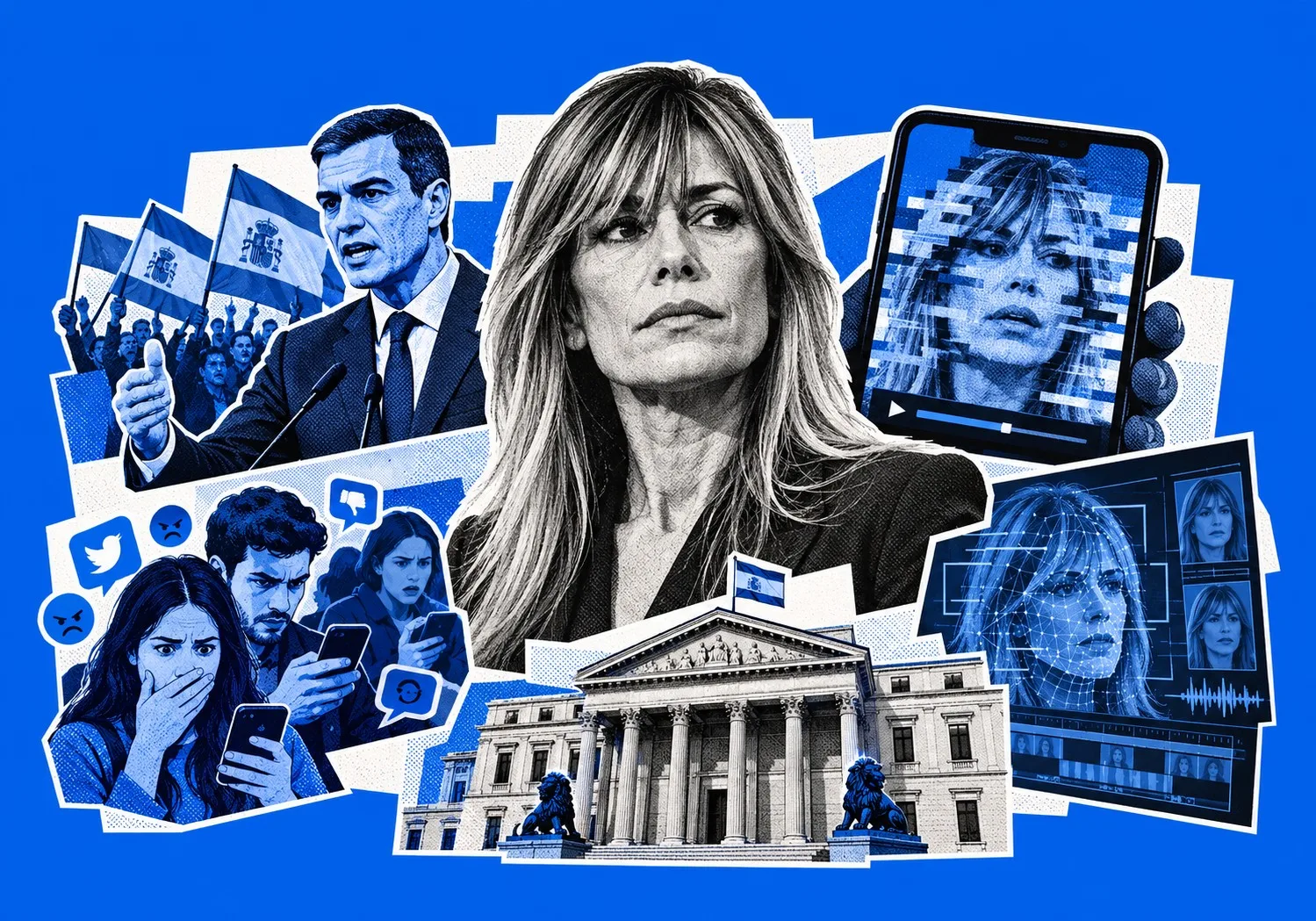
An official campaign video released by Spain’s opposition People’s Party has sparked widespread controversy across the country. The advertisement used artificial intelligence to generate a synthetic statement from Begoña Gómez, the wife of Prime Minister Pedro Sánchez. It also featured manipulated likenesses of other senior Socialist figures depicted in simulated admissions of wrongdoing.
The initiative has prompted legal and policy debates ahead of the 29 November general election.

By introducing synthetic media into official campaign channels, the video highlights a broader issue: generative technology is moving faster than existing regulatory and legal frameworks.
Digital Transformation Minister Óscar López criticized the broadcast on public broadcaster TVE, describing it as a "colossal lie."
He raised concerns regarding electoral integrity and noted similar technological challenges observed in recent European elections.
Concurrently, former Socialist member Leire Díez filed a legal complaint alleging defamation and digital identity theft after her synthetic image was used in the video to imply judicial interference.
The People’s Party defended the campaign.
Party spokesman Borja Sémper stated that the video constituted political satire intended to highlight ongoing judicial inquiries involving Socialist figures.
By framing the video as satire and including a discreet disclaimer identifying the content as synthetic, the party sought protection under existing legislation.
Legal experts consulted by El País noted that Spanish constitutional protections for freedom of expression and parody likely shield the campaign from criminal liability.
This legal distinction reflects a broader strategic development.
Synthetic media is no longer confined to third-party actors or unofficial online commentary. It is now being integrated into the verified communications of established political parties, turning generative AI into a recognized tool of electoral strategy.
The Breakdown of Satire and the Disinformation Paradox
The situation in Madrid illustrates a mismatch between legal frameworks and current technology.
Statutory protections for political satire were originally designed for traditional media, such as cartoons and parodies. They were not designed for software capable of generating realistic visual depictions of public figures.
In a polarized political environment, synthetic imagery can influence public perception quickly, often before legal or fact-checking assessments take place. Subtle disclaimers embedded in digital broadcasts may have limited impact on how viewers process visual information.
When synthetic content generates significant online engagement, campaign strategists encounter strong incentives to use it.
Criminal law professor Juan Antonio Lascuraín noted that while a campaign may be legally permissible, its broader political appropriateness remains questionable.
Nevertheless, strategic incentives often encourage adoption.
Political parties can now visually project critical narratives directly onto their opponents, shifting campaign focus from policy debate toward synthesized personal attacks.
This dynamic complicates public consensus on factual events.
When synthetic media closely resembles authentic footage, verifying information becomes more difficult. Real evidence can be dismissed as manipulated content, while synthetic material can be accepted as factual by partisan audiences.
The American Mirror: A Multi-Million Dollar Precedent
The controversy in Spain reflects broader international trends in political campaigning.
Data from the Wesleyan Media Project in the United States outlines the growth of AI-generated content ahead of the 2026 midterm elections.
Researchers identified at least 220 political advertisements created in whole or in part using artificial intelligence, representing over $137 million in campaign spending across 34 states.
For comparison, spending on synthetic political ads during the 2024 election cycle remained below $50,000.
The American data also shows differences in adoption across political groups.
Republican candidates and affiliated organizations sponsored 81 percent of the identified AI ads and accounted for 88 percent of the overall expenditure. Democrats sponsored 12 percent of the ads. Furthermore, 73 percent of these political broadcasts contained no explicit disclaimer indicating the use of AI.
The increase in political expenditure on synthetic media indicates that generative tools are becoming a standard element of campaign operations, offering low-cost methods for producing targeted content.
Weaponizing Judicial Vulnerabilities
The timing of the People’s Party advertisement coincided with ongoing legal proceedings involving members of the ruling administration.
Begoña Gómez faces legal proceedings following an indictment by Investigating Judge Juan Carlos Peinado regarding allegations of influence peddling and embezzlement related to her former position at Madrid’s Complutense University.
The private prosecution, led by the group Hazte Oír, is seeking a 13-year sentence, while the public prosecutor and defense counsel Jaime Campaner have requested a dismissal, citing technical defects and a lack of criminal evidence.
Separately, former Prime Minister Zapatero has faced questions regarding a €53-million pandemic relief allocation, while Socialist official Santos Cerdán is involved in an inquiry concerning public contracts linked to former minister José Luis Ábalos. All individuals deny any wrongdoing.
The opposition ad incorporates these legal proceedings into synthetic scenarios. Rather than presenting new evidence, the video uses existing judicial inquiries to create simplified visual narratives for political messaging.
This presents challenges for the judicial process.
Formal legal proceedings require time to reach definitive outcomes. In contrast, generative AI tools allow campaigns to produce and distribute synthetic representations rapidly during an active election cycle, well before judicial conclusions are reached.
The Institutional Vacuum
This development comes as political parties prepare for the 29 November general election.
Opinion polls indicate that the People’s Party leads, though it may require a coalition with the far-right Vox party to form a government.
Discussions surrounding a potential PP-Vox coalition have drawn attention to proposed administrative changes, such as reorganizing executive departments and incorporating the Ministry of Equality into Social Affairs.
As political competition intensifies, standard campaign practices are evolving.
The adoption of synthetic attack ads by mainstream parties aligns with broader shifts in political communication, where traditional media channels face increasing competition from digital platforms.
Regulatory institutions and digital transformation ministries face operational constraints. Current regulatory frameworks often lack mechanisms to review or restrict synthetic content during election periods without raising concerns regarding political communication standards.
Additionally, digital platforms benefit financially from the engagement generated by controversial media, aligning platform metrics with campaign distribution goals.
Sources: The Guardian, Politico, Wesleyan Media Project