
Slovakia’s PM Fico Claims some "Western Warmongers" Push for Direct NATO-Russia Conflict

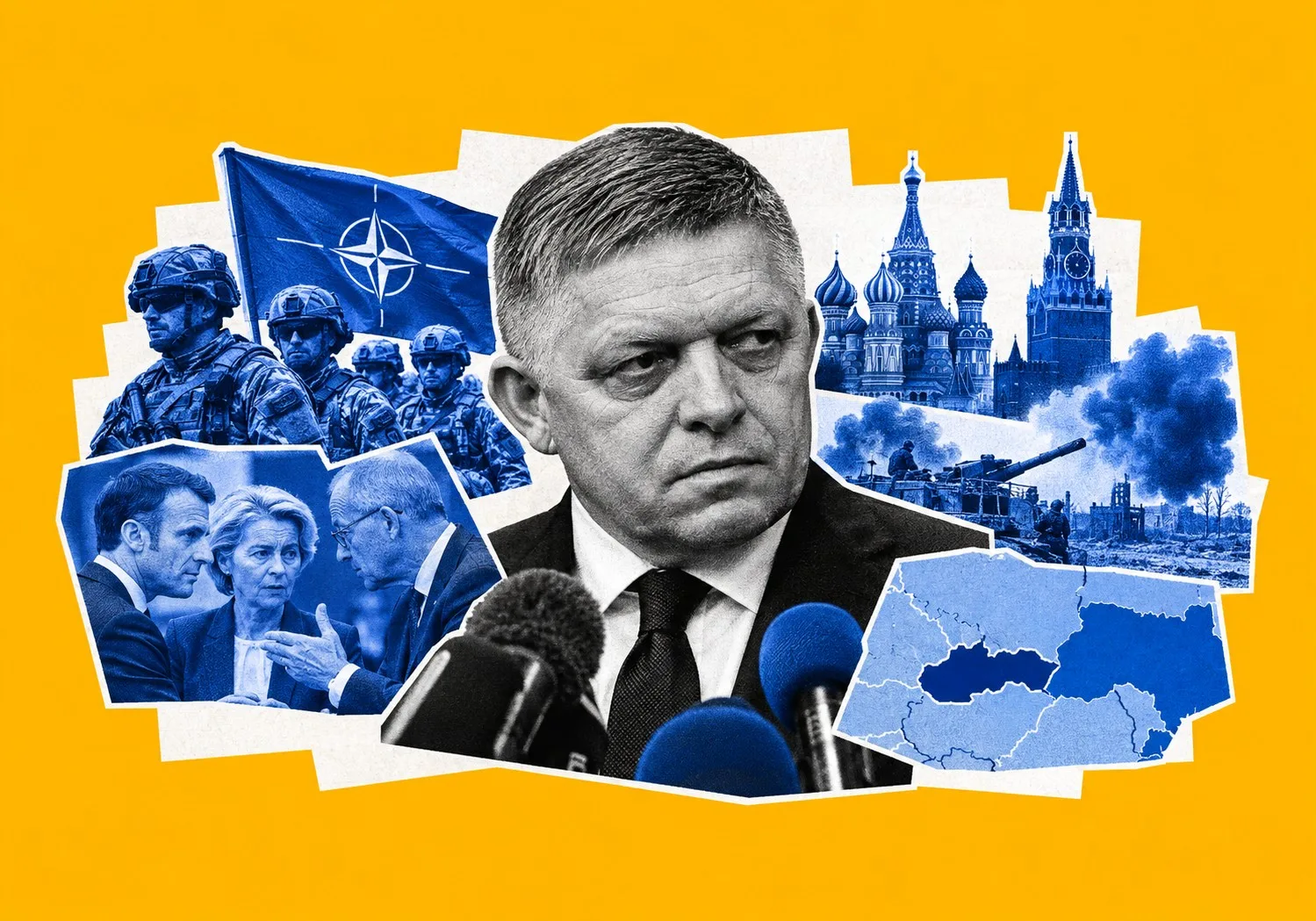
Slovak Prime Minister Robert Fico accused Western capitals of trying to drag NATO into a direct military clash with Moscow. In a video statement released on Saturday, Fico claimed that the strategy aimed at defeating Russia in Ukraine has completely failed, warning that hawkish alliance officials are now driving Europe toward a severe crisis.
The remarks followed a sharp escalation earlier in the week when Fico publicly distanced Bratislava from NATO's mutual defense pact, declaring he would not let Slovakia get pulled into a war "because of some Article 5."
"The failure of the strategy to destroy Russia through the war in Ukraine has led some Western politicians to believe that if the goal cannot be achieved through the Ukrainian army and full support for it, then every effort must be made to trigger a conflict between NATO and Russia," Fico said.
His timing was deliberate. Days earlier in Prešov, an industrial city in eastern Slovakia, Fico spoke hours before he was scheduled to cross the border into Ukraine for the Carpathian 8 Summit in Ivano-Frankivsk Oblast.
The regional cooperation framework brought together leaders from Ukraine, Poland, Slovakia, Czechia, Hungary, Romania, Austria, and Serbia to coordinate infrastructure, economic ties, and security measures.
Fico was due to hold face-to-face talks with Ukrainian President Volodymyr Zelenskyy, Prime Minister Serhii Koretskyi, and Polish Prime Minister Donald Tusk. Instead, he pulled out at the last minute, citing sudden illness, and dispatched State Secretary Marek Eštok alongside a commercial delegation.
Then came Saturday's video.
Fico’s rejection of Article 5 exposes a widening rift on NATO’s eastern edge. Mutual defense depends entirely on absolute credibility. By making Slovakia's participation conditional, Fico hands Moscow a distinct advantage.

The Operational Threat to Article 5
Article 5 states that an armed attack against one member is an attack against all, requiring signatories to take action as deemed necessary, including the use of armed force. The text leaves room for political discretion. When a frontline head of government openly dismisses the clause, that legal discretion turns into an operational vulnerability.
Bratislava is carving out a middle tier within the alliance. The model is straightforward: retain NATO’s security cover and intelligence assets while opting out of core obligations when domestic politics dictate.
That calculation changes how both Brussels and Moscow weigh risk. NATO commanders are already dealing with escalating hybrid threats, including suspected Russian electronic warfare, targeted infrastructure sabotage, and non-attributable drone incursions over allied military installations, alongside frequent missile strikes landing dangerously close to alliance borders.
Deterrence in this environment relies entirely on predictable collective action. Once a member state signals that its support depends on the circumstances, that predictability evaporates.
The Historical and Political Roots of Bratislava's Moscow Pivot
To understand why Fico charts this course, political analysts look back at the deeper currents of Slovak political culture. Unlike Poland or the Baltic states, where historical memory is defined by decades of direct Soviet military occupation and suppression, Slovak national identity historically maintained a more ambiguous view of Russian power.
Nineteenth-century Slovak national revivalists often looked eastward toward the Russian Empire for protection against Austro-Hungarian Magyarization policies. That romanticized pan-Slavic sentiment never entirely vanished from the country's political lexicon.
Fast forward to the twentieth century, and the narrative of Soviet troops liberating Slovak towns in 1945 remains embedded in the historical consciousness of older and rural demographics. Fico has consistently leveraged this historical thread, standing out as the sole European Union leader to travel to Moscow for the Russian government's Victory Day commemorations. When Fico talks about Russia, he taps directly into these cultural reservoirs.
Opinion polling regularly shows that a significant portion of the Slovak electorate holds favorable views of Moscow compared to their western neighbors. While Poland views the Kremlin through an existential security lens, many voters in towns like Prešov or Banská Bystrica are more receptive to narratives blaming NATO expansion for the war in Ukraine.
Fico understands this electorate better than any contemporary Slovak politician. His political career spans decades, marked by pragmatism and an uncanny ability to ride public discontent. When he lost power following the 2020 elections—triggered by public outrage over the assassination of investigative journalist Ján Kuciak—he methodically rebuilt his political capital by opposing pandemic restrictions, inflation, and military aid to Kyiv.
Returning to power in late 2023 at the head of Smer-SD, a left-nationalist populist party, Fico moved swiftly to dismantle his predecessors' foreign policy baseline. He halted state military aid from army stocks, ended official weapons deliveries, and started questioning the entire architecture of Western sanctions.
Veto Politics and the Transnational Bloc
Fico does not operate in isolation within the European Union. His strategy echoes the obstructionist playbook once perfected by former Hungarian Prime Minister Viktor Orbán during his long tenure in office.
Both leaders discovered that holding institutional veto power inside Brussels provides immense leverage. Whenever the European Commission proposes new financial assistance packages for Ukraine or stricter sanctions on Russian energy imports, Budapest and Bratislava frequently act as internal speed bumps.
Fico has repeatedly threatened to block EU aid unless national carve-outs are secured. When oil transit disputes flared over the Druzhba pipeline, he used potential vetoes to force exemptions.
This transactional diplomacy extends directly to Moscow. During a high-profile visit to the Russian capital to meet Vladimir Putin, Fico willingly pinned the label of the "black sheep" of the European Union onto himself, proudly telling reporters near the Kremlin that he rejects a single mandatory foreign policy opinion.
This political alignment extends beyond Hungary and Slovakia. Across the continent, other populist factions share similar sympathies. In Austria, the Freedom Party regularly challenges sanctions and military aid frameworks. In various national parliaments, nationalist blocs echo Kremlin talking points regarding European warmongering.
Brussels has few structural tools to manage this internal dissent. The EU relies heavily on consensus decision-making in foreign policy and sanctions, giving single member states enormous leverage to extract concessions or dilute collective measures.
Regional Fractures and Central European Realignment
This divergence has split Central Europe into two distinct security camps.
Poland and Czechia have positioned themselves as the staunch defenders of European security. Warsaw has spent billions on military modernization, buying tanks, artillery, and fighter jets, transforming its armed forces into a formidable conventional deterrent.
For Polish military planners, a reluctant Slovakia on the southern flank represents a strategic liability. Collective defense requires seamless rear-guard security, logistics, and intelligence sharing. If a transit nation questions its treaty obligations, the entire regional defense grid develops a structural fracture.
Ukraine feels the impact of this political split most acutely. The Carpathian Initiative summit in Ivano-Frankivsk was supposed to project regional solidarity. Fico’s absence, combined with his remarks questioning Article 5, demonstrated that Ukraine's western neighbors remain politically divided.
Fico’s rhetoric targets a domestic audience that wants to avoid economic pain and military escalation. By framing Western aid as warmongering, he shields his administration from domestic criticism over inflation and budget cuts.
It wins local elections. At the same time, it creates a dangerous paradox: relying on NATO's security umbrella for national survival while publicly attacking the mechanisms that make that umbrella credible.
NATO possesses no formal legal mechanism to force a member state into an Article 5 response during a crisis. If a government spends peacetime questioning its treaty commitments, decision-making during a real military emergency risks complete paralysis.
The primary threat facing the Western alliance is not a sudden breakthrough on the eastern border. It is the quiet, steady erosion of collective commitment from within.
Sources: Routers, Dennik, Ukrainska Pravda