
Safe From Bombs, Bound by Law: The Battle Over Evacuated Lviv Masterpieces in Poland

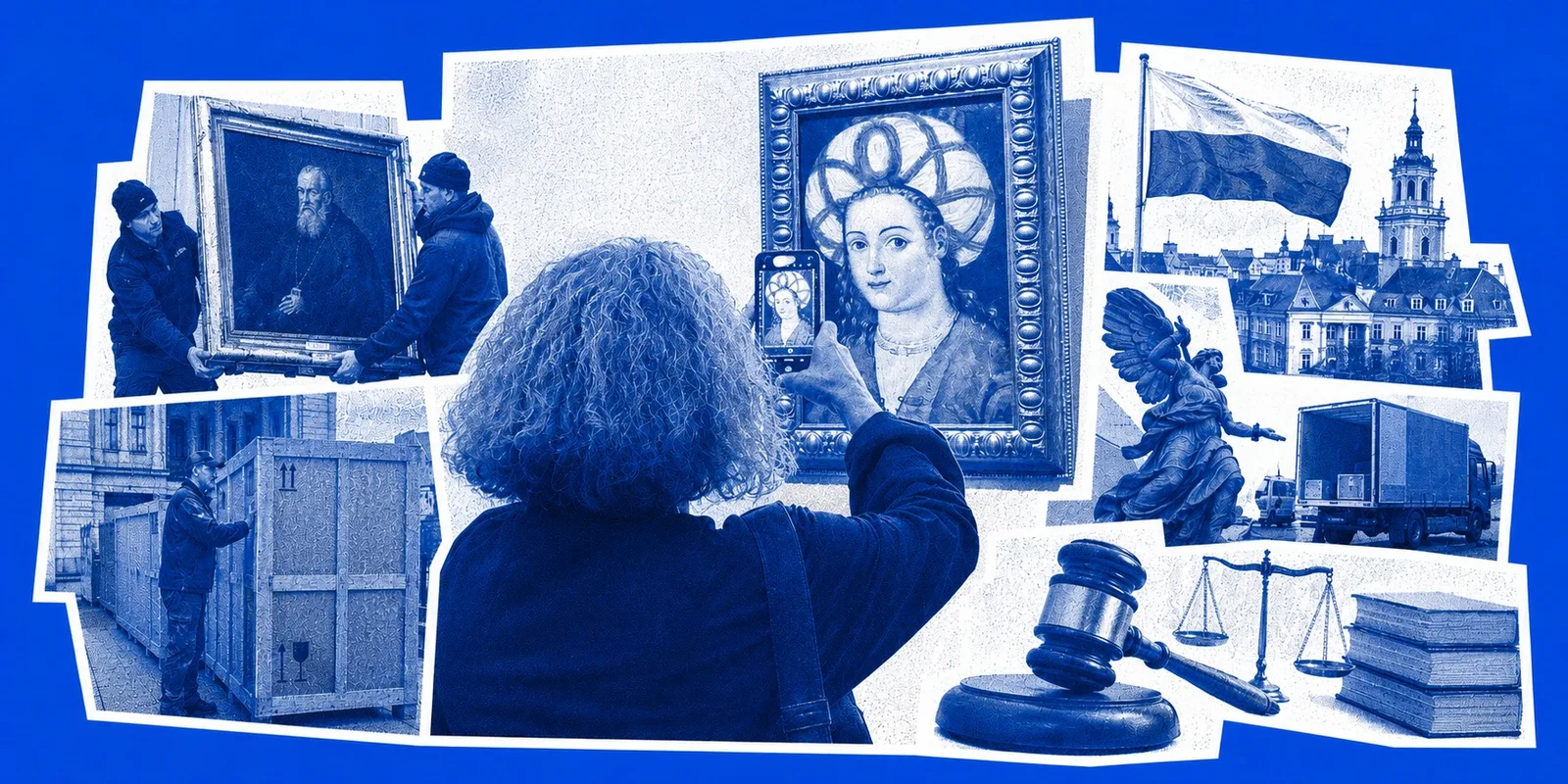
When Russian missiles began targeting Ukraine’s cultural infrastructure, Europeanvand Ukrainian cultural institutions moved swiftly to protect shared history. Dozens of priceless paintings originating from the historical Ossolineum collection in Lviv—long housed in Ukrainian museums—were carefully packed, transported across the border, and placed in Polish custody for safekeeping.
The agreement was unambiguous: Poland would serve as a temporary sanctuary, preserving these cultural treasures from the devastation of war until they could safely return to Lviv.
Now, that trust faces a precedent-setting legal challenge.
Legal representatives of Prince Piotr Lubomirski—a descendant and representative of the heirs of Prince Andrzej Lubomirski, the last hereditary curator of the Princes Lubomirski Museum in Lviv before World War II—have launched court proceedings in Poland aimed at seizing the artworks and blocking their return to Ukraine. The legal maneuver has sparked an intense conflict involving art law, wartime heritage protection, and the historical memory of Central Europe’s shifted borders.
From War Emergency to the Polish Museum
The emergency transport of artwork from Lviv to Poland was initially hailed as a triumph of cultural solidarity. Among the evacuated treasures were 18 prominent 19th- and early 20th-century paintings by celebrated Polish masters—including Jan Matejko, Henryk Siemiradzki, Jacek Malczewski, and Witold Pruszkowski. These works were provided on loan from the Borys Voznytsky Lviv National Art Gallery, the Vasyl Stefanyk National Scientific Library of Ukraine and Lviv Historycal Museum.

These are the works currently on display at the exhibition “The Borderlands of Europe – from the Treasury of the Lviv Historical Museum” at the Museum of Central Pomerania in Slupsk, Poland. The exhibition was opened from June 10 to October 18, 2026. It features over 600 museum items, including paintings, archaeological artifacts from Egypt, Mesopotamia, Ancient Greece and Rome, and military armor.
Among the exhibits are two portraits that, according to representatives of the Lubomirski heirs, come from the former collection of the Przeworsk Ordination of Andrzej Lubomirski. This is an oil portrait of Roksolana, historically known as Hurrem Sultan, chief consort and wife of Ottoman Sultan Suleiman an unknown 16th-century artist and “Portrait of a Young Man” (1850) by Alois Reyhan.

However, as the scheduled end of the exhibition approached, the legal battle erupted. Rather than facilitating the collection's return to Lviv, attorneys representing Prince Piotr Lubomirski filed formal petitions in Polish courts, seeking an injunction to attach the artwork and prevent its repatriation across the border.
Property Claims vs. Soviet Nationalization
The Lubomirski family bases its legal claim on historical ownership. Before World War II, the art pieces belonged to the private family collection integrated into the Princes Lubomirski Museum, founded in Lviv in 1823 as part of the National Ossoliński Institute (Ossolineum).
Prince Andrzej Lubomirski served as the museum's last hereditary curator until 1939. Following the Soviet invasion of Eastern Poland and the post-war border adjustments, Lviv became part of the Ukrainian SSR. The Soviet regime nationalized the museum's holdings without compensating the family, transferring the artworks to local state institutions.
Lawyers for Piotr Lubomirski argue that because the paintings are physically present on Polish soil, Polish judicial authorities now have jurisdiction to address the historical dispossession. They contend that the Soviet nationalization was an illegal act of plunder, meaning modern Ukrainian museums lack legitimate title to private family property expropriated under totalitarian rule.
Consequently, the heirs are demanding that Polish courts recognize their property rights, secure the collection on Polish territory, and ultimately transfer ownership back to the family.
Ukraine’s Stance: Public Trust and International Immunity
The legal action has drawn a firm response from Ukrainian museum directors and legal representatives, who view the petition as an infringement on Ukrainian state heritage and a violation of international protocols.
Vasylyna Yurtsevych, an attorney representing the Borys Voznytsky Lviv National Art Gallery, emphasized that the paintings form an integral part of Ukraine's Museum Fund. Under Ukrainian law and international agreements governing temporary exhibition loans, items transferred abroad for emergency protection enjoy state immunity from seizure.
Ukrainian authorities point out that the temporary export permits issued by the Ukrainian Ministry of Culture explicitly stipulated the unconditional return of the works upon the expiration of the loan agreement. Attempting to confiscate or freeze state-owned museum items while on temporary emergency display abroad violates international customary law and basic principles of cultural exchange.
Tadeusz Drewnowski, an attorney representing the Polish host institution—the Castle Museum in Łańcut—acknowledged the legal complexity of the suit, noting that while the Polish courts must process the heirs' application, host museums are bound by contract and international guarantees given to foreign sovereign partners.
A Threat to Global Cultural Rescue Efforts
International art law experts warn that a ruling in favor of the Lubomirski heirs would establish a dangerous precedent for heritage protection in conflict zones.
When nations facing military aggression transfer cultural property abroad, they rely on the host nation's guarantee of safe passage and return (guarantee of return). If domestic courts in host countries permit private third parties to attach or confiscate evacuated artwork through historical restitution claims, war-torn countries will lose faith in international protection mechanisms.
"If emergency evacuation agreements can be undermined by private claims in host nations, the entire international system for rescuing endangered art during wartime collapses," noted one international heritage expert. "Museums operating in war zones will be forced to keep priceless artifacts under bombardment rather than risk losing them to legal seizure abroad."
Geopolitical Friction and the Legacy of WWII
The dispute places Polish cultural authorities in a delicate position. While Poland has officially supported Ukraine during the war, the case reopens unresolved historical questions surrounding World War II property nationalization and post-war border changes.
Polish government officials and cultural institutions have expressed concern over the diplomatic fallout. A court-ordered seizure of Ukrainian public museum items would create friction between Warsaw and Kyiv at a critical geopolitical moment.
As Polish courts deliberate on the motions filed by the Lubomirski heirs, the case remains under close scrutiny by international museum associations and legal experts worldwide. The outcome will decide not only the fate of the Lviv paintings, but also whether the legal framework protecting wartime cultural rescues can withstand historical property disputes.

According to official data from the Ministry of Culture of Ukraine, as of the summer of 2026, 2,299 items from the state part of the Museum Fund of Ukraine are in temporary storage abroad (mainly in European countries). They are located in 17 cultural institutions in eight countries.
Sources: Zaxid.net, Rzeczpospolita