
Russian Strikes on Zaporizhzhia Kill 20, Including Three Children

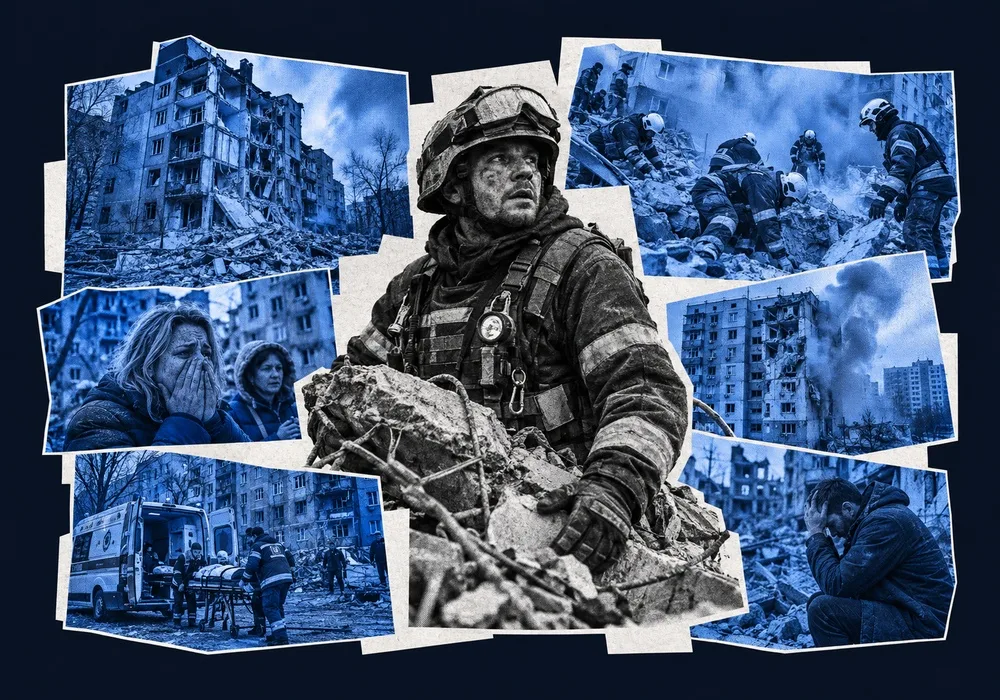
A Russian airstrike on Zaporizhzhia killed 17 people, including three children, and injured another 18 on 10 October. Five guided aerial bombs struck residential areas, destroying part of an apartment building and damaging dozens of homes. The attack came amid an intensifying Russian aerial campaign and renewed diplomatic discussions over the future of the war, raising questions about civilian protection, air defence and the effectiveness of international pressure on Moscow.
A Russian airstrike on Zaporizhzhia, a major industrial city in southeastern Ukraine, killed 20 people, including three children, according to Ukraine's State Emergency Service. Another 18 people were injured, including two children. Rescue workers continued searching the rubble as authorities updated casualty figures and assessed the extent of the destruction. The following day, 11 October, was declared a day of mourning in the city.
Russian forces struck residential areas with five guided aerial bombs in the early hours of 10 October. One attack destroyed the entrance section of an apartment building, while other strikes damaged neighbouring residential buildings and private homes. According to the Zaporizhzhia Regional Military Administration, at least 26 residential buildings sustained damage, including 23 apartment blocks and three private houses.
The destruction left residents trapped beneath collapsed concrete and debris. Emergency workers, police officers, medical personnel and municipal crews were deployed to the affected areas to extinguish fires, search for survivors and assess structural damage. During the operation, rescuers pulled a woman alive from the rubble after she had been trapped for more than eight hours.

The attack demonstrated the devastating consequences of using powerful aerial weapons against densely populated urban areas. The collapse of a residential building can kill people inside their homes and make rescue operations significantly more difficult. Even buildings that are not struck directly can suffer structural damage from explosions and falling debris, leaving residents without safe accommodation.
Zaporizhzhia has repeatedly been targeted by Russian forces during the full-scale invasion. Its proximity to the front line and its industrial importance have made the city vulnerable to sustained attacks. However, the immediate consequences are borne by civilians, whose homes and neighbourhoods remain exposed to weapons capable of causing extensive destruction.
A Wider Russian Aerial Campaign
The attack on Zaporizhzhia took place amid a broader Russian assault involving drones and missiles across Ukraine. Ukrainian air defence forces reported intercepting or suppressing a substantial proportion of the drones launched overnight, but strikes were still recorded at multiple locations. Russia has continued to use waves of unmanned aerial vehicles alongside missiles and guided bombs, forcing Ukraine to defend cities and critical infrastructure across a large territory.
The scale of these attacks creates a difficult operational problem. Air defence systems must detect incoming weapons, identify their trajectories and allocate interceptors while facing simultaneous threats from different directions. Even effective interception rates cannot guarantee that every weapon will be stopped, particularly when attacks involve large numbers of relatively inexpensive drones.
Guided aerial bombs pose an additional challenge for communities near the front. Their destructive power can cause severe damage to buildings, while the need to protect multiple cities and military positions places considerable demands on Ukraine's available air defence resources. The problem is not simply the number of incoming weapons but also the cost and availability of the systems required to stop them.
Repeated bombardments also have cumulative consequences. Emergency services must respond to new attacks while continuing recovery work from previous ones. Hospitals face additional pressure, local authorities must arrange temporary accommodation, and damaged housing requires inspection and repair. Each new strike adds to the financial and social costs of a war that has already placed enormous demands on Ukraine's public services.
Civilian Protection and the Limits of Air Defence
The deaths of three children in Zaporizhzhia underline the vulnerability of civilians who have little control over the military decisions that determine the security of their neighbourhoods. Children are particularly dependent on the availability of shelters, effective warning systems and the rapid response of emergency services. When residential buildings collapse, the chances of survival can depend on how quickly rescue workers reach those trapped beneath the debris.
For Ukraine, improving civilian protection requires more than additional interceptor missiles. It also involves strengthening early-warning systems, expanding access to shelters, maintaining emergency medical capacity and ensuring that essential services can continue operating after attacks. Local authorities must be able to respond to repeated damage without exhausting the resources needed for the next emergency.
These requirements have implications for European defence policy. The sustained use of drones and aerial weapons against Ukrainian cities illustrates how mass attacks can place pressure on even well-organised defensive systems. European countries face the challenge of increasing production of air defence equipment and ammunition while ensuring that their own armed forces retain sufficient stocks.
The war has also exposed the importance of cost-effective interception. Using expensive missiles against large numbers of relatively cheap drones can create an unsustainable imbalance if the attacking side can replenish its weapons faster than the defending side can replace its interceptors. European investment in detection technologies, electronic warfare, short-range air defence and lower-cost interception systems could help address this problem.
Ukraine's experience therefore has consequences beyond its borders. The protection of civilian populations increasingly depends on the ability to counter large-scale, mixed attacks rather than isolated missile launches. The country's continuing need for air defence assistance is directly connected to Europe's broader efforts to prepare for a more demanding security environment.
Russian Attacks Complicate Diplomatic Efforts
The strike on Zaporizhzhia came as diplomatic discussions over ending Russia's war continued. On 9 October, US President Donald Trump announced an agreement involving Russian diesel supplies intended to help address fuel-market pressures. The announcement drew criticism from Ukrainian President Volodymyr Zelenskyy, who argued that easing restrictions on Russian energy exports could provide Moscow with additional resources to sustain its military campaign.
The timing intensified concerns in Kyiv that economic concessions to Russia could undermine efforts to pressure the Kremlin into ending the war. Russian energy revenues have long been a central issue in Western policy because income from oil and petroleum products helps support the country's state budget, including military spending. Changes to restrictions on those exports can therefore have consequences beyond the immediate supply of fuel.
For European governments, the issue involves balancing energy-market concerns against the strategic objective of limiting Russia's ability to continue its invasion. Measures that ease access to international markets may offer short-term commercial benefits, but they can also weaken the coherence of sanctions policy if they are not accompanied by meaningful changes in Russian behaviour.
The continued attacks on Ukrainian cities further complicate the diplomatic picture. Negotiations may create opportunities to explore a ceasefire or a broader settlement, but they do not in themselves protect civilians from ongoing bombardment. The destruction in Zaporizhzhia illustrates the gap between diplomatic discussions and the reality experienced by communities still exposed to Russian weapons.
The dispute over Russian diesel supplies also highlights the challenge of maintaining a coordinated Western approach. Ukraine's ability to defend itself depends not only on military assistance but also on the economic and political decisions made by its partners. Differences over sanctions, energy prices and the terms of a possible settlement can affect the pressure applied to Moscow and the resources available to Kyiv.
The Stakes for European Security
The latest attack reinforces the connection between Ukraine's immediate defence needs and Europe's longer-term security planning. Continued assistance with air defence, ammunition and intelligence remains important to protecting Ukrainian cities. At the same time, European governments are under pressure to expand defence-industrial capacity, replenish national stockpiles and improve their ability to respond to sustained aerial threats.
Civilian infrastructure must also remain part of the security equation. Housing, electricity networks, water supplies, transport systems and hospitals are essential to the functioning of a society under attack. Damage to these systems increases the burden on public budgets and can displace residents long after the immediate emergency has ended.
The scale of destruction in Zaporizhzhia also demonstrates why reconstruction cannot be separated from security. Repairing damaged homes and restoring essential services requires funding, materials and skilled workers, while continuing attacks can destroy newly repaired infrastructure and delay recovery. The longer the threat persists, the greater the pressure on local authorities and national finances.
For European policymakers, the central challenge is to ensure that diplomatic initiatives are supported by a credible approach to deterrence and civilian protection. Negotiations can contribute to ending the war, but their prospects depend partly on whether Russia faces sufficient costs to change its calculations. Meanwhile, Ukraine needs the means to protect its population while those diplomatic efforts continue.
The Russian strike on 10 October left 20 people dead in Zaporizhzhia, including three children, and another 18 injured. As rescue operations gave way to the difficult work of recovery, the attack added to the human and material costs of Russia's ongoing invasion. It also underlined the continuing gap between international efforts to negotiate an end to the war and the reality of life in Ukrainian cities under sustained aerial attack.
Sources: Ukrinform, Zaporizhzhia Regional Military Administration