
Reflect Orbital’s Space Mirror Exposes a Global Gap in Space Law and Light Pollution Governance

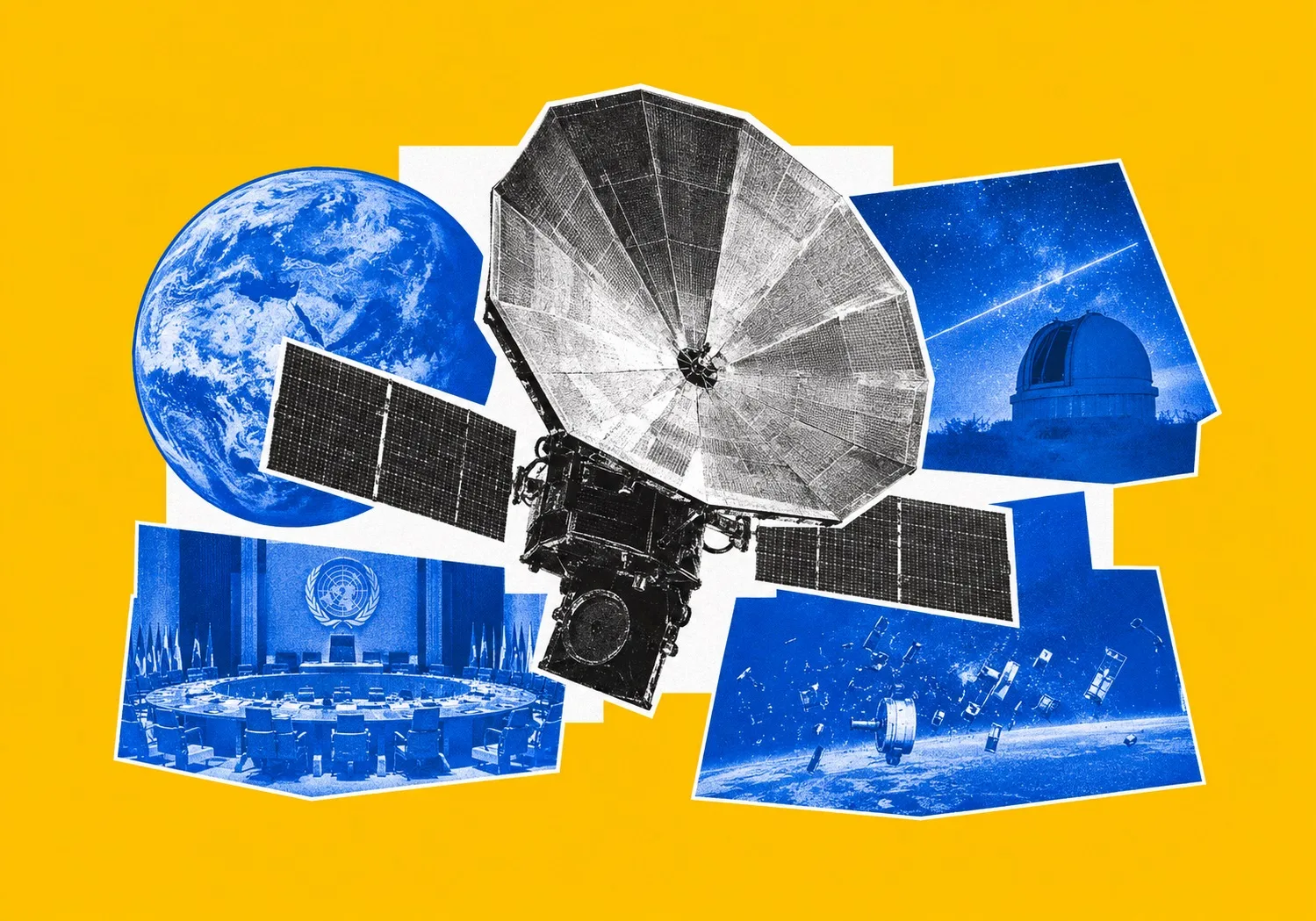
The FCC’s decision to license Reflect Orbital’s sunlight-redirecting satellite Eärendil-1 has launched a single prototype into orbit - and a major regulatory precedent down to Earth. By authorizing commercial orbit-to-ground illumination without international environmental assessment, U.S. regulators have pushed space governance past its traditional boundaries of frequency management into the unregulated realm of global night-sky modification.
The FCC has effectively authorised a commercial space operation whose intended effect is not confined to orbit. Once the mirror is deployed, what happens on the ground becomes part of the satellite's purpose. That raises a question existing space regulation was never really designed to answer: who gets to decide when an orbital asset is allowed to alter the natural environment below it?
A satellite that changes the night sky
Reflect Orbital's business case is based on a simple problem in the energy market. Solar panels stop producing electricity when the sun goes down, while demand and wholesale prices can remain high during the evening. The company wants to use mirrors in orbit to extend the period during which solar farms can receive direct sunlight.
There are other proposed uses, including search-and-rescue operations, remote construction, mining in isolated or polar regions and replacing some conventional night lighting.
For now, those possibilities remain largely theoretical. Eärendil-1 is a one-year prototype rather than an operational energy network.
The company's longer-term plans are much more ambitious. Reflect Orbital has discussed a constellation of 4,000 to 5,000 satellites by 2030 and potentially more than 50,000 by 2035. It says a network of 76 specialised spacecraft could provide illumination comparable to a full moon over almost any location on Earth.
The scale of that ambition is disputed. Academic modelling cited in the briefing indicates that achieving even 20 per cent of noon-time solar irradiance at one ground location could require around 3,000 satellites with much larger mirrors. The associated energy costs could reach tens of millions of dollars per hour.
That makes Eärendil-1 a useful dividing line. A single experimental spacecraft presents one set of problems. A dense orbital constellation would create an entirely different regulatory category.
The FCC's mandate is the awkward part
The opposition to the licence is focused heavily on that regulatory mismatch.
The FCC's role in satellite regulation is rooted in the US Communications Act of 1934 and in the management of non-governmental communications systems and radio frequencies. Reflect Orbital's spacecraft, however, is being authorised to perform a physical operation involving sunlight.
DarkSky International, the American Bird Conservancy, Environment America and Public Employees for Environmental Responsibility have asked the FCC to revoke or stay the licence. Almost 2,000 public comments were submitted against the project.
Their argument is not simply that the satellite could be bright.
They contend that the FCC treated the application primarily as a telecommunications matter and did not conduct the kind of comprehensive environmental assessment they believe should apply to a project capable of producing orbital light pollution. The groups have also argued that the agency's use of its existing authority does not adequately address the environmental effects of the proposed activity.
That leaves a regulatory question hanging over the project: if the consequences are environmental but the asset is licensed through a communications framework, which authority is responsible for assessing the environmental consequences?
Astronomers see a much bigger problem
The scientific community has focused on what thousands of reflective spacecraft could do to optical observations.
The American Astronomical Society and the European Southern Observatory have warned that reflected and scattered light from orbital mirrors could interfere with observatories, saturate imaging detectors and complicate automated asteroid-tracking systems.
Reflect Orbital has proposed several safeguards. It says it will establish exclusion zones around research observatories and protected habitats, publish orbital positions in advance and restrict illumination to short periods. The mirrors could also be turned edge-on when not being used to reduce unwanted reflections.
Those measures may make an individual satellite easier to manage. They become less straightforward when the number of spacecraft grows into the thousands.
Astronomers already have to account for objects moving through low Earth orbit. A large population of actively reflective satellites would introduce another variable: not just where an object is, but where it is directing sunlight at a particular moment.
For precision optical astronomy, that distinction matters.
Light pollution does not stop at a border
The environmental issue is broader still.
Artificial night lighting can affect circadian rhythms and nocturnal behaviour. The organisations challenging the FCC approval have raised concerns about effects on wildlife, including birds and insects, as well as possible disruption to migratory patterns.
An orbital reflector creates an unusual version of the problem because the source of the illumination is outside the jurisdiction in which its effects may be felt.
The 1967 Outer Space Treaty establishes outer space as a domain open to exploration and use, but it does not set specific operating standards for orbital reflection, limits on artificial illumination or protection of the natural night sky.
That was not necessarily a pressing omission when the principal commercial uses of satellites were communications and observation.
The commercialisation of orbital light changes the equation.
A US regulator can impose conditions on an American company. It cannot, by itself, create environmental rules for every country whose territory or ecosystem might eventually be affected by a large orbital constellation.
This is where the apparently technical question of a satellite licence becomes an international governance issue.
The economics are still a long way from the vision
There is also a substantial commercial gap between the prototype and the infrastructure Reflect Orbital ultimately envisages.
The company has raised more than $28.7 million in private funding, including a $6.5 million seed round led by Sequoia Capital and a $20 million Series A led by Lux Capital, with participation from Starship Ventures. The US Air Force has separately provided $1.25 million through an AFWERX Small Business Innovation Research Phase II contract to investigate dual-use applications.
The defence interest is understandable within the company's proposed model. A system capable of delivering controlled illumination to a remote location could have applications for emergency response or operations where conventional infrastructure is unavailable.
But defence funding does not resolve the basic commercial calculation.
For solar farms, the proposition is competing with other ways of shifting electricity into the evening - most obviously energy storage. The orbital model avoids placing batteries at the solar farm, but it requires spacecraft, launches, orbital control and a large number of reflective assets. The briefing does not establish that orbital illumination is already economically competitive with battery storage.
That uncertainty is important. Much of the debate has jumped ahead to the environmental consequences of a constellation whose economic case has not yet been demonstrated.
New Space is moving into a different regulatory territory
The deeper significance of Eärendil-1 lies in the direction of travel.
Commercial space companies once concentrated on communications and Earth observation. The sector is now moving towards infrastructure that can generate, transmit, or manipulate energy in orbit. Star Catcher is developing a concept for space-to-space power transmission, while Volta Space Technologies is working on lunar laser energy transfer.
Reflect Orbital belongs to the same broader shift, even though its technology is different.
Space is becoming a place where private companies propose to provide services that have direct physical consequences on Earth.
That changes the regulatory problem. Collision avoidance and radio-frequency interference can be assigned relatively clear technical parameters. Environmental effects are harder to allocate because they can involve ecosystems, scientific observations and populations far from the country that issued the licence.
The history of orbital mirrors also shows that the idea itself is not new. Russia's Znamya 2 experiment in 1993 deployed a 20-metre reflector from the Mir space station and produced a bright spot roughly 5km wide that moved across Europe. A later Znamya 2.5 attempt in 1999 failed after the mirror became entangled with a Mir antenna.
What has changed is the prospect of turning an experiment into a commercial system.
Eärendil-1 is expected to spend about a year in orbit before being deorbited. If the demonstration works, the next applications will confront a regulatory system still largely organised around satellites as transmitters, sensors and objects that must be kept from colliding.
Reflect Orbital's mirror introduces another category: an orbital asset whose commercial value comes from changing what happens below it.
The difficult question is no longer whether national regulators can authorise one such spacecraft. It is whether they can continue doing so individually if orbital infrastructure begins to affect a resource shared by everyone - the darkness of the night sky.
Sources: The Economist, Space, ABC, MIT Technology Review