
Is Russia Already at War with Europe? Putin’s Nuclear Threats, Hybrid Attacks, and Kremlin Weakness

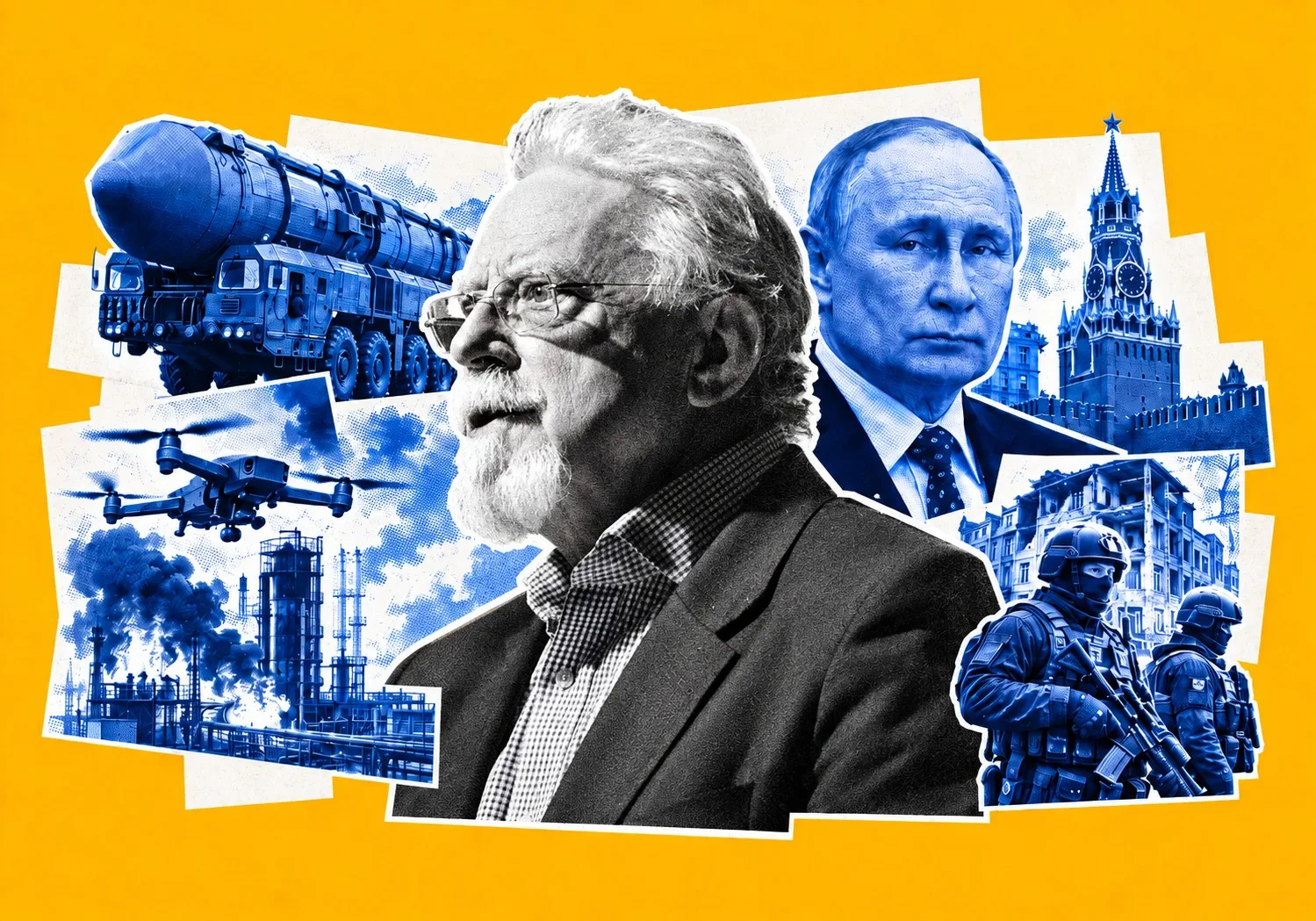
As the Kremlin tests Western boundaries through nuclear signaling over Kaliningrad and an undeclared hybrid war of cyberattacks and sabotage, European security hinges on seeing past Vladimir Putin’s posturing. Speaking on Russia Unmasked, British political analyst Professor Tony Meehan details why Russia is already waging multiple hidden wars across Europe—and why NATO’s unified defensive stance is forcing a fundamental shift in Moscow’s strategy. Putin is under intense pressure at home, fighting six separate wars—from battlefield and economic losses to a desperate fight for his own political survival. Trapped by his own ego, surrounded by internal rivals in the Kremlin and FSB, and spending billions in a desperate search for longevity, he is no longer the invincible leader he once was. That makes his next move inherently unpredictable, dangerous, and driven by fear rather than strength.
The Kaliningrad Signal: Nuclear Saber-Rattling or Internal Fear?
Putin’s threats are for all of these audiences - Europe, NATO, Trump, or the Russian people - but they have different purposes and significance.
The message for Europe, NATO, and Trump is simply to remind them that he is still in charge.
He controls Russia.
Russia has the weapons to destroy them, and don't think America has been forgotten.
My personal observations are that Putin's latest threats to the West are signs of fear and weakness, not necessarily against the West, but possibly enemies he has inside Russia.
To the best of my knowledge, he's never threatened the West in this manner before.
Is he attempting to walk Russia into a major nuclear confrontation or to scare the West or to scare his generals in the Kremlin?
It's true.
Russia does have the weapons, but one must ask, does it have the ability, the military ability, commitment, and resources to push the buttons? We're not talking about pushing one button. We're talking about twenty, thirty simultaneously across Europe and North America. Think about it: Amsterdam, Berlin, Brussels, London, Madrid, Paris, Rome, Washington, and many more, plus the military targets across Europe and North America. If you think about the coordinated response by NATO, it's a response that has already been planned and rehearsed, so you can draw your own conclusions as to how far he will go.
As for his Russian audiences, the messages in some ways are similar: I, Putin, remain the strength to protect Mother Russia. "You can depend on me. I am not afraid of Trump, NATO, or anyone. Together, we will defend Russia."
However, I'm confident that other Russian audiences possibly in the FSB, military, the Duma, and Kremlin will have their own thoughts and agendas.
So it's not necessarily clear-cut as he may think it is.
NATO’s Response and the Shift in Moscow’s Rhetoric
Europe, NATO has responded to Putin with the simple message to remind him, Russia, China, the people of the world, that NATO is a defense organization.
It has no interest or plans to attack Russia.
By doing that and making that statement, it immediately defeated Putin's objective to show NATO as the aggressor.
Were NATO or others in Europe to engage in a battle of words, Putin would use this claim that Russia, again, is the victim.
So, therefore, they need to do something about it.
And Putin being Putin would use that as a red flag to start a war.
So, subsequent to his initial outburst, and following the NATO statement, Putin has responded further by saying that Russia will not attack the Baltic States, NATO, or Europe, or The US. Now this is a surprising position for him. Could it be that there are voices in the military or the Kremlin or both that are starting to speak louder than him and making him to back down?
It's a strange situation we have.
Can we say that Russia is already waging a war against Europe just without formally declaring it?
The answer to that question is is most certainly yes, but I don't think that the West underestimates Russia.
We have to remember, Russia has had an established network of operators across the world for forty, fifty years or more to conduct cyber—at that time, different forms of—warfare against the Western world.
So, therefore, it's had to defend and challenge and remove this continuous process by Russia in a level of work that we never see or hear about.
It is the world of the spies, the world of secrecy. It happens that way.
The Six Putin"s Wars
If we think about Russia's invasion of Ukraine, in five months, this war will have been going on for five years. During this time, Putin has been fighting and losing five different wars in Ukraine:
- Battlefield military war: 1.5 million plus Russian military dead or wounded, could be 2 million in five months.
- War against Ukrainian civilians: He's made them stronger and more determined to survive and to see victory.
- Psychological propaganda: For which he's no longer believed or trusted. So, therefore, he's lost that war.
- Technology: Ukraine has changed the strategy of war to drones and robotic defense systems. Russia was not and still is not prepared or adapted to meet those challenges.
- Economic war: International sanctions have weakened Russia's economy. I would estimate that Russia has lost billions, if not trillions of US dollars in military equipment, oil, and other revenues.
In addition, we have to recognize that Putin underestimated and failed to identify his enemy.
It wasn't Ukraine.
Because of his actions, he, Vladimir Putin, created EU and NATO as an active enemy through their support for Ukraine.
Maybe that was his objective by invading Ukraine to have a war with NATO, but it didn't work. He's now fighting a sixth war at home, that's in Russia, for his survival.
He is no longer the almighty, strong, and invincible man that he once was.
Longevity Obsession: Ego, Power, and Public Money
Regarding the research in aging, is it another example of the man's ego?
The interesting thing about this story is that it first appeared in the New York Times and subsequently made it to the front page of the Moscow Times. And the interesting thing there for me is that the Moscow Times is telling Russians that Putin is spending 18,000,000,000 rubles on this program in order to extend his life.
It's being run by his daughter—favoritism.
It's being run by his best friend—favoritism.
So, it's simple: "I am the all-powerful Vladimir Putin. I can control anything and everything, even my life. Saying to those who believe in him, of which there are many: I am greater than God. I can extend my life. I can extend yours."
This is what it will cost. Another major miscalculation, I would suggest.
What Happens to the Kremlin After Putin?
I believe the system is and will always be prepared for the follow-up to Vladimir Putin.
The military, Kremlin, and others we know nothing about will have numerous plans, options, and possibly candidates to take over the moment that Putin is no longer in power. Now note, I say no longer in power doesn't necessarily mean to say he is dead, poisoned, killed, assassinated, whatever. It just means he no longer has the power.
How that happens is an internal matter for those in Russia.
I don't think the systems have made it impossible for him to walk away.
I think his ego, again, his search for power and control, makes it impossible for him. His personal safety, I think, is relatively secure if he continues to control the FSB. If he loses that control, then there's a different question.
His departure will be the potential for major shift in Russian politics, foreign policy, and military objectives.
So, therefore, that would allow whoever comes in, if that person is minded to, because you never know, to reach a settlement with Ukraine without necessarily losing face because that would be put on Putin. But, again, it depends on who replaces him because that person will dictate how and when the war ends or continues.
Trump, Energy Deals, and Commercial Self-Interest
Earlier this week, Donald Trump asked US journalists if they thought he was a better dealmaker or president.
There was a harsh silence in the room.
My response is he isn't a great dealmaker because you have to look at the responses to his sanctions and threats, to both Canada and Europe, whereby they rejected them totally.
As for being a great president, for many Americans, he understands their issues and responds, and they are satisfied. So to those Americans, he is a very good president. He's what I would refer to as an American nationalist, which doesn't necessarily make him a great president when it comes to international politics. They're not his forte.
The Iran war was unnecessary.
His proposed reunification of Ireland just has created chaos and opened old wounds. His threat to take over Greenland—they're just three recent examples of his failure on international politics.
Insofar as the commercial deals negotiating the multimillion oil deal, personally, I don't think it's for the benefit of the citizens or the world, but it's actually for their own benefit.
As for Ukraine's future being influenced by economic interest, it already is happening. The Trump administration, I understand, has signed a $30,000,000 deal for Ukraine minerals. Russia wants the Donbas for the same reason. So, Ukraine is the focus of commercial interest, and those in power, Trump and Putin, want to take out of it what they can without any benefit to those citizens and all citizens of Ukraine.
The European Dilemma and Emerging Security Threats
It's what Europe does that will be important as opposed to what it says.
With Canadian prime minister, Mark Carney, now part of the EU political circle, I think things will begin to change because he has demonstrated very simply how to deal with the big bully boys of the world.
And by that, I'm referring to Donald Trump.
It is understood that Trump and Putin are like-minded. They're driven by self-interest. They're driven by power drives. They each believe they personally own what they were elected to protect, and they have the rights to do with whatever it is they wish to do with, whether it's oil fields, whether it's minerals, whether it's anything.
I think the biggest hidden danger for Europe is Islamist terrorism, and that is something that we will see coming more to the fore, especially here in The United Kingdom, in the coming months and years.
The Blitz Spirit: Why Bombing Infrastructure Cannot Break Kyiv
Recent history, let's say for the past eighty odd years, tells us that citizens' response to a blitzkrieg style bombardment is one of resilience, rejection, and determination to achieve victory.
I'm confident that this will apply to the citizens of Kyiv and every other Ukrainian city, town, and village.
It satisfies the aggressor because he thinks he or she is doing something that will allow them to achieve their objectives.
But in reality, the strength of the character of the nation, Ukraine and its citizens, is far stronger than any bomb, or anything. The hurt and the pain is the one thing that drives them to rejection and determination to victory.
Those of us who are interested and aware of the different aspects of the war in Ukraine do understand, and we do have an empathy.
As you know, I was born during World War Two.
Fortunately, the London blitz ended before that.
But, I can still remember going to school in the late nineteen forties walking past or around bomb sites and the remains of the blitz and the bombing of the German air force.
So, yeah, there is an awareness, an understanding, and an empathy towards and for Ukraine.
Professor Tony Meehan, political analyst