
Pope Leo XIV in France: Inside the Vatican’s High-Stakes European Gamble

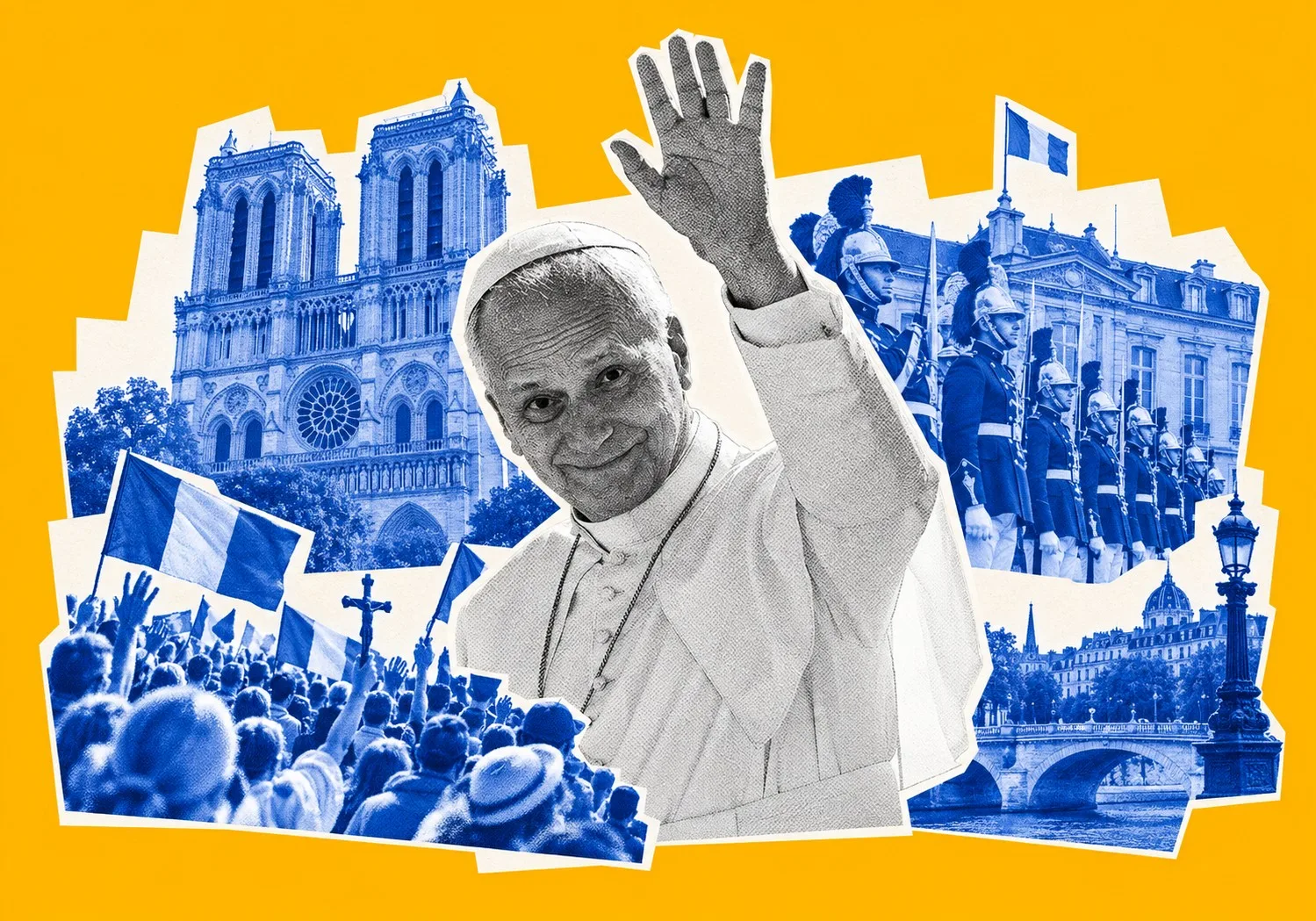
This four-day trip is the first official state visit by a pope to France since Benedict XVI came in 2008. “That the world may have life.” The motto of Pope”s visit, The Vatican News writes, is a "a call to hope and communion, encouraging people to overcome divisions in order to share peace, reconciliation, and fraternity, signs of new life in the world". There is a personal element to this visit: the paternal grandmother of the U.S.-born Pope Leo XIV was born in France.

When Pope Leo XIV stepped off the plane at Paris-Orly Airport on September 25, 2026, and shook hands with Emmanuel Macron, the official welcome masked a much tougher political reality.
It arrives at a moment when the Roman Catholic Church is trying to reset its footing across Western Europe.
Rather than digging in behind defensive walls against an increasingly secular society, the Vatican is wading straight into the messy intersections of modern European politics, trying to win back moral authority just as its domestic standing faces deep historical damage.
The Paris Leg: From AI Warnings to Historic Symbols
The opening day of the tour set a breakneck pace designed to put the Vatican right in the middle of current political and intellectual debates rather than letting it hide behind historical pageantry. Right after the formal welcome at the Élysée Palace and talks with Macron, the schedule skipped traditional church territory to tackle twenty-first-century policy battles. At UNESCO headquarters, Leo XIV issued a blunt warning about the ethical dangers and lack of regulation surrounding artificial intelligence, framing digital automation as a threat that reduces human worth to mere data points.
Later that afternoon, his ride through the capital in the papamobile—moving from Notre-Dame-des-Champs Church to Place Saint-Michel—led straight into Vespers at the newly repaired Notre-Dame Cathedral, marking the first papal visit to the landmark since the devastating 2019 fire. The day wrapped up with a massive youth vigil at the Stade de France for crowds aged 17 to 35, featuring the public display of the Holy Tunic of Argenteuil.
Subsequent days showed the sheer scale of public turnout the church can still command, even in a secular country. An open-air Mass at the Place de la Concorde drew roughly 600,000 registered participants. Yet these massive gatherings sit uneasily alongside the underlying tensions of contemporary French politics. Macron’s administration has recently pushed through laws directly opposed by Catholic teaching, notably the 2024 constitutional protection for abortion rights and new rules legalising assisted dying for the incurably ill. For the Élysée, hosting the pontiff provides a useful international platform to project leadership on continental peace and dialogue; for the church, it risks highlighting the yawning gap between mass emotional participation and everyday legislative irrelevance.
Carrying the Weight of Institutional Scandals
Beyond the speeches and architectural landmarks, the most critical test of the visit lies away from the capital in southwest France. On September 27 at the Sanctuary of Our Lady of Lourdes, Pope Leo XIV is scheduled to hold a private meeting with seven French survivors of clerical abuse. This structured session, organised with direct input from victims and led locally by figures such as French bishop Thibault Verny—whom the Vatican appointed to oversee child protection—represents a high-stakes effort to keep institutional accountability front and centre.
The shadow cast by the October 2021 report from the Independent Commission on Sexual Abuse in the Church (CIASE) remains enormous. That inquiry estimated that roughly 330,000 minors suffered abuse over seven decades amid widespread institutional silence. For the leadership of the French Catholic Church, having the pope in town offers a brief shield from public hostility, but it also drags the painful gap between empty apologies and real structural reform right back into the headlines. Critics and survivor groups argue that high-level audiences, while symbolically necessary, cannot substitute for transparent legal accountability and deep internal overhauls. By stepping directly into Lourdes—a traditional site of pilgrimage and healing—the Vatican is trying to merge spiritual penitence with direct political crisis management.
At the same time, the church’s social footprint in France is visibly shifting toward urban migrant integration initiatives, highlighted by the Pope's visit to Maison Bakhita. These efforts allow the Holy See to find common ground with European governments on humanitarian issues, even as deep disagreements persist over national borders, asylum policy, and secular law.

The Geopolitical Horizon in Metz and the Future of Europe
The final stretch of the tour shifts the focus from national reconciliation to continental geopolitics. On September 28, the Pope travels to the eastern city of Metz, situated near the German and Luxembourg borders, to join an interreligious gathering and deliver a major speech on peace and European unity at the Robert Schuman Conference Centre.
Metz holds immense symbolic weight as the hometown of Robert Schuman, the French statesman and Catholic declared venerable by the church who is widely recognised as a founding father of the European project.
By accepting an invitation extended by President Macron to leaders from all 27 European Union member states, Leo XIV places the moral weight of the Vatican squarely behind a European integration process that currently faces severe internal strain, populist fatigue, and security anxieties.
This strategic pivot reveals the core of the Vatican’s new European policy. By focusing outward on multilateral peace, migration, and technological ethics, the Holy See attempts to bypass the bruising cultural battles over bioethics and family law where its influence at the national level has steadily eroded.
The Élysée Palace did not respond to a request regarding which leaders are set to attend.
The French president will not attend any of papal masses over the course of the trip.
Ahead of the Pope's visit, the Elysée stressed that France could embrace religious enthusiasm while remaining committed to secularism.
Macron will be represented by the Prime Minister as well as by his wife Brigitte Macron during the giant open air mass at the Place de la Concorde and adjoining Champs-Elysées on Saturday, according to the Elysée.
This friction over church and state is hardly new to the Élysée. When Emmanuel Macron attended Pope Francis’s open-air Mass at Marseille's Stade Vélodrome in 2023, his presence provoked immediate backlash from the French left. Critics accused the president of breaching the strict neutrality demanded by laïcité, arguing that a head of state has no business gracing a religious service in an official capacity.
Sources: Vatican News, Euronews, France24