
Poland and Lithuania Plan Mass Evacuation of 1M Civilians Across Suwalki Gap

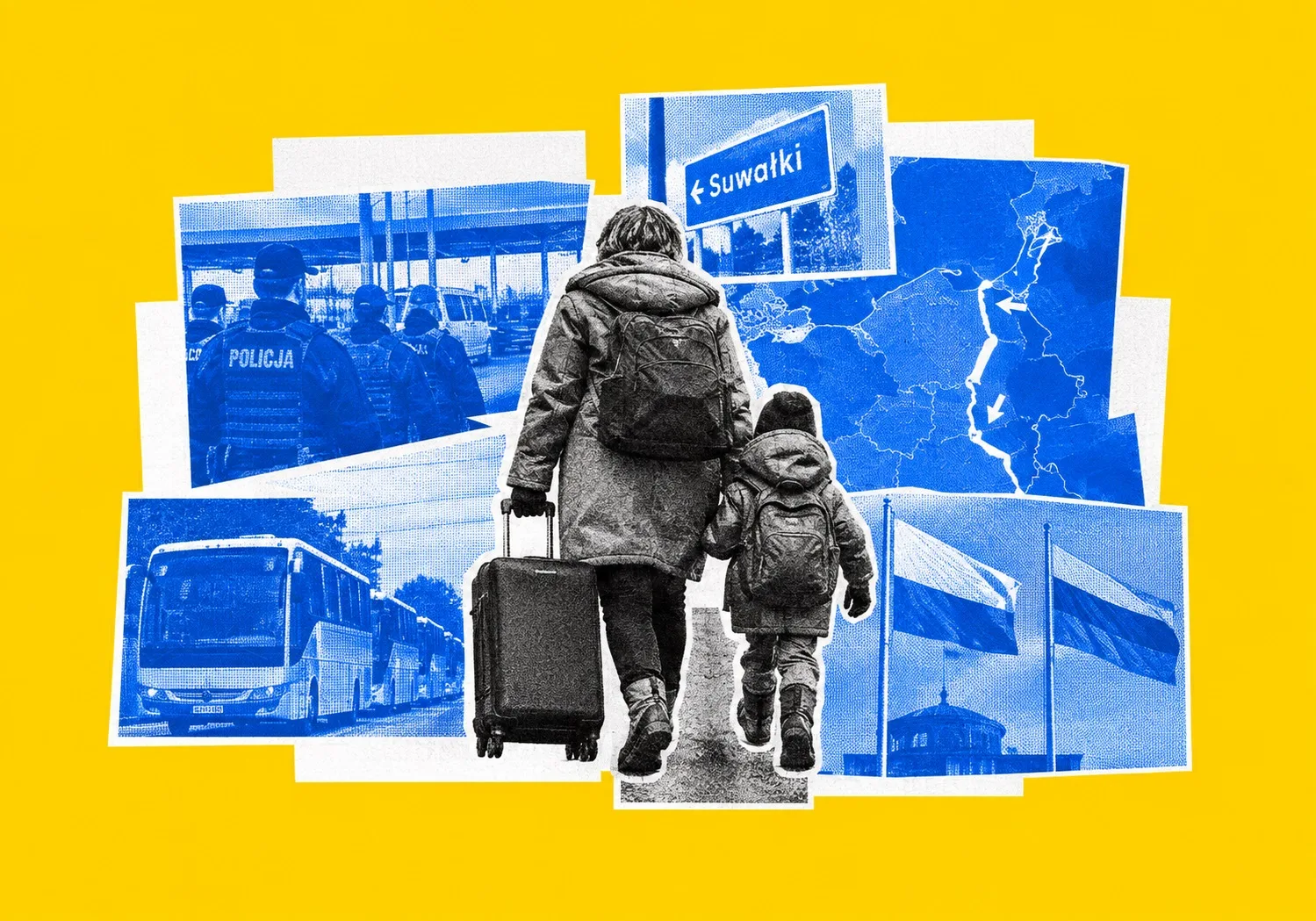
Warsaw and Vilnius are refining a joint cross-border evacuation system capable of moving at least one million people from the Baltic states into Poland during a potential crisis with Russia. Unveiled following talks in Budzisko and Lithuania’s Vyčio Skliautas 2026 civil defense drills, the plan aims to turn NATO’s most vulnerable bottleneck into a coordinated civil-military corridor before a conflict begins.
The scale of the evacuation plan is a significant part. It envisages the movement of more than 1mn people, with Poland’s Podlaskie Voivodeship designated as the principal area for initial reception. That turns civil protection into an element of military planning: the objective is not simply to get civilians out, but to prevent a mass civilian movement from paralysing a corridor that NATO would need for other purposes.
The exercise was designed around a war scenario
Lithuania’s Vyčio Skliautas 2026 exercise, held from September 25 to October 3, provided the practical test for that approach.
The exercise simulated a full-scale military invasion from Belarus alongside power cuts, communications failures, cyber attacks and pressure on critical infrastructure. Evacuation drills involving civilians were conducted in Vilnius and roughly ten border municipalities, while other communities carried out staff simulations.
The Polish interest was unusually operational. A 20-person delegation drawn from several Polish institutions observed the exercise, examining how people would cross the border, how they would be registered and received, and how transport and logistics could function under emergency conditions.
Lithuania also established a reception and registration centre in Lazdijai, close to the Polish border. Civilian registration was tested using a dedicated mobile application, giving the exercise a practical dimension that goes beyond the familiar command-post simulations of emergency planning.
That matters because the hardest part of a mass evacuation is unlikely to be the political decision to move people. It is the administrative machinery that has to process them once they start moving: registration, transport, assembly points, border procedures and reception capacity must work simultaneously.
The bilateral protocol with Poland is still being refined following the end of the exercise. But the basic architecture is now clearer.
The Suwałki problem is no longer only military
The Suwalki Gap has long been treated primarily as a military vulnerability. Its importance comes from geography: it is the land connection between Poland and the Baltic states, squeezed between Belarus and Kaliningrad.
A conflict would therefore create a problem with two competing imperatives. NATO would need the corridor open for military mobility, while hundreds of thousands or potentially millions of civilians could be moving in the opposite direction.
That is where evacuation planning becomes part of deterrence.
A civilian population moving without coordination could create precisely the congestion that military planners would seek to avoid. Roads, border crossings, transport capacity and local services could become saturated. A crisis could therefore produce operational paralysis without requiring the corridor itself to be physically closed.
The emerging Polish-Lithuanian framework is designed to reduce that risk by treating civilian movement as something that must be organised in advance.
This is a subtle but important change in the logic of eastern-flank defence. Civil defence is no longer being treated as a national back-up function that begins once military planning has been completed. It is being incorporated into the same geographic and logistical calculations.
For Poland, the burden falls particularly heavily on Podlaskie Voivodeship. The region would become the first major reception zone for people crossing from the Baltic states, while its infrastructure would simultaneously remain part of the wider military mobility network.
The challenge is therefore not simply capacity. It is coordination between civilian and military priorities.
Poland has a border-control problem of its own
The evacuation plan is also being developed against an awkward political and logistical backdrop: Poland is simultaneously tightening and streamlining its borders.
Warsaw introduced temporary controls on its border with Lithuania in July 2025 in response to secondary illegal migration and has extended those controls, together with measures on the German border, until March 30, 2027. Around 1,300 people had been refused entry at the Polish-Lithuanian border between July 2025 and October 2026.
During the summer of 2026, queues at the border reached several kilometres. Procedures have since been adjusted and traffic has eased through more selective and risk-based checks.
The contradiction is obvious only on the surface. A border designed to regulate movement during normal conditions has to coexist with a contingency system designed to accelerate movement during an extreme crisis.
That requires the two systems to be capable of operating differently without becoming confused.
In peacetime, Poland wants control over who enters. In a military emergency, the priority could become the rapid movement of large civilian populations while preserving the ability to distinguish civilian flows from other traffic. The current bilateral work is effectively an attempt to build that flexibility into the border system before it is needed.
For transport operators and regional logistics networks, this may mean continued friction. For military planners, predictable procedures could be more valuable than unrestricted movement.
The Baltic states are planning as one space
The evacuation framework is being negotiated directly between Poland and Lithuania, but its intended scale makes it a Baltic-wide contingency.
Lithuania, Latvia and Estonia are all included in the projected movement of at least 1mn people. Lithuania already has its own national evacuation strategy; the cross-border framework addresses the point where national planning stops being sufficient.
That distinction is important. The problem is not simply whether each Baltic state can evacuate its own population. It is what happens when people have to cross an international border into the only land corridor connecting the region with mainland Europe.
The Lithuanian exercise therefore served as a test of an emerging international chain: local authorities identify and assemble civilians, transport systems move them towards designated crossings, registration takes place, border procedures are adapted, and Polish authorities assume responsibility for initial reception.
Lazdijai provides one tested reception point. Other crossings exist within the planning framework, although details have not been publicised.
The system remains under development. That is precisely why the exercises matter.
From civil protection to deterrence
The most consequential feature of the Polish-Lithuanian initiative is that it treats civilian resilience as a component of military readiness.
Warsaw and Vilnius are not planning evacuation merely because a large refugee movement would be humanitarian chaos. They are planning it because chaos itself could become a strategic vulnerability.
That logic changes the role of local administrations. Municipalities along the border are no longer peripheral actors waiting for instructions from national capitals. Their ability to register, move and receive civilians becomes part of the resilience of the wider eastern flank.
It also gives NATO military planners a clearer framework for thinking about the Suwałki Gap. If civilian traffic can be organised rather than improvised, military movement becomes easier to separate from evacuation flows. If reception capacity is prepared in advance, the immediate pressure on the border can be reduced.
The significance lies less in the existence of an evacuation plan than in what it says about the region's understanding of a potential conflict.
The Baltic states are increasingly being treated not as three separate national contingencies, but as a connected operational space whose civilian population, transport infrastructure and military reinforcement routes depend on the same narrow geography.
The Suwałki Gap remains a vulnerability. The emerging plan does not change that geography. It changes the number of things that can be organised around it before a crisis begins - and, in a region where civilian movement and military mobility would compete for the same roads and crossings, that distinction could determine whether the corridor remains usable when it matters most.