
Patriot Missile Repair Hub in Europe: Poland or Germany?

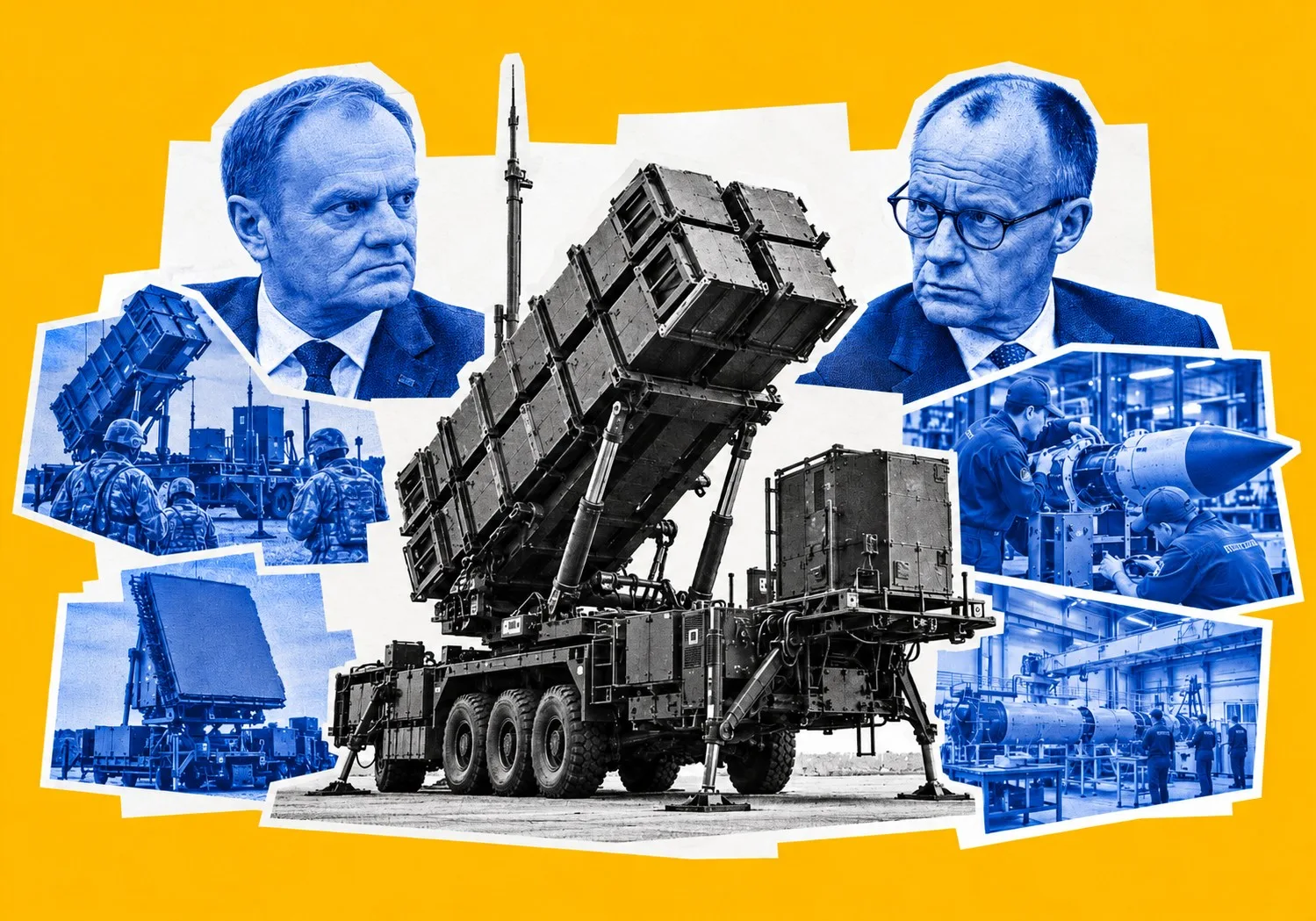
The United States government will announce within the next 48 hours the location of Europe’s first maintenance and repair hub for Patriot PAC-3 MSE missiles, according to Polish media outlets citing their own sources. The Pentagon, State Department, and prime contractor Lockheed Martin have narrowed the final decision to a choice between Poland and Germany. Polish news organizations report that Warsaw is currently the leading candidate to host the critical NATO air defence facility.
Preliminary assessments published by Polish media reflect this status: "Poland may have grounds for cautious optimism."
The final selection will determine the location of key servicing infrastructure for European air defense assets. This move reflects broader operational adjustments within NATO's logistics framework.

The Trans-Atlantic Bottleneck
Under established procedures, allied PAC-3 MSE interceptors require routine recertification, major repairs, or component servicing.
These multi-million-dollar missiles cannot be serviced locally in Europe.
Instead, damaged interceptors or those due for mandatory periodic inspection must be packed up, loaded onto ships or cargo planes, and transported directly across the Atlantic Ocean back to specialized defense industrial facilities in the United States.
Limited repair capacity also exists in Japan.
Increased global demand for Patriot interceptors has created severe backlogs at domestic US facilities.
And massive queues at American service plants mean that returning equipment takes as long as 18 months.
During this 1.5-year period, allied armed forces are forced to operate without these critical assets, leaving significant gaps in their active air defense shields.
The establishment of a dedicated European servicing center is projected to reduce this lead time significantly.
Locating such a center in Poland will shorten the entire logistical process to a few months, eliminating the need to pack and transport interceptors over sea and air routes to North America.
Formal coordination on European maintenance capacity began in July 2026 at the NATO Defence Industry Forum in Ankara.
Polish Deputy Prime Minister and MON Chief Władysław Kosiniak-Kamysz signed a Memorandum of Understanding during the event. He met with defense representatives from the US, Germany, the Netherlands, and Sweden.
The signatories reached a shared conclusion: "establishing such an infrastructure in Europe is essential due to the overload of the American industrial-logistics base caused by various conflicts and a huge increase in global orders."
The Diplomatic Push
Following the Ankara agreement, Polish officials held several rounds of talks with US counterparts. Deputy Defence
Minister Cezary Tomczyk met with officials in Washington in May 2026. He explored options for long-term industrial participation in Patriot system sustainment.
"After our visit, I think everything is open and we received preliminary approval from the State Department to produce missiles for Patriot systems," he later stated.
A delegation of US officials conducted on-site evaluations of Polish defense facilities in September 2026.
Thomas Dinanno, US Undersecretary of State for Arms Control and International Security, led the team alongside US Ambassador Tom Rose. They reviewed operations at MON headquarters and affiliated production sites to assess local technical standards.
A Polish delegation held meetings in Washington in the final weeks leading to the announcement.
The group included Deputy MAP Minister Konrad Gołota and Deputy MON Ministers Magdalena Sobkowiak-Czarnecki and Paweł Zalewski. They met with Lockheed Martin leadership and Michael P. Duffey, US Deputy Assistant Secretary of Defense, to present the final specifications of the Polish proposal.
Gołota referred directly to the technical evaluations conducted by US teams.
"What we proposed to the Americans in technical and financial terms received the highest marks, and key decisions will be made in the coming weeks," Deputy MAP Minister said.
Capital vs Geography
Germany’s proposal relies on its existing defense industrial infrastructure.
It also leverages higher overall domestic defense spending and a large volume of national PAC-3 MSE orders.
Gołota acknowledged Berlin's primary advantages: "Berlin has two strong cards: the huge financial capabilities of its economy and a large scale of missile orders for its own army."
In response, the Polish submission highlights direct state funding, specific technical facilities, and geographic proximity to NATO's eastern border.
The proposal emphasizes that "locating a service center in a country that directly defends the border of NATO and the European Union makes strategic sense for allies today."
Poland’s proposal includes a PLN 1.5 billion direct funding commitment from the state budget.
The proposed technical hub centers on Wojskowe Zakłady Elektroniczne (WZE) in Zielonka, near Warsaw.
The Zielonka plant contains a specialized Hardware-in-the-Loop (HWIL) simulation laboratory. This lab performs digital testing and calibration of Patriot guidance components without physical missile launches.
State-owned defense holding Polska Grupa Zbrojeniowa (PGZ) has also completed US auditing processes.
PGZ currently manufactures specific electronic components used in global Patriot supply chains. Gołota addressed Poland's manufacturing footprint directly: "Some parts we manufacture as the only ones in the world."
The bid accompanies parallel defense initiatives between Washington and Warsaw.
These projects include a recent $4 billion Foreign Military Financing (FMF) loan agreement. Deliveries of M1A2 SEPv3 Abrams tanks are also making steady progress, with 35 units delivered recently.
Furthermore, ongoing negotiations address a planned US military installation in Poland estimated at PLN 15 billion.
From Servicing to Production
Polish state officials view securing the maintenance center as a foundational step.
They see it as a path toward potential licensed assembly of PAC-3 MSE missiles in the future.
Certified maintenance facilities provide the diagnostic infrastructure necessary for complex system integration within defense manufacturing frameworks.
US authorities have not formally agreed to technology transfers for full production yet.
However, establishing certified servicing capabilities at facilities such as WZE Zielonka creates the technical prerequisites required for future production licensing.
Gołota explained this strategy: "having a service center could change Poland's negotiating position. If we had such an infrastructure, it would be enough to implement a few key technological elements to launch a full production line."
The decision on the location of the hub coincides with broader efforts across NATO. The alliance seeks to decentralize maintenance tasks and reduce reliance on long-distance supply routes during periods of high operational activity.
Redrawing NATO Logistics
Selecting a European location for PAC-3 MSE maintenance will alter supply chains for regional operators.
An operational facility in Central Europe provides closer access for NATO members on the eastern flank.
Nations such as the Baltic states and Romania can avoid trans-Atlantic transit for missile servicing.
Outsourcing servicing tasks to a European partner lowers local maintenance backlogs for Lockheed Martin and the US Department of Defense. It also incorporates external capital into the broader maintenance network.
Political considerations in Washington remain a variable factor in defense contracting decisions.
Gołota observed the broader political environment surrounding such contracts.
"In such a heated pre-election atmosphere, every Pentagon decision on billion-dollar investments becomes an element of a ruthless game for votes," Poland official told.
Any transition from maintenance operations to local component production will require further regulatory approvals under US export control frameworks.
The forthcoming decision will establish the long-term logistical architecture for one of NATO's primary air defense systems in Europe.
Sources: Gazeta Wyborcza, Rczeczpospolita