
Hostage Capitalism: Russia Seizes Metro in Sweep of European Retail Assets

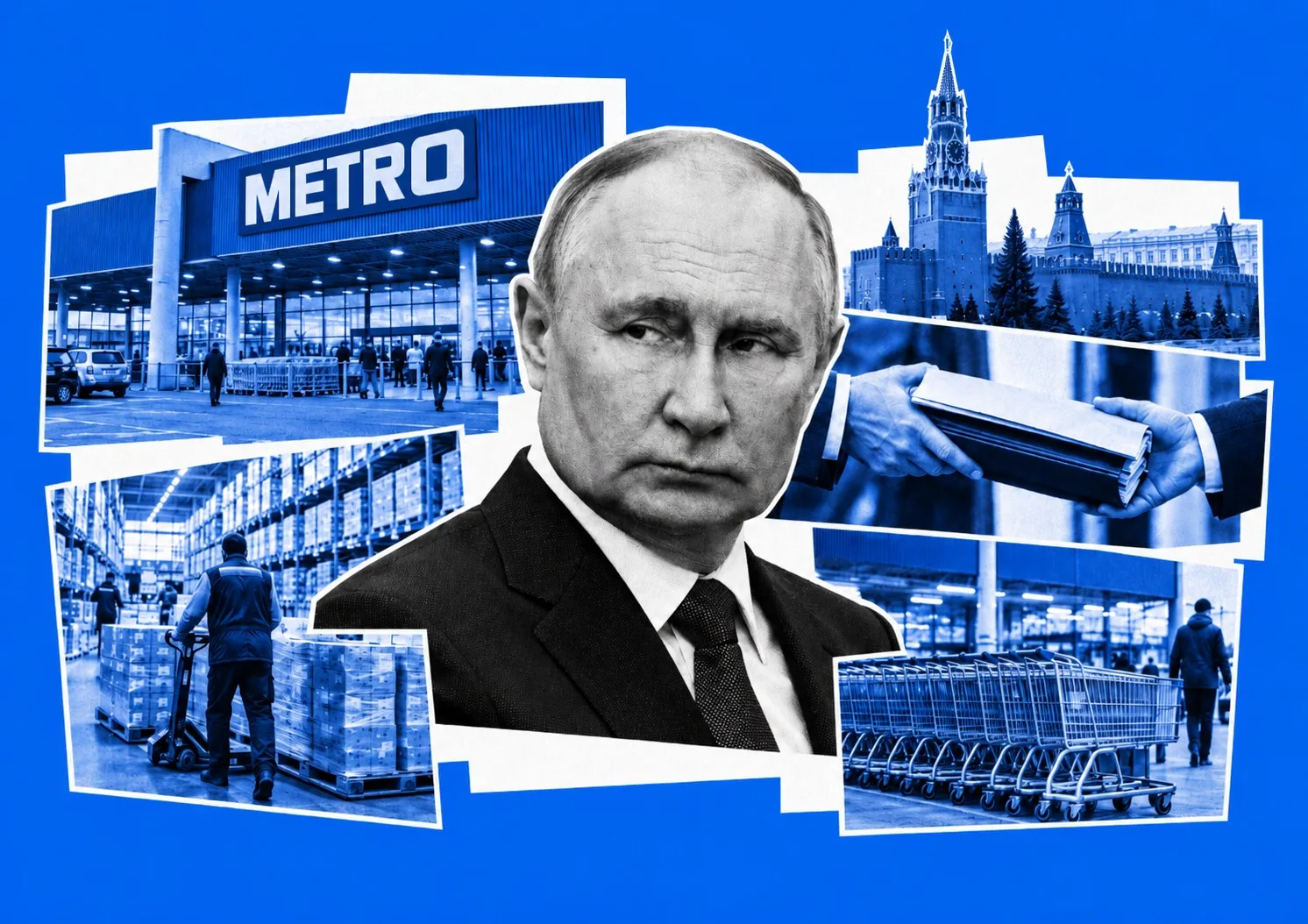
To the ordinary Russian shopper pushing a metal trolley down the tiled aisles of a Moscow wholesale depot, nothing looks out of the ordinary today. The shelves are packed, cashiers scan the usual barcodes, and the discount displays match last month's layout. Truth be told, the average buyer cares little about corporate registries. Yet behind this ordinary commercial facade, the Kremlin has just engineered a clean takeover of European corporate property on a scale not seen for decades. Plain and simple.
On September 28, 2026, Russian President Vladimir Putin signed a decree placing the Russian operations of German wholesaler Metro AG under temporary state management.
With a single signature, the legal ownership of Metro Warehouse Noginsk LLC and Retail Property 5 LLC was cut off from their Dutch and German parent structures.
Control shifted straight to Torg Rus LLC, a shell company registered in Russia just three weeks prior. Its sole recorded owner is Johannes Tolay, the executive who has run Metro's local operations since 2023.
At the same time, a parallel decree pushed through the rapid sale of Western Union's Russian subsidiary to a local firm called Softeks LLC.
For European corporate boardrooms from Frankfurt to Paris, the message is clear.
Moscow has moved past the opportunistic grabs of heavy industrial plants and energy installations.
The mass consumer retail sector—supermarkets, wholesale depots, and logistics networks once considered too vital to everyday civilian life to touch—is now fair game. Western commercial capital has been turned into political leverage.
This is no isolated bureaucratic glitch. It is the endpoint of a coordinated September sweep targeting the last remaining European consumer networks in Russia.
Eleven days earlier, a similar presidential decree scooped up a massive portfolio of French and Swiss assets in one go. The Russian arms of supermarket chain Auchan, food giant Nestlé, home improvement network Lemana PRO, and logistics firm FM Logistic were handed over to temporary management under a newly minted corporate shell named L.E.V. Management.
The Limits of Diplomacy
The diplomatic fallout was loud, fast, and ultimately toothless. By September 19, the French foreign ministry issued a public demand that Moscow reverse the Auchan takeover.
A week later in New York, as leaders gathered for the United Nations General Assembly, that friction bled into bilateral meetings, shadowing a tense encounter between Russian Foreign Minister Sergei Lavrov and his German counterpart, Johann Wadephul.
Mind you, protests from Paris and Berlin misunderstand the logic here. The Kremlin is not reacting blindly to Western sanctions out of mere annoyance.
It is building a repeatable pipeline for asset capture that penalises European capitals for their foreign policy, weaponising their own brands as retaliation. Doing business in Russia is now dictated entirely by wartime diplomacy, and old property guarantees have been replaced by presidential decrees.
The Architecture of Custodial Capture
The trick lies in the legal framing. The Kremlin avoids the old-fashioned term nationalisation, opting for the bureaucratic euphemism of temporary administration.
This is not the blunt-force state seizure of the past. Instead, the Russian government has perfected a model of custodially managed localisation.
By putting local executives—like Tolay stepping up via Torg Rus—in charge of these state-backed entities, the government achieves a neat double win. It keeps the shelves full and avoids panic buying, while stripping European parent companies of governance, strategy, and dividends.
Back in 2022, early interventions targeted critical infrastructure. German utility Uniper, Finnish energy group Fortum, Danish brewer Carlsberg, and French dairy maker Danone were hit with early iterations of this playbook.
Back then, retail and logistics networks were left alone, viewed as too complex and politically sensitive to mess with safely.
The September decrees shatter that assumption. By installing bespoke domestic management over Metro, Auchan, and Nestlé, the state has proven it can absorb complex retail logistics without triggering public unrest.
Metro's press service quickly put out a smooth statement confirming that local operations continue without disruption, stressing that obligations to suppliers, staff, and customers remain active.
Yet that reassurance highlights the paradox. The shops stay open, the supply chains function, and workers get paid. The catch is simply that the legitimate European owners have been locked out for good.
The Reckoning for Western Capital
For the corporate holdouts who chose to stay in Russia after 2022—justifying it with talk of duty to staff or basic food supply—the landscape offers a brutal reckoning. Ring-fencing local operations offered zero protection against state capture.
The complete decoupling of Western parent capital from local subsidiaries permanently dismantles three decades of European corporate integration into Eastern Europe.
The mechanics are effective. Because assets are placed under temporary management rather than formally expropriated overnight, parent companies are trapped in legal limbo. They cannot sell their stakes, pull out profits, or influence strategy.
The capital stays locked inside the Russian banking system, funding the wartime economy through taxes, redirected supply chains, and eventual sales to local buyers at knockdown prices, much like the Western Union transfer to Softeks LLC.
The strategic winners are clear. The Kremlin gains massive leverage over Germany, France, and the EU without sparking domestic pushback.
Local managers and new administrative shells gain control over commercial empires, inheriting billions in infrastructure and market share without spending a dime on capital expenditure.
The losses land squarely in the West. European multinationals face the total loss of operational control, triggering write-downs that will hit global valuations.
European governments watch their diplomatic leverage erode, knowing that whenever they announce new sanctions, the Kremlin can sign another decree, turning yet another European brand into a captive state asset while the physical cash flows straight to Moscow.