
Funding the War: Russia Targets Private Wealth in Major Tax Overhaul

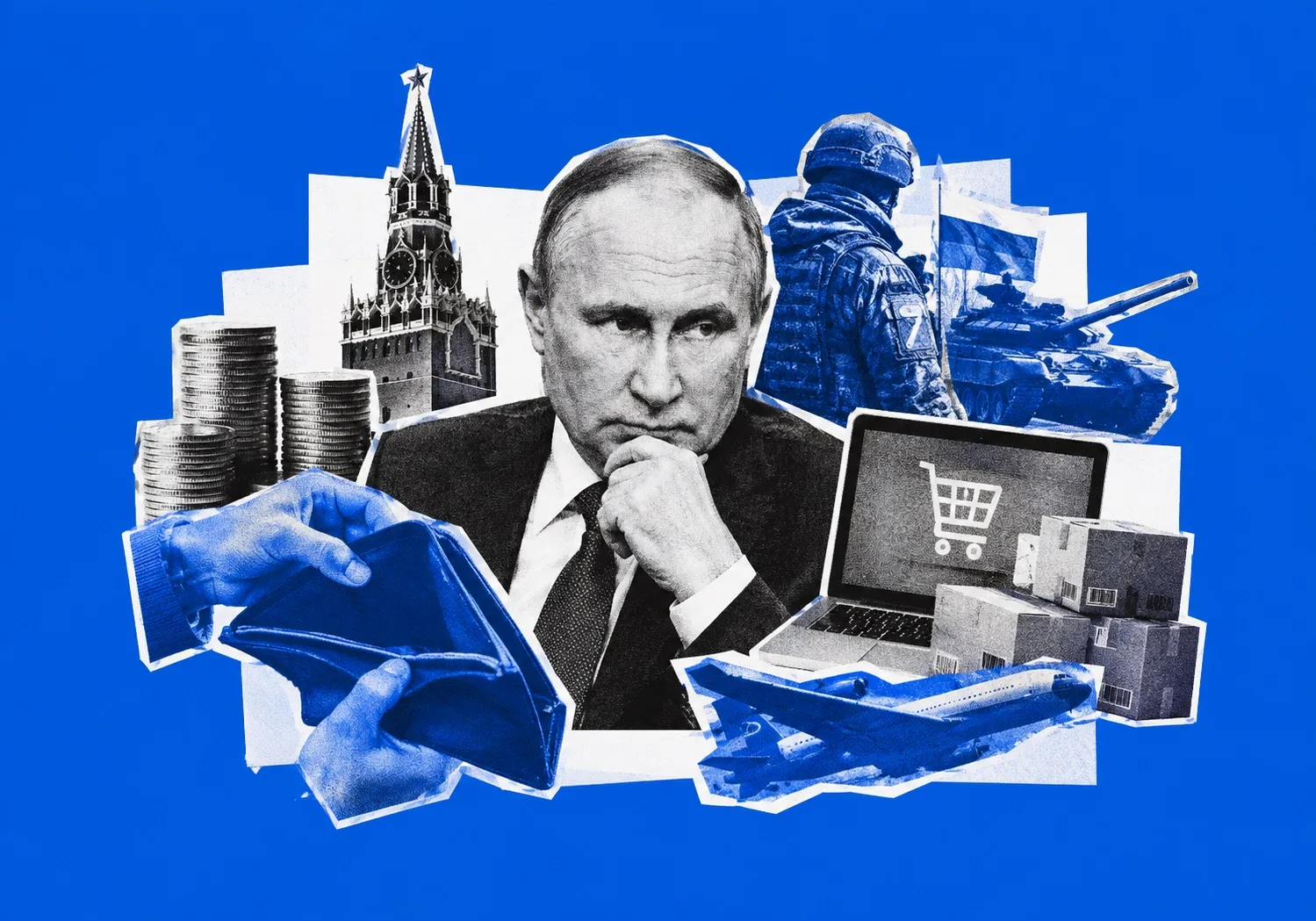
Facing a staggering budget deficit driven by military spending, Moscow is turning to its own citizens to finance the war in Ukraine. A sweeping tax package submitted by Russia’s Finance Ministry on September 24 introduces high progressive taxes on passive income and cross-border shopping - marking a permanent shift toward extracting domestic private wealth to sustain state expenditure.
The most consequential change concerns money that Russians earn without working for it.
From January 2027, dividends, bank interest, securities income, certain property transactions, insurance payouts and monetary gifts would be incorporated into the main progressive personal income tax base. Rates would range from 13% to 22%, with the highest rate applying to annual income above 50 million roubles. The Finance Ministry estimates that about 4 million people, or roughly 6% of PIT taxpayers, would be affected. Deposits below 1 million roubles and the income of military personnel participating in the war in Ukraine would remain exempt.
The significance lies less in the headline rate than in what is being brought into the tax net.
Russia introduced its five-tier progressive PIT system for active labour income in 2025. The latest proposal extends that logic to accumulated capital: savings, investments, property and other assets that can generate income without employment. That closes a distinction between taxing what people earn from work and taxing what they have accumulated.
It also comes after other fiscal measures. Standard VAT was raised to 22% from January 2026, while selected large companies have faced windfall taxes. For businesses, the government is proposing further changes in 2027, including a 15% corporate tax on passive income earned by mutual investment funds and higher mandatory social contributions for self-employed individual entrepreneurs.
The direction is consistent: fewer areas of private economic activity remain outside the reach of the state.
The consumer becomes part of the fiscal equation
The second major measure reaches Russians through the opposite end of the economy: everyday purchases.
The draft would impose 22% VAT on goods bought through foreign online marketplaces and delivered to Russia. Foreign digital platforms would become tax agents, responsible for collecting and transferring the tax to the Russian Federal Tax Service. A separate 100-rouble customs clearance fee would apply to individual postal packages worth up to €200.
That would effectively remove much of the advantage that Russian consumers have enjoyed from low-value cross-border purchases under the Eurasian Economic Union's personal import framework.
The economic effect is broader than a more expensive parcel from abroad. Foreign marketplaces such as AliExpress, Temu and Shein would lose part of their price advantage, while Russian platforms including Ozon, Wildberries and Yandex Market would operate behind a stronger competitive barrier. The measure therefore combines revenue collection with a reshaping of the domestic retail market.
For Moscow, that is an attractive combination. The state collects VAT while imported goods become less competitive against domestic sellers. Consumer demand that might previously have flowed directly to foreign platforms can be redirected towards Russian marketplaces.
The policy also puts foreign companies in a more complicated position. Platforms serving Russian customers would have to operate within a system in which they themselves become responsible for collecting tax for the Russian state. The briefing does not establish whether any major foreign platform will leave the market, but the new obligation creates an additional regulatory barrier to cross-border commerce.
A budget increasingly built around extraction
There is an important tension inside the 2027–2029 package.
The government is preserving or expanding substantial social commitments. Pensions are due to receive two rounds of indexation in 2027, while maternity capital and child benefits will rise. The budget also reserves large sums for family housing, schools, kindergartens and primary healthcare. Almost 2 trillion roubles is earmarked for technological leadership programmes, including 139 billion roubles for machine tools and unmanned aerial systems.
But defence and security remain explicit spending priorities, alongside support for war participants and their families.
The result is a fiscal model in which the state is simultaneously maintaining welfare commitments, funding strategic industrial programmes and sustaining wartime expenditure while broadening the sources of revenue available to it.
That matters because the traditional buffers are becoming less sufficient for the scale of the state's commitments. The deficit trajectory provides the clearest numerical indication. A 5.79 trillion-rouble deficit by early September, compared with a full-year target that had already been exceeded, sits uneasily alongside plans to keep annual deficits around 2% of GDP for the following three years.
The new taxes are part of the mechanism for making those projections workable.
The new dividing line
Perhaps the most politically revealing element is not the tax treatment of wealthy households, but the exemptions.
Military personnel participating in the war are explicitly protected from the new taxation of passive income. Small bank deposits are also shielded. Meanwhile, people with larger savings, investment portfolios, or property holdings are being brought further into the progressive system.
That creates a distinctive distributional structure. The financial burden of sustaining the state is not spread evenly across the population. A protected category sits alongside civilians whose accumulated capital and consumption are increasingly available to the tax authorities.
For the middle and upper-middle classes, the consequences are likely to be felt through several channels at once: lower net returns on deposits and dividends, greater taxation of certain property transactions, and higher prices for foreign consumer goods. The briefing estimates that cross-border purchases could become 20% to 27% more expensive, while the new passive-income regime would reduce the attractiveness of some conventional savings and investment strategies.
That could change behaviour even before it generates significant additional revenue. Savers may reconsider where they hold money. Investors may search for different instruments. Consumers may switch from foreign platforms to domestic marketplaces. The precise scale of these shifts remains uncertain, and the briefing provides no revenue estimate for the amount the government expects to collect from the 4 million affected asset holders.
But the policy direction is clear.
The end of the low-tax private economy
For years, Russia's fiscal model retained a significant distinction between the heavily taxed state economy and areas where private savings, consumption and investment could operate with relatively light taxation. The 2027 package attacks several of those remaining spaces simultaneously.
Bank interest is no longer treated as a largely separate source of income. Dividends and other investment returns enter the progressive PIT framework. Property transactions become part of the same broader tax logic. Foreign online shopping loses much of its previous tax advantage. Small entrepreneurs face tighter patent-regime thresholds and higher mandatory contributions.
This is not simply a matter of raising rates.
It is a change in what the Russian state considers taxable capacity.
The government's fiscal requirements are increasingly reaching into private balances accumulated before the current pressure on public finances emerged. Household capital, savings and consumption are becoming part of the mechanism through which the state finances its priorities.
That creates a structural question for the next phase of Russia's wartime economy: how much private wealth can be brought into the fiscal system before households begin changing where they save, invest and spend? The 2027 package does not answer that question. It does, however, show that Moscow is preparing to test the boundary.
Sources: Meduza, Anti Malware, The Moscow Times, The Insider, Banki