
Finland Orders Halt to Google’s €13bn AI Data Centre Expansion Over Environmental Breach

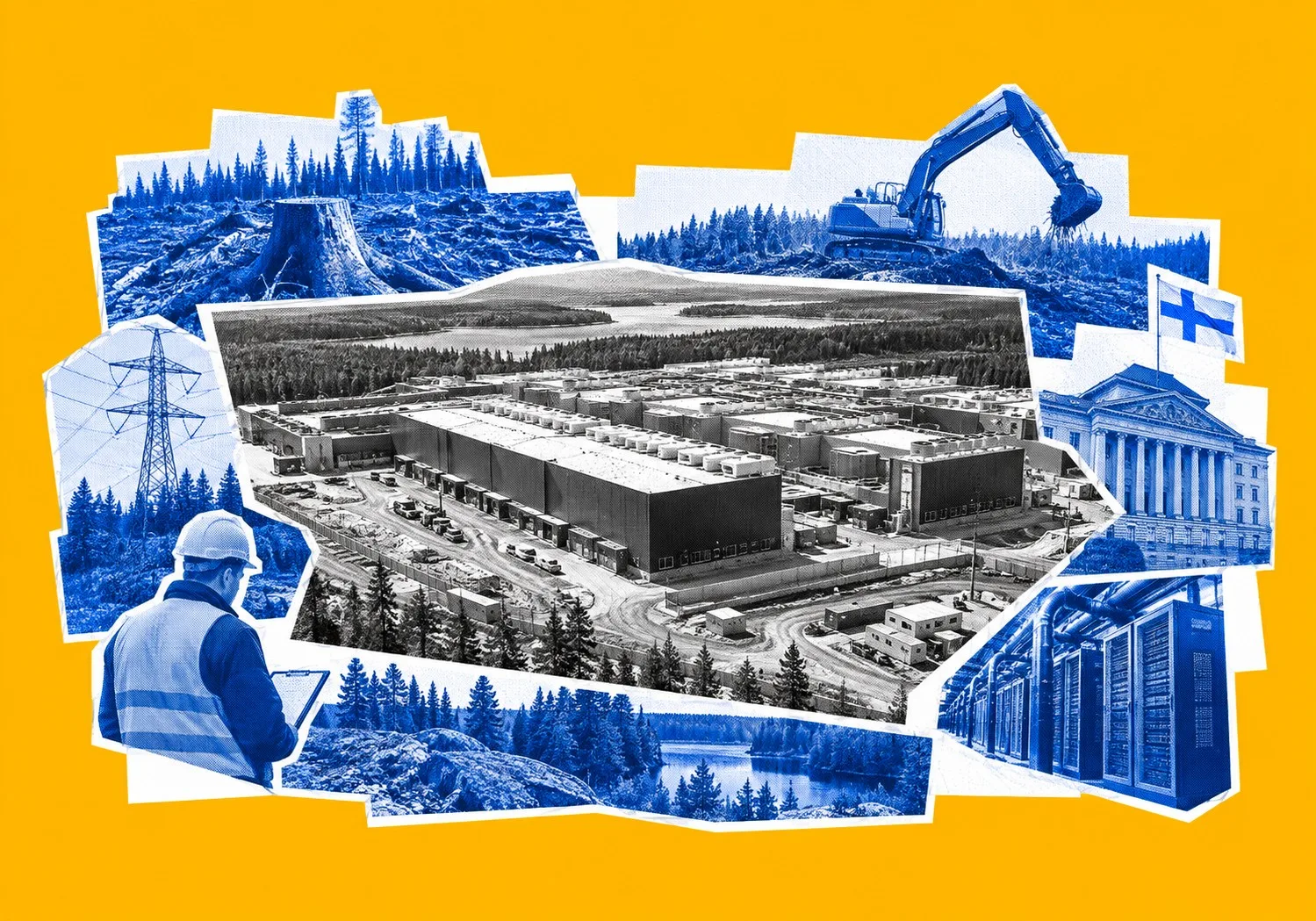
Finland’s environmental authority has ordered Google to immediately suspend site preparation for its flagship €13 billion AI data centre expansion after contractors clear-cut over 300 hectares of forest without mandatory environmental impact assessments. The forced halt in Muhos and Kajaani impacts the US tech company's infrastructure deployment in Europe. The state watchdog, the LVV, set an October 23 deadline for Google’s local entity, Tuike Finland, to turn off all heavy machinery, giving the developer until October 14 to submit a formal explanation of why hundreds of hectares of pine forest were clear-cut before statutory approvals were in place.
The regulatory intervention follows evidence that contractors clear-cut over 300 hectares of pine forest without completing mandatory Environmental Impact Assessments (EIA). Inspecting officers documented that ground crews had stripped upper soil layers, altered natural drainage channels, created unpermitted access tracks, and constructed heavy vehicle pathways toward regional high-voltage transmission lines before formal land-use permissions had been finalized.
Environmental Breach and Regulatory Intervention
The regulatory action was triggered by a formal legal petition submitted by the Finnish Association for Nature Conservation. Environmental inspectors and conservation officers reviewed high-resolution satellite imagery alongside municipal land surveys, establishing that logging operations had extended beyond standard timber zones and directly encroached upon protected habitat buffer zones.
Hanna Halmeenpää, chair of the board of the Finnish Association for Nature Conservation, who filed the request with the agency, commented on the situation directly from the site. "In our view, operations at this construction site should be suspended until it is clarified whether the project is in compliance with the law," Halmeenpää told AFP at the edge of the deforested area. "From the satellite images, we've seen that nature sites which should be preserved have also been logged," she added, explaining that the size of the clear-cut area was comparable to 420 football fields.
Field checks conducted by regional environmental officers confirmed that topsoil removal had disrupted natural watershed drainage, altering local water runoff patterns toward nearby natural watercourses. Forestry officials noted that while the felled timber comprised mature pine stands historically managed under standard commercial timber rotations, executing physical land clearance at this scale without an approved EIA violates the Finnish Land Use and Building Act.
In response to the regulatory findings, the LVV issued a binding administrative directive specifying two key statutory deadlines:
- October 14, 2026: Deadline for Tuike Finland to submit a formal written statement explaining why heavy land-clearing operations took place prior to obtaining required EIA approvals.
- October 23, 2026: Mandatory deadline by which all heavy machinery, earthmoving equipment, and site preparation operations must fully cease.
Environment Minister Sari Multala confirmed that statutory land-use rules had been violated, stating that administrative enforcement actions were necessary and acknowledging that overall project timelines will face substantial delays as a result.
Corporate Response and Project History
Google established its operational presence in Finland in 2009 by purchasing and converting a former paper mill in the southern coastal city of Hamina into a major server facility. In September 2026, the company officially announced a comprehensive €13 billion expansion strategy designed to deploy advanced computing infrastructure over two years across four strategic municipalities: Hamina, Kajaani, Vaala, and Muhos.
According to economic impact projections commissioned and published by Google, the €13 billion investment framework is estimated to contribute €3.6 billion annually to Finnish gross domestic product. The enterprise projections outline a workforce requirement of 16,000 temporary construction jobs during the civil engineering phase, alongside the creation of 7,000 long-term technical and operational positions once the facilities become fully operational.
In response to the filing and the agency's order, Google outlined its position on the forestry works. Google told AFP in an email that "tree felling activities have been taking place in compliance with Forestry Act requirements" and they "were awaiting further guidance from LVV on this matter."
Sondre Ronander, communications manager for Google in Finland, detailed the preliminary environmental steps taken prior to the suspension. "We have conducted extensive nature surveys covering the entire area as part of the zoning and Environmental Impact Assessment processes, to ensure high-value nature zones within the sites have been protected during forestry works," said Ronander, promising compliance alongside a 130-hectare replanting scheme in Muhos.
Tuike Finland had initially proceeded with timber harvesting under basic commercial forestry notifications rather than waiting for the multi-stage EIA clearance required for major industrial development. Following the LVV directive, corporate representatives acknowledged the regulatory oversight and confirmed full compliance with the stop-work order.
Local Impacts and Infrastructure Demands
In Muhos, a rural municipality with a population of under 9,000, local administration and residents originally evaluated the project proposal through the lens of economic development. Mayor Kimmo Hinno and municipal council members noted that the arrival of large-scale technology infrastructure promised local business revenue, increased municipal tax receipts, and direct employment opportunities.
Local residents expressed cautious support contingent on legal adherence.
Following the arrival of heavy civil contractors, community focus shifted toward ecological and infrastructure impacts. Municipal representatives in Muhos held public information sessions where residents submitted formal inquiries regarding groundwater table protection, noise pollution from continuous cooling units, and potential impacts on local agricultural drainage.
Regional energy utilities and grid operators are evaluating the structural requirements necessary to supply continuous baseload power to the planned facilities.
Data centers require uninterrupted electricity supplies, prompting the national transmission system operator, Fingrid, to evaluate connection applications. Fingrid stated that formal grid connection agreements require developers to satisfy all statutory planning, environmental, and technical standards. Regional utility managers noted that power requirements for hyperscale data centers will necessitate building dedicated high-voltage substations and expanding local transmission lines.
Statutory Procedures and Regulatory Framework
The regulatory oversight of the proposed expansion involves three separate administrative bodies operating under Finnish administrative law:
- The Regional ELY Centre: Responsible for overseeing economic development, environmental protection, and regional land management.
- The Municipal Planning Boards: Local authorities in Muhos, Kajaani, Vaala, and Hamina responsible for local zoning, building permits, and municipal infrastructure connections.
- The Ministry of the Environment & LVV: The central supervisory authority responsible for enforcing national environmental legislation, land-use regulations, and compliance oversight.
Under Finnish law, the Environmental Impact Assessment process requires comprehensive scientific evaluations, including detailed studies on noise pollution, industrial cooling water extraction and discharge, local flora and fauna protection, and power grid capacity.
Once drafted, the EIA documentation must be published for a mandatory 60-day public review period.
During this window, private citizens, civic groups, municipal agencies, and non-governmental organizations may file formal objections or technical feedback. The developer must address all registered concerns before regional authorities can issue final environmental permits.
Ministry of the Environment officials confirmed that the stop-work order will remain active until Tuike Finland submits full EIA documentation and receives formal administrative clearance. Administrative experts indicate that technical evaluations of this scale typically require several months to complete.
Political and Economic Context in Helsinki
The regulatory conflict occurs during a challenging economic period for Prime Minister Petteri Orpo’s coalition government, which is navigating high national unemployment rates and low domestic GDP growth. The Orpo administration had positioned foreign direct investment in digital infrastructure as a central component of its national economic growth plan, highlighting earlier commitments from international technology firms including Google, Microsoft, and TikTok.
Political scrutiny has intensified ahead of the upcoming parliamentary elections scheduled for April.
Opposition leaders from the Green League and the Left Alliance submitted formal parliamentary inquiries to the Ministry of the Environment requesting exact timelines of site inspections, logging notifications, and regulatory communications concerning the Muhos and Kajaani developments.
Concurrently, public reaction to industrial energy consumption led to a rapid civic petition drive.
A citizen-led petition demanding statutory limits on power allocations for data centers, stricter environmental compliance thresholds, and mandatory developer funding for public grid upgrades gathered more than 50,000 validated signatures in three days. Under constitutional rules, reaching the 50,000-signature threshold mandates that the proposal be formally submitted to parliament for legislative debate.
The parliamentary secretariat confirmed the registration of the petition, which will be forwarded to the Parliamentary Committee on the Environment. Committee procedures require public hearings featuring testimony from environmental law experts, energy analysts, utility representatives, municipal officers, and industry stakeholders before a formal legislative recommendation is presented to the full assembly.
Energy Authority statistics show that industrial data center power consumption has grown steadily as a percentage of Finland's national energy demand.
Grid operators estimate that planned hyperscale facility expansions will require several additional terawatt-hours of generating capacity annually.
The Ministry of Climate and the Environment is evaluating whether current national renewable energy production can absorb this additional industrial demand without compromising Finland’s binding international carbon reduction targets.
While municipal finance records demonstrate that data facilities contribute to local budgets through property taxes and corporate tax allocations, councilors in smaller municipalities have raised concerns regarding municipal expenditure required for surrounding road reinforcements, water infrastructure capacity, and specialized emergency response equipment.
The Ministry of Employment and the Economy confirmed that while international technology investments represent a major share of planned industrial capital expenditure in Northern Finland for the 2026–2028 period, all foreign direct investment projects remain strictly subject to standard national statutory approval procedures.