
Europe’s Night Trains Get a Modular Redesign

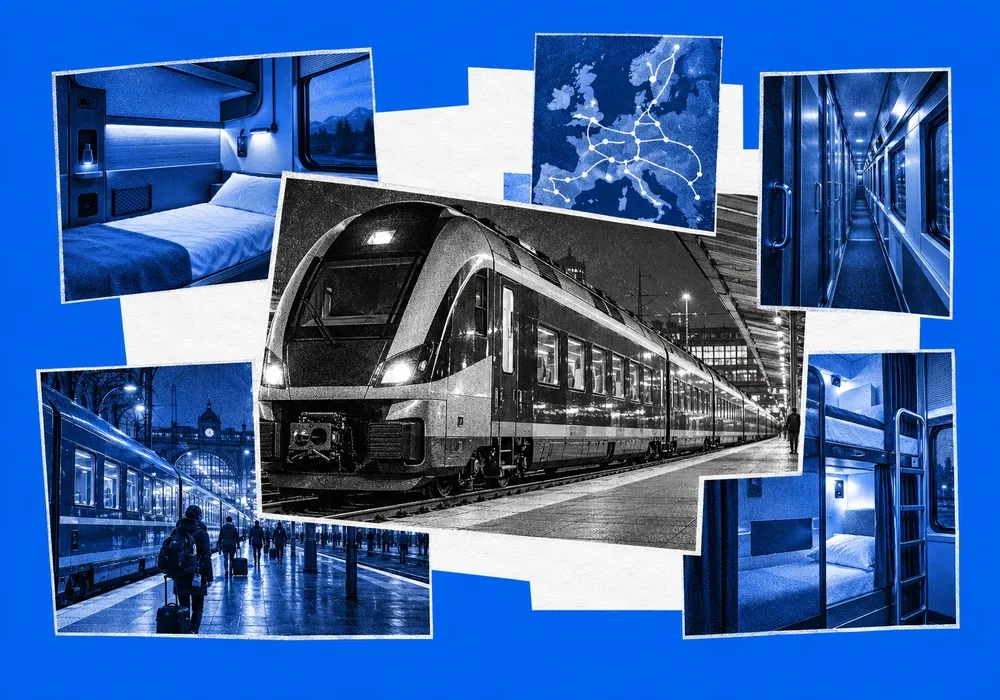
A German-led research project has presented ALISA, a modular double-decker night-train concept designed to increase capacity, improve rolling-stock utilisation and offer flexible passenger accommodation. The project is exploring a new model for overnight rail as Europe seeks to expand international night-train services.
A German-led research project has presented a new concept for Europe’s night trains, designed to combine higher passenger capacity with greater flexibility and more efficient use of rolling stock. The ALISA project, presented at InnoTrans 2026 in Berlin, proposes a lightweight double-decker train with modular interiors that can be adapted to different passenger and route requirements. The concept is intended to address some of the structural challenges that have limited the expansion of overnight rail in Europe, including high operating costs, limited capacity and the intensive use of specialised sleeper carriages.
The project was developed by the German Aerospace Center (DLR) together with TRICON, GETA, satek and k+v. Its basic formation consists of three permanently coupled double-decker carriages with a total length of around 46 metres. Several such units could be coupled together, allowing operators to adjust the length of a train depending on demand, route characteristics or season. The project is currently a research concept rather than a production-ready train, with the partners presenting models and full-scale interior sections to demonstrate the proposed architecture.
A different approach to night-train economics
One of the main objectives of ALISA is to improve the economics of overnight rail by increasing the amount of capacity that can be provided within the available loading gauge and axle-load limits. DLR says the concept could accommodate around 40% more passengers than the latest generation of ÖBB Nightjet trains while maintaining the same axle load. The comparison is part of the project's research assessment and does not represent a confirmed specification for a future commercial train.
The focus on capacity reflects one of the fundamental challenges facing European sleeper services. Sleeping compartments require considerably more space per passenger than conventional daytime seating, while sleeper trains traditionally operate primarily during the night and spend a substantial part of the day either stationary or being prepared for another service. ALISA seeks to address both problems by combining more compact use of space with interiors that can be converted between different modes of operation.
The project therefore treats the night train not simply as a collection of sleeping cars but as a flexible passenger platform. Different sections could accommodate conventional seats, reclining sleeper seats, private cabins or family compartments, while some spaces could be adapted for passengers with reduced mobility. This would allow operators to change the balance between different types of accommodation according to the characteristics of individual routes.
Double-decker architecture and modular interiors
The use of two passenger decks is central to the concept because it creates additional capacity without requiring a longer train. At the same time, the design has to overcome the technical limitations created by Europe's different railway loading gauges and infrastructure standards. DLR has therefore developed a lightweight vehicle structure and a single-wheel running gear intended to make more efficient use of the available space.
The proposed trains would also have a continuous passenger passage through both levels. This is intended to improve movement inside the train while allowing the available floor area to be used more efficiently. The three-car units could then be combined into longer formations, giving operators a modular system rather than requiring a separate train design for every route.
The modular principle also applies to the passenger compartments. The proposed interior includes several accommodation types, ranging from standard seating and reclining arrangements to single and double cabins, family compartments and spaces adapted for passengers with reduced mobility. Instead of operating a uniform train configuration across an entire network, operators could potentially adjust the composition of the train to the expected demand on a particular service.
Lightweight construction is a key part of the design
A double-decker train with private sleeping compartments would normally require additional structural material and therefore additional weight. ALISA consequently places considerable emphasis on lightweight construction, with researchers redesigning the load-bearing structure so that material is concentrated in areas exposed to greater forces while less critical sections can be made lighter.
The project has also examined multi-material construction, including sandwich structures using aluminium outer layers combined with lightweight honeycomb cores. Elements such as cable ducts and interior fittings can be integrated into the structural design rather than being added as separate components. The aim is to reduce vehicle weight while retaining the strength and safety characteristics required for passenger rail.
Reducing weight could have implications beyond the design of the vehicle itself. Lower mass can affect energy consumption, axle loads and the ability to operate a high-capacity train within existing infrastructure constraints. For a European sleeper network that would have to operate across several national rail systems, these factors are particularly relevant.
From sleeping accommodation to daytime use
Another element of the ALISA concept is the possibility of using parts of the train differently during the day. Some sleeping areas are designed around conversion mechanisms that allow them to be transformed into seating arrangements. This would allow the same rolling stock to support more than one type of service instead of being dedicated almost exclusively to overnight travel.
The approach is intended to improve the utilisation of expensive rolling stock. Traditional sleeper cars spend much of their operating cycle providing accommodation for passengers during a relatively limited part of the day, whereas daytime intercity trains can generate passenger capacity over a much longer period. ALISA's researchers are exploring whether a more flexible interior could narrow this difference without eliminating the privacy and comfort expected from overnight travel.
The project used virtual-reality tools and full-scale mock-ups to test the proposed arrangements before the development of a complete train. The partners examined different cabin layouts, passenger flows and interior configurations, with the objective of combining increased capacity with a level of comfort suitable for overnight journeys.
A potential model for Europe's expanding night-train network
The ALISA project comes as European interest in overnight rail has increased, with operators expanding or restoring international night-train connections in response to demand for alternatives to short-haul aviation. However, the expansion of such services depends not only on passenger demand but also on the availability of suitable rolling stock, infrastructure capacity and commercially viable operating models.
ALISA addresses primarily the rolling-stock challenge. Its modular architecture could allow operators to increase or reduce train capacity without developing entirely different vehicles for different routes. A high-demand international connection could use several three-car units, while a lower-demand or seasonal route could operate with a shorter formation.
The concept also attempts to address the tension between passenger privacy and economic efficiency. Private cabins provide a substantially different product from conventional rail seating, but they also occupy more space per passenger. By combining different accommodation types within one modular system, ALISA seeks to give operators greater flexibility in determining how much space is devoted to each category.
From research concept to commercial train
ALISA is not yet a commercial train and there is no indication that the proposed design will enter passenger service in its current form. The project partners are presenting a 1:10 model of the complete three-car unit together with full-scale sections of selected compartments and a virtual-reality demonstration. Further engineering, certification, financing and industrial development would be required before such a concept could become operational rolling stock.
The project nevertheless illustrates how European rail research is approaching the next generation of overnight services. Rather than simply reproducing traditional sleeper-car layouts, ALISA combines higher capacity, lightweight construction, modular train formations and convertible interiors in an attempt to improve the economics of night travel.
If elements of the design eventually reach commercial production, the approach could provide European operators with a more adaptable type of rolling stock for international overnight services. For now, ALISA remains a research project, but its focus reflects a broader shift in European rail towards trains that can be configured around demand rather than built around a single fixed operating model.
Sources: German Aerospace Center (DLR), Railway Gazette