
Austria Launches Joint Tender for New Narrow-Gauge Train Fleets

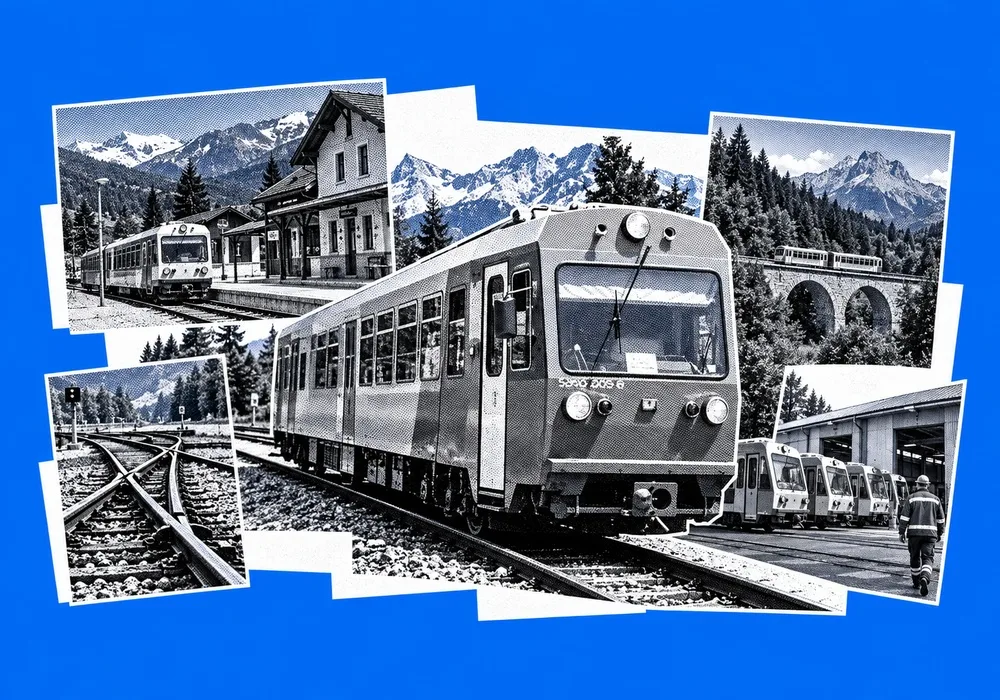
Austria's Tyrol, Salzburg and Styria regions are launching a joint tender for around 19 electric and battery-electric trains for three narrow-gauge railways, combining procurement to reduce costs and support the transition away from diesel operation.
Austria’s Tyrol, Salzburg and Styria regions are joining forces to procure new electric and battery-electric trains for three narrow-gauge railway networks, combining their orders to reduce procurement and maintenance costs. The joint tender covers the Zillertalbahn, Pinzgauer Lokalbahn and Murtalbahn and is intended to support their transition away from diesel operation.
The procurement is part of a wider modernisation programme for rural railways, with the Austrian federal government increasing funding available for private rail infrastructure from 2027. The three regional governments have aligned their technical requirements and are preparing a common tender rather than purchasing the small fleets separately.
Three railways, one procurement
The Zillertalbahn in Tyrol, the Pinzgauer Lokalbahn in Salzburg and the Murtalbahn in Styria operate relatively small regional networks but play an important role in commuting and tourism. Their infrastructure and rolling stock have historically relied heavily on diesel traction, making fleet renewal increasingly difficult because of the limited market for specialised narrow-gauge trains.
The Murtalbahn illustrates the problem particularly clearly. Its track gauge is 760 mm, a relatively uncommon standard in Europe, while the railway operates a comparatively small fleet. Styria has said that this combination leaves little commercial incentive for manufacturers to develop or supply vehicles through a standalone procurement process. Pooling demand with the other two railways creates a larger order and allows the operators to standardise parts of the procurement and maintenance arrangements.
The three railways are expected to procure around 19 new trainsets: six for the Zillertalbahn, eight for the Pinzgauer Lokalbahn and five for the Murtalbahn. The joint procurement is designed to generate savings both at the point of purchase and throughout the vehicles' operating lives.
From diesel to electric and battery operation
The procurement is closely linked to the electrification of the three networks. The planned fleets will use electric or battery-hybrid propulsion, allowing the railways to move away from conventional diesel traction while accommodating the different infrastructure conditions of the three lines.
For the Zillertalbahn, the target is to have the new battery-hybrid trains in operation by 2030. The Murtalbahn will follow later, with its new trains expected from 2033. The transition requires not only rolling stock but also investment in electrification, depots, workshops and other railway infrastructure.
The Murtalbahn project also includes infrastructure upgrades intended to improve operating performance. The planned modernisation is expected to reduce the journey time between Unzmarkt and Murau from 36 minutes to 24 minutes, strengthening the railway's role in regional mobility.
Federal funding expands the programme
The joint procurement has been enabled in part by additional federal support. Austria's Medium-Term Investment Programme for Private Railways is being expanded under the 2027/2028 budget framework, with an additional €25 million a year available from 2027. This brings the programme's total annual funding to around €114 million.
The federal government will also provide funding for the purchase of the new electrically operated vehicles, allowing the three regions to proceed with the tender. The broader financing package is intended to cover the infrastructure work required for the shift from diesel to electric and battery-based operation.
For the regions, the approach addresses two constraints at the same time: the high cost of modernising relatively small railway systems and the limited availability of specialised narrow-gauge rolling stock. Instead of treating each railway as a separate market, the authorities are using a larger combined order to improve the economics of the transition.
A wider test for rural rail modernisation
The Austrian programme goes beyond replacing ageing trains. The three railway networks serve areas where railways are used both for everyday commuting and tourism, making their continued operation relevant to regional economic activity as well as public transport.
The federal mobility ministry expects the investment to create work for rail manufacturers, infrastructure companies and regional construction firms over several years. The government also links the conversion to broader transport decarbonisation efforts, while the regions see the new fleets as a way of maintaining reliable public transport outside Austria's major urban centres.
The joint tender therefore reflects a broader procurement model for smaller European railway systems. Where individual regional operators lack sufficient demand to support a competitive market for specialised vehicles, coordinated purchasing can create a larger order without requiring the networks themselves to be merged.
For Austria's narrow-gauge railways, the immediate objective is to secure new rolling stock. The longer-term challenge will be to complete the infrastructure upgrades on schedule and ensure that the new electric and battery trains can deliver the promised improvements in reliability, capacity and journey times.
Sources: Austria's Federal Ministry for Innovation, Mobility and Infrastructure, Railway Gazette, ORF Tirol