
EU Nears Deal on Alisher Usmanov Sanctions After French Deadlock

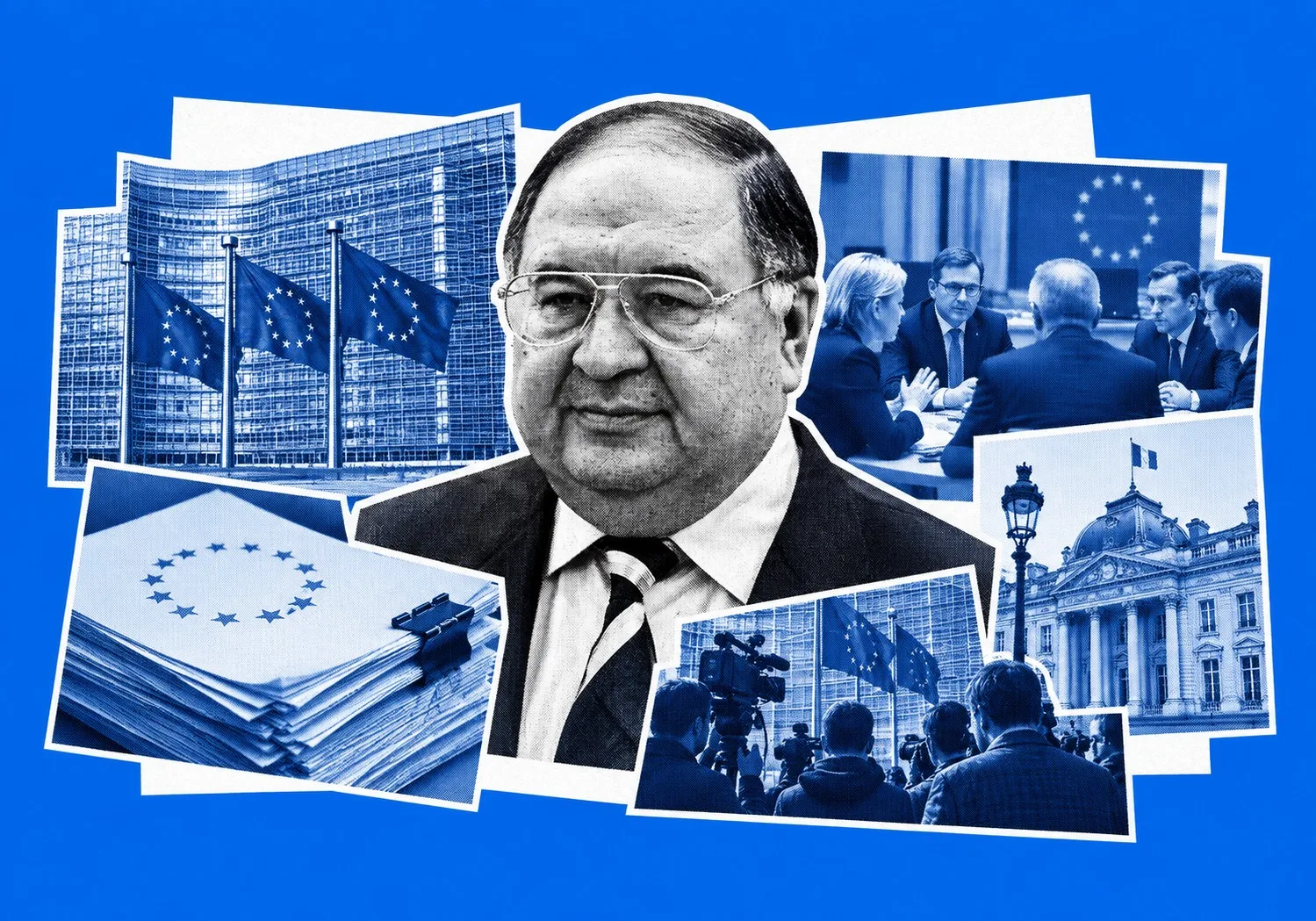
European Union ambassadors scrambled into an emergency, stop-gap renewal of the bloc's restrictive measures last week. The rush was designed to avert an accidental expiration of the entire Russian sanctions regime, a catastrophic outcome that would have handed Moscow an unearned propaganda victory. Paris forced the delay with a blunt diplomatic veto, demanding an immediate carve-out for Russian-Uzbek billionaire Alisher Usmanov. Continental heavyweights like Germany and Italy indicated a willingness to swallow the bitter pill of a compromise—keeping Usmanov’s name on the ledger while stripping away his asset freezes and travel ban. A vocal coalition of member states rejected the move outright, setting off a bitter procedural war behind closed doors.
The standoff exposed deep administrative fractures hiding beneath Brussels' public veneer of unbreakable unity. The standard six-month renewal process is normally a frictionless bureaucratic exercise among the twenty-tries member states, handled smoothly by the Committee of Permanent Representatives (Coreper). France broke that rhythm entirely, plunging diplomats into tense, marathon sessions that stretched long past midnight. The European External Action Service and the rotating presidency were forced to cobble together a messy, legally dubious workaround just to keep the broader package legally intact while political horse-trading continued in the background.
Hostage Diplomacy in the South Caucasus
To understand how a routine sanctions renewal turned toxic, one must look away from the glass-and-steel architecture of Brussels to the volatile, transaction-driven politics of the South Caucasus. Alisher Usmanov, a prominent metals and mining magnate with deep historical and financial ties to the Russian state, has long anchored the EU's asset-freeze regime. His industrial footprint spans steel production, telecommunications, and offshore holding structures, making him a prime target of the initial wave of economic statecraft deployed by the bloc following the 2022 invasion.
Paris decided to spend its political capital on him for one specific reason: backchannel negotiations with Baku. Azerbaijan applied heavy political pressure on behalf of the billionaire, leveraging its position as a critical energy supplier and regional power broker. In exchange, the Elysée Palace viewed Usmanov’s rehabilitation as a necessary, non-negotiable bargaining chip required to secure the liberation of several French citizens imprisoned in Azerbaijan. Most notable among them is Martin Ryan, a French businessman who was sentenced to a decade behind bars on politically charged espionage charges.
This transactional pivot stunned other European capitals. EU sanctions were originally built on objective, transparent criteria tied directly to violations of international law and Ukraine’s territorial integrity. Using the bloc's premier geopolitical deterrent as leverage in bilateral consular disputes reduces sophisticated European foreign policy to a bazaar of national self-interest.
Slovakia had already injected traditional skepticism regarding broad economic penalties into the Council, opening the door to institutional dissent. Yet, while Bratislava’s objections stemmed from routine political reservations, Paris introduced an entirely different, highly volatile variable: bilateral hostage diplomacy. The resulting compromise—retaining a sanitized version of Usmanov’s listing while neutering its financial penalties—sought an impossible balance. It offered a pragmatic escape hatch to avoid a public collapse of the regime, but it hollowed out the enforcement mechanism itself, reducing a pillar of deterrence to empty administrative theater.
The Threat to the Sanctions Architecture
The fallout from this manoeuvre extends far beyond the immediate fate of a single oligarch. For four years, the European Union has staked its geopolitical credibility on the premise that its economic warfare against the Kremlin follows objective, predictable criteria. Using the bloc's premier deterrent as leverage in bilateral consular disputes converts multilateral foreign policy into an unpredictable transactional scramble.
If sovereign member states can punch strategic holes in the sanctions wall simply to retrieve imprisoned nationals, collective European deterrence crumbles. It signals to Moscow, to the Global South, and to domestic skeptics that European solidarity is ultimately negotiable, giving economic pressure a transactional price tag.
This erosion of principle invites opportunistic third-party states to exploit foreign nationals as diplomatic hostages, entirely confident that such tactics can successfully force carve-outs from the world's largest trading bloc. The long-term security implications of incentivizing state-level hostage-taking are severe, undermining decades of diplomatic norms.
Pandora’s Box in Luxembourg
Beyond the immediate diplomatic fallout, the compromise invites immediate, devastating judicial blowback inside European courtrooms. For years, Russia’s super-rich have waged an exceptionally well-funded legal war against the European Commission, flooding the EU General Court in Luxembourg with complex appeals seeking to overturn asset freezes and travel restrictions. Legal teams representing sanctioned elites have consistently argued before the judges that listings are politically motivated, arbitrary, and lack sufficient individualized evidence. Up to this point, the European judiciary has largely resisted these arguments by affirming that restrictive measures serve a coherent foreign policy mandate based on objective criteria.
Granting a political exemption to Usmanov introduces a fatal vulnerability into that judicial defense line. Consistency is the absolute bedrock of administrative law. Once the European Union officially acknowledges that political expediency, bilateral pressure, or hostage diplomacy can successfully override statutory asset freezes, defense lawyers representing dozens of Russian billionaires will march into Luxembourg armed with undeniable evidence of arbitrary enforcement.
The core principle of equal treatment under European law would be weaponized against the very institutions trying to uphold it. Judges in Luxembourg would find it exceptionally difficult to dismiss claims of political bias when the Council itself demonstrates that sanctions compliance is negotiable for the right diplomatic price. A single political exception risks unwinding years of painstaking legal victories in the European courts.
A Crossroads for European Unity
As ambassadors reconvene to finalize the ultimate terms of the sanctions renewal, the European Union faces a stark, uncomfortable choice. The proposed workaround is an evasive maneuver designed to paper over deep structural cracks with diplomatic ambiguity, kicking the political crisis down the road at the expense of institutional integrity.
If Brussels ultimately capitulates to French demands, the victory will be profoundly pyrrhic. It risks transforming the bloc’s most potent geopolitical deterrent into a fragmented patchwork of national exemptions—proving beyond a doubt that when the raw pressures of realpolitik knock loudly on the door, the rule of law is too often the first thing packed away.
Sources: Euronews, EuObserver, Financial Times