
EU Maintains Arctic Oil and Gas Drilling Ban Despite Allies’ Pressure, Says Commissioner Síkela

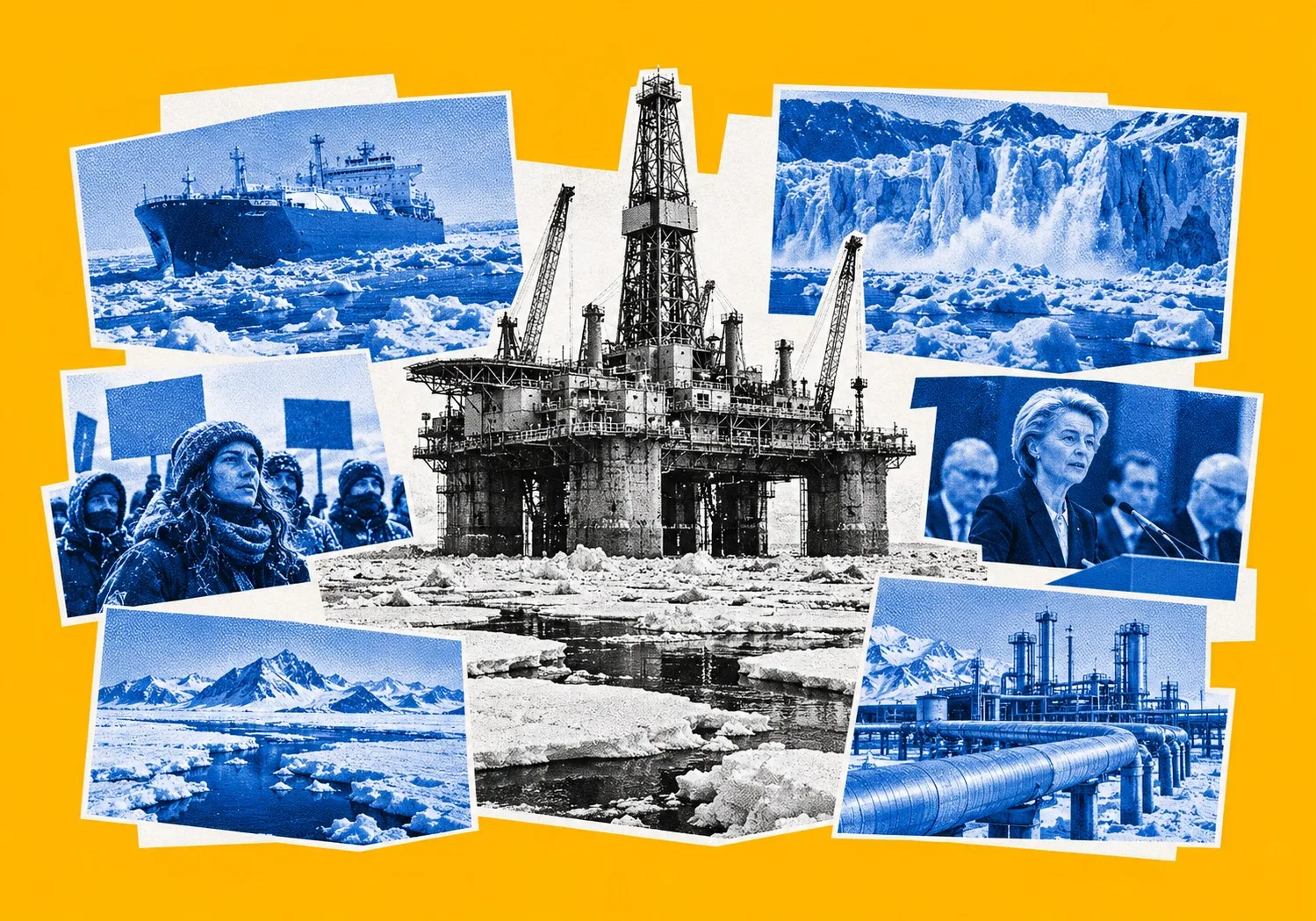
The European Union will maintain its strict opposition to oil and gas drilling in the Arctic despite opposing policies from Norway and the US, European Commissioner Jozef Síkela confirmed following the launch of the EU’s updated Arctic Strategy. Speaking following the presentation of the updated strategy alongside EU foreign policy chief Kaja Kallas, Commissioner for International Partnerships Jozef Síkela reiterated the bloc’s fundamental baseline that fossil fuels in fragile polar ecosystems must remain untapped. "Due to its specific vulnerabilities, the Commission will work with partners to protect the Arctic environment and prevent all hydrocarbon reserve developments that pose a threat to the Arctic ecosystem," the official strategy document explicitly states, reinforcing Brussels' stance that "oil, coal and gas stay in the ground, including in Arctic regions."
Yet, behind the Commission's firm public declarations lies a growing diplomatic fault line with its closest allies—and a subtle recalibration of its own legal ambitions.
While Síkela’s comments highlight an uncompromising normative line, the EU's actual strategy document quietly dropped a key promise from its previous 2021 framework.
Five years ago, Brussels formally committed to work towards "a multilateral legal obligation not to allow any further hydrocarbon reserve development in the Arctic or contiguous regions" or buy any products derived from such projects.
Explaining why that binding pledge was removed, a senior EU official acknowledged the stark geopolitical realities currently reshaping the far north: "The world is changing there and it is harder — five years into this — to get to that kind of multilateral decision-making given the positions of various players."
The Allied Pushback
This collision between Brussels' environmental position and the strategic priorities of its transatlantic partners is nowhere more evident than in Oslo and Washington.
Norway, which has emerged as Europe’s most vital pipeline gas supplier following the European Union's strategic decoupling from Russian state energy, has explicitly called on the EU to drop its opposition to new Arctic drilling.
With mature offshore basins in decline, Norwegian hydrocarbon production is projected to drop precipitously in the 2030s unless major energy groups, such as state-backed Equinor, make new commercial discoveries outside traditional, mature operating areas.
Oslo’s argument is rooted in immediate energy security: if Western Europe expects Norway to maintain its position as a reliable long-term energy supplier, it cannot simultaneously outlaw the exploration required to replace dying fields.
The Transatlantic Divide
The position of the United States has similarly diverged from the EU's restrictive vision.
As Washington and Moscow both eye the strategic and economic opening of polar sea lanes and northern resource corridors, the prospect of a binding global consensus to freeze resource extraction has effectively evaporated.
Nevertheless, the EU's insistence on holding its line has drawn strong support from regional environmental groups and a coalition of Nordic nations.
A Nordic coalition has actively called on the EU to uphold its Arctic oil and gas drilling ban, arguing that any retreat would shatter international climate leadership and accelerate polar ecological breakdown.
War, Prices, and Pragmatism
The EU's internal debate over Arctic reserves is taking place against the backdrop of acute global market turbulence. The ongoing war in Iran has sent shockwaves through global energy markets, driving up crude oil and natural gas prices and reinforcing the vulnerability of European economies to external commodity spikes.
This geopolitical volatility has intensified the debate over whether Western nations should prioritize long-term net-zero transition goals or immediate, domestic energy autonomy.
While European Union officials like Jozef Síkela view Arctic preservation as a non-negotiable imperative, energy producers argue that failing to secure replacement reserves during an international crisis risks systemic economic instability.
For major operators like Shell and Equinor, the divergence between EU normative policy and the resource policies of Norway and the US creates a fragmented regulatory landscape. While the EU maintains its refusal to support polar extraction, its inability to enforce a global multilateral ban leaves non-EU operators free to proceed under national regulatory regimes.
London's North Sea Gamble
The broader impact of these geopolitical energy pressures is already being felt across the North Sea.
In a decision that highlights the sharp contrast between EU environmental rhetoric and national energy security management, the United Kingdom government has officially approved drilling at the controversial Jackdaw North Sea gas field.
Located 240 kilometres east of Aberdeen, Scotland, the Jackdaw field is co-developed by the Shell Group. According to company predictions, the field will produce approximately 6.5 per cent of total UK gas production at its peak capacity.
The timing of the UK approval—coming just twenty-four hours after the European Commission presented its Arctic strategy—underlines how immediate supply concerns are driving policy decisions in Western capitals. Defending the move, Labour Prime Minister Andy Burnham explicitly cited market disruption and consumer cost pressures linked to Middle Eastern conflicts.
"At a time when people are really struggling, it's right that we look in a responsible way at maximising the existing energy reserves we have in Britain that could help," Prime Minister Burnham stated. "We're committed to moving towards renewable energy and reaching net zero by 2050. But even on our ambitious climate path, we'll still require oil and gas as part of our energy needs for decades to come."
Politics vs. The Courts
The UK government's decision was warmly welcomed by offshore energy industry groups, who framed it as a critical safeguard for domestic fuel supplies. However, it drew immediate condemnation from environmental organisations and political opponents.
Zack Polanski, leader of the Green Party, branded the authorization "climate vandalism," while Greenpeace UK warned that the decision reflected "the toxic grip fossil fuel lobbyists still hold over our energy policy."
Ami McCarthy, head of politics at Greenpeace UK, pointed out that domestic field development fails to protect British households from global market fluctuations: "True pragmatism means severing our reliance on expensive oil and gas that leaves British households broke, supercharges extreme weather, and leaves our energy security at the mercy of petrostates."
Furthermore, the Jackdaw approval sets up a renewed confrontation with the judiciary. Last year, a landmark Scottish court ruling declared previous approvals for Jackdaw and Rosebank—another major North Sea project holding the UK's largest untapped oil reserves—unlawful because regulators failed to account for their indirect, Scope 3 carbon emissions.
By proceeding with Jackdaw while a decision on Rosebank remains pending, the UK government has demonstrated a willingness to absorb legal and political friction in order to secure domestic gas supplies.
The decision across the North Sea underscores the central paradox facing European leaders today: while Brussels and officials like Commissioner Síkela attempt to maintain a principled stance against polar resource extraction, national governments facing immediate energy security pressures are moving decisively to pull gas out of the ground.
Sources: Euronews, Anadolu Ajansi