
EU Budget Talks Enter Three-Month Negotiating Push

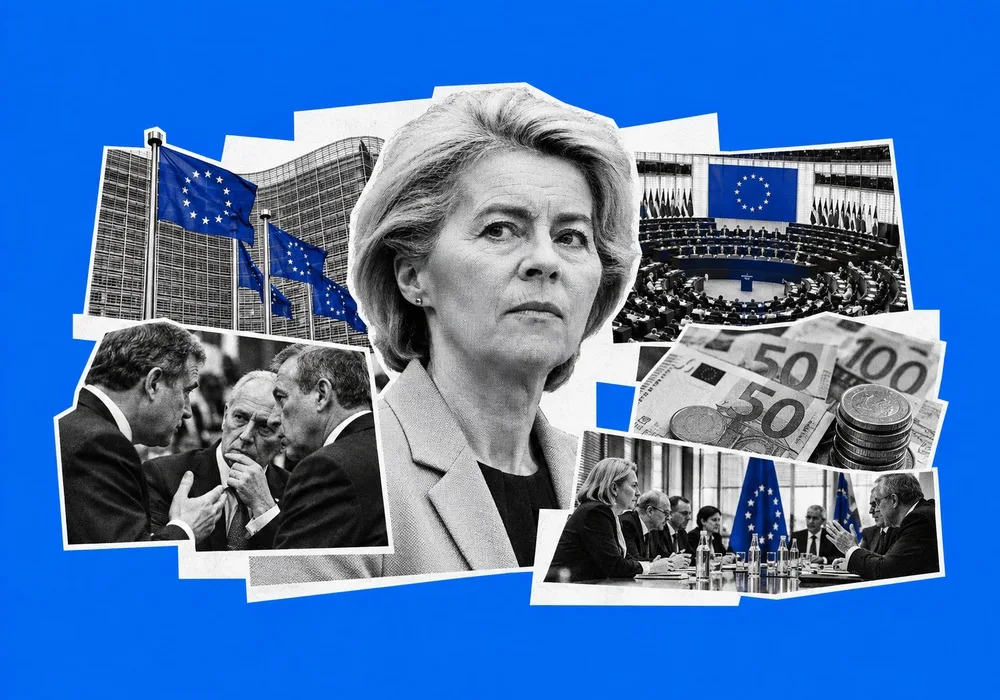
EU governments are entering a decisive three-month phase of negotiations over the bloc's €2 trillion long-term budget for 2028–2034. The main disputes concern the size of the budget, national contributions, new EU-level revenues and how much funding should shift towards defence, competitiveness and strategic technologies.
EU governments are entering a decisive three-month phase of negotiations over the bloc’s next long-term budget, with member states divided over its overall size, national contributions and the introduction of new EU-level revenues. The proposed €2 trillion framework for 2028–2034 is also designed to shift more resources towards competitiveness, defence, security and strategic technologies while maintaining major commitments to agriculture and cohesion. The scale of these competing priorities is making the negotiations one of the most consequential budgetary discussions of the current EU institutional cycle.
European affairs ministers are meeting in Brussels on 22 September to advance discussions on the Multiannual Financial Framework (MFF), with the Irish Council presidency working towards a revised negotiating framework ahead of the October European Council. EU leaders are expected to use meetings in October, November and December to narrow the remaining differences, with the end of 2026 set as the political target for reaching an agreement. If negotiations fail to produce a deal in December, governments could return to the issue in January or February 2027, leaving considerably less time for the subsequent legislative process.
Pressure over the size of the budget
The Commission’s proposal would provide almost €2 trillion for EU spending between 2028 and 2034, representing a significant increase in the bloc’s financial framework. The proposed structure reflects a broader set of demands on the EU budget than in the previous period, including defence, industrial competitiveness, technological development, energy security, migration and border management, alongside established policies such as agriculture and regional development.
The size of the proposal has already triggered resistance among several major net contributors. Germany, Denmark, Finland, the Netherlands and Austria have called for a more restrained increase, arguing that the EU should prioritise existing resources and improve spending efficiency rather than rely on substantially higher national contributions. The disagreement is therefore not simply about a headline figure: governments are also negotiating which policies should receive more funding and which areas could face tighter limits.
The issue is particularly sensitive because national governments are facing competing spending pressures of their own. Defence budgets are rising across Europe, while governments are also dealing with high debt burdens, investment requirements and the costs of the energy transition. A larger EU budget would therefore have to compete with domestic priorities at a time when fiscal space remains limited in many member states.
New revenues at the centre of the negotiations
The Commission has proposed expanding the EU’s own resources to reduce the reliance on direct contributions from national budgets. The package includes revenues linked to the emissions trading system and the Carbon Border Adjustment Mechanism, as well as proposed contributions connected to tobacco, electronic waste and large companies operating in the EU. The Commission estimates that the measures could provide around €58 billion a year in additional revenue in 2025 prices.
The question has become increasingly important because the EU will also have to begin repaying the debt raised under NextGenerationEU. From 2028, debt repayment and interest costs will create a substantial additional pressure on the EU budget, with the Commission estimating annual costs of around €24 billion during the 2028–2034 period.
For member states, however, the introduction of new EU revenues does not necessarily remove the political problem of higher contributions. Governments must determine who ultimately bears the cost of new levies and whether new EU-level taxation or charges are preferable to increasing national payments. The own-resources package therefore remains closely tied to the wider dispute over the size and structure of the MFF.
A different spending balance
The next budget is being negotiated in a markedly different strategic environment from the previous MFF. Russia’s full-scale war against Ukraine, growing concerns over European defence capabilities, competition in advanced technologies and the need to strengthen industrial supply chains have pushed security and economic resilience higher up the EU agenda.
The Commission’s proposal seeks to reflect these priorities through a new European Competitiveness Fund and greater flexibility in how EU money is allocated. The fund would bring together a number of existing programmes and support areas including strategic technologies, health and biotechnology, defence and space, artificial intelligence, semiconductors and industrial decarbonisation.
The proposed structure would also reorganise traditional spending. Cohesion policy, agriculture, fisheries, migration and internal security would be incorporated into broader national and regional partnership plans, giving governments greater flexibility to shift funding between priorities. Supporters of the model argue that this could make EU spending more responsive to crises and changing economic conditions, while critics in Parliament have raised concerns about reduced predictability and weaker programme-specific guarantees.
Cohesion and agriculture remain major fault lines
The restructuring of the budget is particularly sensitive for countries that depend heavily on cohesion funding and agricultural support. Cohesion policy remains a major mechanism for financing infrastructure, regional development and investment in less-developed parts of the EU, while the Common Agricultural Policy represents one of the bloc’s longest-standing areas of common spending.
The proposed national and regional plans could give governments more freedom to combine funding from different programmes, but this flexibility also creates uncertainty over how much money will ultimately be available for individual policy areas. Member states with strong interests in cohesion and agriculture are therefore seeking safeguards, while other governments want the next MFF to respond more directly to the EU’s strategic and economic priorities.
This creates a central tension in the negotiations. The EU is being asked to finance more areas of strategic importance without abandoning policies that have traditionally absorbed a large share of the common budget. Increasing the overall envelope would ease some of the pressure, but would also require agreement on higher contributions or additional EU revenues.
Parliament will have a role in the final deal
Even if the 27 member states reach a political agreement, the process will not be complete. The European Parliament must give its consent to the MFF, while the EU’s own-resources decision requires approval by member states under their respective national procedures.
Parliament has already signalled concerns about the proposed degree of flexibility in the new budget structure. MEPs have argued for stronger safeguards for individual programmes and greater parliamentary oversight, putting them at odds with governments seeking more room to redirect funding during the seven-year period.
The parliamentary stage could therefore reopen parts of the agreement reached by national governments. The experience of the previous MFF also shows how long the final stages can take, increasing the importance of reaching a political deal among governments early enough to leave sufficient time for the subsequent procedures.
Three months to narrow the differences
The coming months will determine whether the Commission’s proposed budget can survive competing demands from member states and Parliament. Governments have to settle the overall size of the framework while simultaneously negotiating new revenue sources, the distribution of funds and the degree of flexibility built into the new structure.
The immediate objective is to make enough progress before the October European Council to turn the Commission’s proposal into a more concrete political negotiating package. Further discussions in November and December are expected to focus increasingly on the remaining financial and political trade-offs.
A failure to reach agreement by the end of 2026 would not immediately stop EU spending, but it would compress the timetable for the legislative and national approval procedures needed before the new framework begins in 2028. The outcome of the negotiations will determine how much financial capacity the EU has over the next seven years and how far that capacity can be redirected towards defence, competitiveness and economic security while preserving its established spending priorities.
Sources: Council of the EU, European Parliament Research Service