
EU Budget Deadlock: Brussels Summit Fails to Secure 2028–2034 MFF Deal

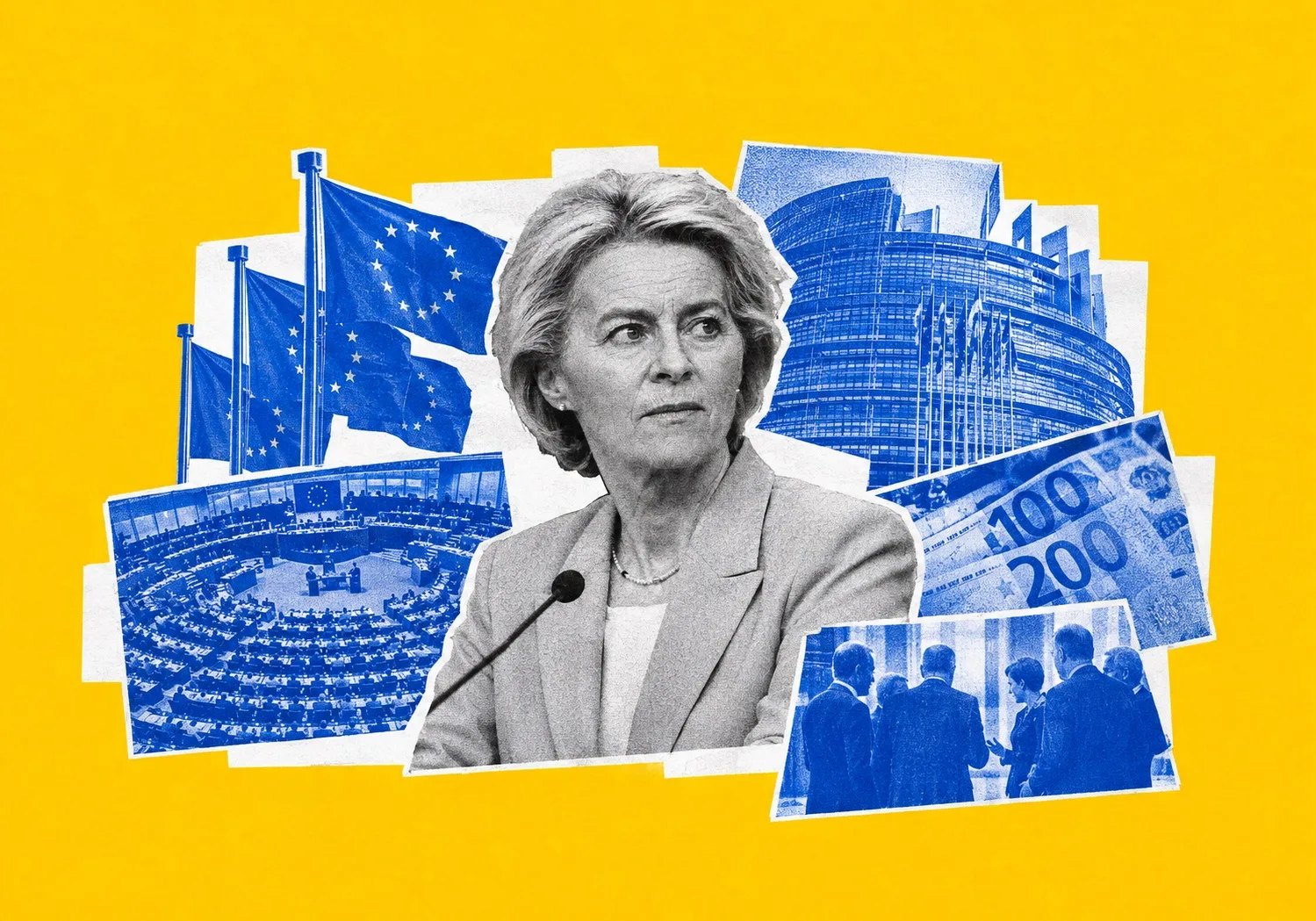
European Union leaders have ended their Brussels summit without a breakthrough on the bloc’s next seven-year budget, pushing critical MFF negotiations into November. Deep divisions over defence spending, industrial competitiveness, and national contributions continue to expose the gap between Europe’s geopolitical ambitions and its willingness to fund them.
European Council President António Costa has scheduled an extraordinary summit for 26-27 November, ahead of the regular meeting on 17-18 December. The immediate objective is to clear a path towards an agreement on the 2028-2034 multiannual financial framework (MFF). Yet the decision to postpone substantive progress indicates how difficult it will be to reconcile competing demands before the end of the year.
The underlying dispute is straightforward, even if its consequences are not. European governments increasingly expect the Union to support Ukraine, strengthen defence capabilities, protect industry from external competition and cushion the economic effects of expensive energy. But they remain divided over whether these responsibilities justify a larger common budget, higher national contributions or a redistribution of existing funds.
For the moment, the preference has been to delay the choice.
A smaller budget for a larger European role
The Irish Council Presidency’s compromise negotiating framework proposes reducing the European Commission’s initial budget proposal by approximately €141 billion to €159 billion. The scale of the adjustment has provoked resistance from the European Parliament, where senior negotiators have challenged both the overall reduction and its implications for particular spending priorities.
The proposed cuts amount to an 8% reduction in the overall budget, with competitiveness funding facing a 12.8% cut and external action a 17.4% reduction. Those figures go to the heart of the EU’s attempt to redefine its economic and strategic position.
Competitiveness spending is not simply another line in a complex financial document. It concerns the resources available to strengthen Europe’s economic position at a time when Chinese industrial capacity is intensifying competitive pressure and high energy prices are weighing on European businesses. Reducing that allocation while promising to improve the Union’s industrial resilience creates an obvious political and economic tension.
External action faces a similar contradiction. Europe wants to exercise greater influence beyond its borders, sustain international commitments and respond to an increasingly uncertain security environment. A substantial reduction in the resources devoted to external action would narrow the financial means available to pursue those objectives.
The argument for restraint is not difficult to understand. Governments that contribute more to the EU budget than they receive directly have domestic spending priorities of their own. Their reluctance to accept a larger common financial envelope reflects a desire to retain control over national resources and prevent the Union from acquiring commitments that eventually require additional money from national treasuries.
But the calculation becomes more complicated when the costs of inaction extend beyond individual budgets. If European governments want the EU to act as a collective economic and security power, the common budget must provide at least some of the resources required to do so.
The current negotiations have yet to establish how that balance should work.
The politics behind the accounting
The conflict also exposes a disagreement over the direction of European integration. The Union’s financial architecture was developed around a system in which national governments negotiate shared spending while defending their own contributions and the interests of domestic beneficiaries. That approach remains influential even as the EU assumes responsibilities that are harder to separate into national accounts.
Defence is the clearest example. Security threats do not necessarily respect national budget cycles, and investments in military capabilities may require sustained commitments extending well beyond a single government’s term. Common financing can help coordinate such efforts, but it also raises difficult questions about who pays, who decides, and which priorities receive protection when resources are limited.
For governments favouring fiscal restraint, a larger EU budget risks creating permanent obligations and weakening national control over spending. For those seeking a stronger common security and industrial policy, excessive restraint risks leaving the Union with ambitions that cannot be translated into action.
Neither position can be dismissed as a purely technical argument. Both concern the distribution of political authority within the EU.
The European Parliament has become an important part of that contest. Its President, Roberta Metsola, used her address to EU leaders on 15 October to reject the proposed budget cuts. Parliament’s lead budget negotiators, Siegfried Mureșan and Carla Tavares, have criticised the reductions, alongside own-resources rapporteurs Danuše Nerudová and Sandra Gómez López.
The institutional balance gives Parliament leverage, but not control over the negotiations. Adoption of the MFF requires unanimity among member states in the European Council and the consent of the European Parliament by an absolute majority. Governments therefore cannot simply impose a final agreement without parliamentary approval, while Parliament cannot independently dictate the spending limits preferred by national capitals.
This creates a negotiation in which both sides can obstruct an outcome, but neither can secure its preferred settlement alone.
The dispute over the budget also includes the question of how the Union should raise its revenue. Parliament has pressed for a more ambitious financial settlement, including new own-resources mechanisms. Discussions involving potential levies on digital services and crypto-assets form part of the wider debate over whether common priorities should depend primarily on national contributions.
That question matters because the size of the budget and the method of financing it cannot be separated indefinitely. A Union that seeks more common spending without agreeing on a sustainable revenue model will repeatedly encounter the same political resistance.
Ukraine makes the argument harder to postpone
The war in Ukraine gives the budget dispute a more immediate security dimension. On 14 October, the EU disbursed an additional €2.86 billion in military assistance under its €90 billion loan arrangement for 2026–2027. The support covers drones, air-defence systems, missiles, radars, electronic warfare equipment and ammunition. European leaders have also reaffirmed their commitment to Ukraine’s anti-missile capabilities and the protection of critical energy infrastructure.
The assistance demonstrates that the Union can mobilise substantial resources when governments agree on an urgent priority. The harder question is whether that capacity can be sustained and integrated into longer-term financial planning.
Emergency support and the next MFF are not interchangeable. The former addresses immediate needs within an existing financing arrangement; the latter determines the limits and distribution of EU spending over seven years. Yet they belong to the same political debate because commitments made today shape the demands placed on future budgets.
German Chancellor Friedrich Merz has argued that frozen Russian assets must remain in Europe under independent EU control. His position adds another dimension to the financing discussion: the political and legal management of assets linked to Russia’s war against Ukraine.
For European governments, the challenge is to maintain support for Kyiv while accommodating other priorities, including domestic economic pressures and investment in European defence. A smaller long-term budget would make those choices more acute, particularly if additional security commitments compete with established spending on agriculture, regional development and social programmes.
The proposed reductions therefore concern more than the relative size of individual allocations. They raise the question of which European commitments are to be treated as permanent priorities, and which may be expected to absorb the adjustment when money becomes scarce.
Energy costs and the return of industrial protection
The same tension has emerged in the debate over energy prices. EU leaders have classified rising costs as a matter of critical importance, but the summit produced no comprehensive policy package.
Italy and Greece have proposed temporarily easing fiscal rules to finance targeted relief. Austria, Germany, Italy, Poland, Portugal and Spain have separately backed an EU-wide windfall tax on energy companies’ profits.
These proposals reflect different approaches to a common problem. Temporary fiscal flexibility would give national governments more room to support households and businesses, while a windfall tax would seek to redirect part of the profits generated by high prices. Neither approach, on its own, resolves the structural disadvantage facing European industry when energy remains expensive.
The G7’s agreement to release 100 million barrels of oil over four months adds an international dimension. The move is intended to stabilise markets following US President Donald Trump’s decision to lift sanctions on Russian diesel. It illustrates how European energy conditions are influenced by decisions taken outside the EU, limiting the extent to which Brussels can control outcomes through its own policies.
Trade policy presents a parallel challenge. The summit opened against the backdrop of an interim agreement with Beijing on limits for hybrid vehicle imports, while draft conclusions called for stronger enforcement of trade-defence measures and new tools to protect the European market.
The scale of the imbalance is politically significant: the EU recorded a €360 billion trade deficit with China in 2025. European concerns about industrial overcapacity and competition in automotive and green technology are increasingly shaping the debate over economic openness.
A tougher trade-defence policy would represent a shift from treating market access primarily as a means of expanding commercial exchange towards using trade instruments more actively to protect European production. Such a change may offer domestic industries some protection, but it also risks intensifying friction with Beijing.
It would be difficult to pursue that strategy while cutting the very competitiveness funding intended to strengthen European firms. Market protection can alter the conditions under which companies compete; it cannot, by itself, supply the investment needed to make them more productive.
November’s test
The extraordinary summit scheduled for 26–27 November offers governments another opportunity to narrow the differences before the December European Council meeting. The change in the draft conclusions from a commitment to reach an agreement by year-end to a call for a “timely agreement” indicates that leaders have already softened their expectations.
There are reasons for caution. The proposed reductions are substantial, Parliament has made clear that it will resist the current framework, and unanimity gives national governments considerable power to defend their positions. A compromise will require more than finding a midpoint between two budget totals. It will involve decisions about which policies receive protection, how much flexibility governments retain, and whether new revenue sources can reduce the pressure on national contributions.
The political difficulty is that the costs of compromise are immediate and visible, while the benefits of common investment are distributed across countries and often emerge over years. Governments can explain a refusal to increase contributions in terms of domestic fiscal discipline. The consequences of underinvestment in defence, industrial capacity or external action are harder to attribute to a single decision.
Europe’s leaders are therefore approaching the November negotiations with a choice that extends beyond the next seven-year spending plan. They can continue to treat the EU budget principally as a contest over national balances, or they can begin to finance the collective responsibilities they increasingly expect the Union to assume.
The unanimity requirement ensures that no institutional redesign can be imposed on reluctant capitals through the budget negotiations alone. But the emerging contradiction is becoming harder to avoid: the EU is being asked to act as a strategic power while its governments continue to negotiate its finances as though the central question were how little each of them must contribute.
Sources: European Parliament, Politico, USNews, Barrons