
EU Approves 22nd Russia Sanctions Package: Focus Shifts to Military Supply Chains

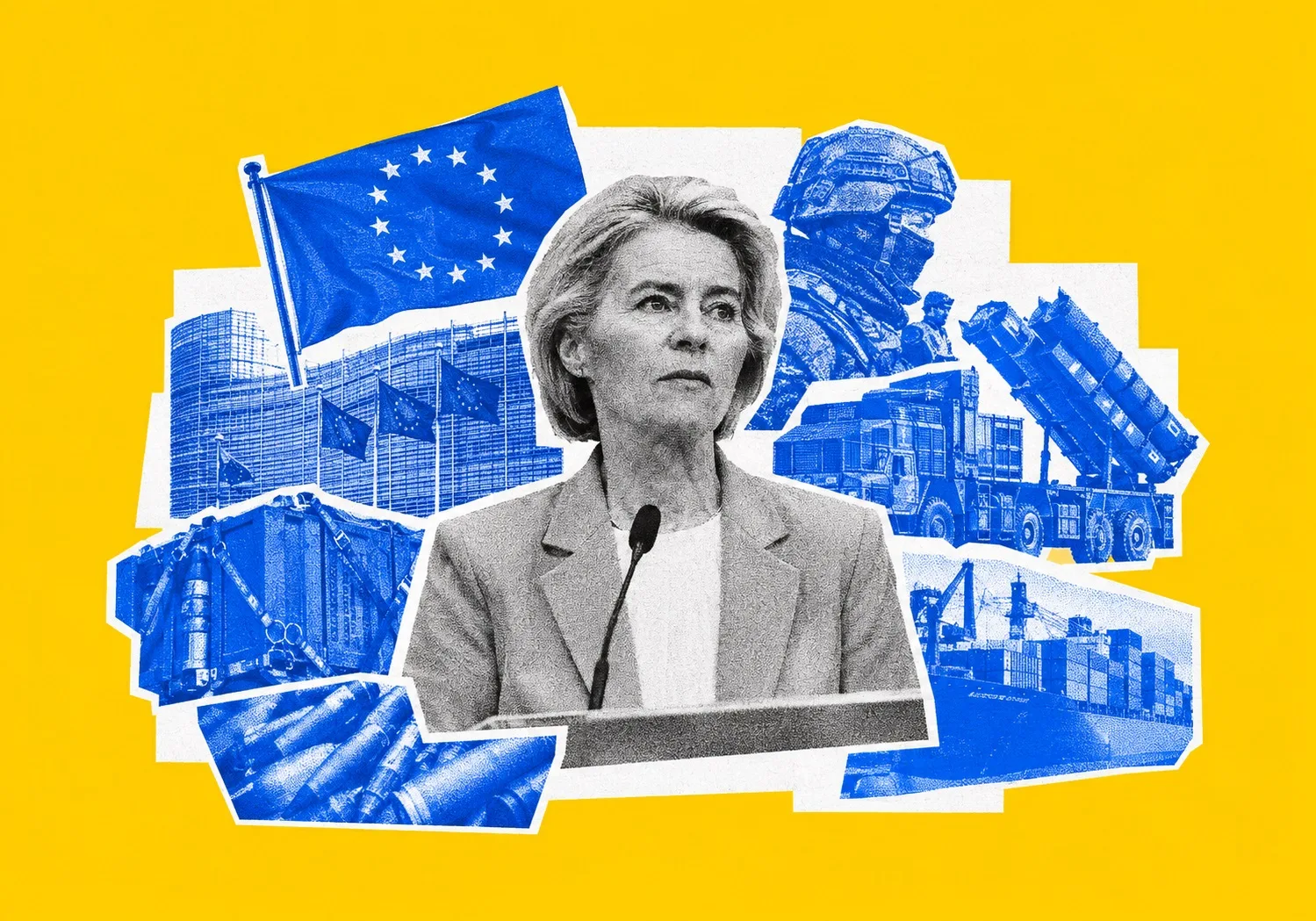
The European Union has adopted its 22nd sanctions package against Russia, targeting 1,646 individuals and defense companies behind Moscow’s precision weapons. Approved in Luxembourg on 12 October, the new measures aim to restrict Russian missile supply chains while extending the EU's overall sanctions framework for three years.
The listings include 826 companies and organisations, 743 individuals from Russia’s defence industry, and 77 candidates who contested September elections in occupied Ukrainian territories. The listed industrial entities collectively generate at least €20bn in annual turnover and employ more than 250,000 people.
But the number of names matters less than their position in Russia’s military supply chain. The EU is no longer relying primarily on broad economic restrictions or the designation of prominent political figures. It is increasingly targeting the less visible businesses, technical specialists and suppliers whose work allows weapons to move from the design stage to the battlefield.
That distinction could prove more consequential than another round of headline-grabbing sanctions against Russian elites.
The supply chain becomes the battlefield
The package concentrates heavily on the production chain behind Russia’s ballistic missiles, particularly the 9M723 missile used by the Iskander-M mobile missile system. Drone and aircraft manufacturing also feature prominently.
The targets include producers of microelectronics, onboard computers, communications equipment, radar components, solid rocket propellant and carbon and synthetic fibres. Research and testing institutions, assembly facilities and shipyards involved in submarine maintenance are also covered.
These are not interchangeable parts of the Russian economy. They occupy different positions in the process of developing, manufacturing and maintaining advanced military equipment.
Microcircuits and onboard computers support guidance and control functions. Antennas, transceivers and radar equipment contribute to communications, navigation and targeting. Specialised fibres provide materials used in demanding aerospace applications, while solid propellants are essential to the operation of solid-fuel rocket motors.
Restricting access to these inputs does not automatically stop missile production. Russia can draw on domestic manufacturers, existing inventories, alternative suppliers and substitute components. The immediate objective is therefore more modest, but strategically important: make production harder, more expensive and less predictable.
A manufacturer unable to obtain a particular component may need to redesign part of a system, qualify a replacement or reorganise procurement through a different supplier. Each adjustment creates additional costs and potential delays. The cumulative effect across hundreds of firms is more important than the disruption of any single factory.
For Ukraine, the stakes are direct. Russian ballistic missiles place pressure on air-defence systems and threaten civilian and energy infrastructure. If restrictions slow the replenishment of precision weapons, they could improve Ukraine’s ability to manage that pressure over time.
The outcome will depend on how effectively the EU can restrict access to critical components rather than simply prohibit transactions with the companies named on its lists.
Why Brussels is looking below the surface
The emphasis on mid-tier suppliers reflects the changing nature of the sanctions challenge.
Earlier restrictions sought to impose a broad economic shock by limiting trade, finance and access to Western technology. Such measures remain important, but a general prohibition does not necessarily reveal which smaller firms are helping a sanctioned manufacturer obtain a particular material or piece of equipment.
The new approach is more granular. It follows the industrial relationships that connect specialist producers, research facilities, component manufacturers and the larger defence contractors that assemble finished systems.
This makes sanctions enforcement a problem of industrial intelligence as much as regulation. Authorities must identify corporate networks, understand what particular suppliers produce and determine whether ostensibly civilian goods are contributing to military manufacturing.
The inclusion of 743 individuals, many of them executives, engineers and supply-chain actors, reinforces that approach. Responsibility for sustaining a weapons programme extends beyond the senior officials who approve military operations or the owners of the largest defence companies.
The package also follows a series of hybrid incidents on EU territory, including a drone incident at Leipzig Airport. Those events helped accelerate the negotiations, adding a more immediate European security dimension to the longer-term effort to constrain Russia’s military capabilities.
The EU is consequently trying to achieve two objectives through the same regulatory machinery: reduce Russia’s capacity to sustain its war against Ukraine and make the networks supporting that capacity more difficult to operate across European and international markets.
Neither objective can be achieved through the sanctions list alone. The measures are only as effective as the restrictions imposed on transactions, the willingness of businesses to comply and the ability of Russian procurement networks to find alternatives.
The enforcement problem extends beyond Europe
The addition of 1,646 names creates an immediate compliance challenge for banks, exporters, logistics companies and other intermediaries. Corporate groups must reassess counterparties, ownership structures and supply relationships to determine whether transactions could involve newly designated entities.
The consequences will not be confined to companies operating inside the EU. Businesses in third countries that supply Russia with dual-use technology or facilitate payments and shipments may also face heightened scrutiny from European counterparties concerned about breaching sanctions.
For international compliance teams, the difficulty lies in distinguishing legitimate trade from transactions that may ultimately support a restricted military supply chain. A component can be commercially ordinary in one context and strategically significant in another.
The broader the network of designated companies and individuals becomes, the more important it is to understand indirect relationships. A transaction with an unlisted intermediary may still warrant scrutiny if the surrounding ownership or supply arrangements connect it to a sanctioned party.
That creates additional costs for legitimate businesses, including those with no direct involvement in Russia’s defence sector. It also raises the risk that firms will withdraw from uncertain transactions rather than invest in the resources needed to establish whether they are permissible.
The package’s scale therefore presents a test of administrative capacity. European authorities must ensure that restrictions remain enforceable as the number of listed actors grows, while companies must adapt their screening systems to a substantially larger set of counterparties.
There is also a limit to what the EU can achieve without cooperation beyond its borders. If Russian manufacturers can continue to obtain critical inputs through alternative trading networks, the effectiveness of European restrictions will depend partly on how successfully those routes can be identified and disrupted.
The 22nd package increases the pressure on those networks. It does not establish that they have been closed.
A longer horizon for sanctions enforcement
Alongside the new listings, EU governments unanimously extended the general sanctions framework for three years, replacing the previous six-month renewal cycle.
The change is significant because sanctions are not simply a political decision made once. They require continuous administration by public authorities and private companies, from the management of frozen assets to the screening of payments and the review of commercial relationships.
Under a six-month renewal cycle, businesses and enforcement bodies must repeatedly account for the possibility that the underlying framework could become a subject of political bargaining. A three-year horizon offers greater regulatory predictability and reduces the frequency of these recurring decisions.
That does not mean the individual restrictions are guaranteed to remain unchanged for three years. Nor does it eliminate the possibility of further disputes among member states. The practical benefit is greater continuity in the legal framework supporting enforcement.
For companies making decisions about technology transfers, international partnerships and long-term contracts, predictable rules can be almost as important as the precise number of entities covered. A stable framework allows compliance procedures to be built around an established regime rather than repeatedly adjusted to a looming renewal deadline.
For Brussels, the longer duration also supports the logic of industrial containment. Disrupting a defence supply chain is unlikely to produce an immediate or easily measurable result. The intended effects may accumulate as manufacturers encounter difficulties sourcing materials, maintaining equipment or replacing restricted technology.
A sustained regime is better suited to that objective than one repeatedly exposed to short-term political uncertainty.
Yet the unanimous agreement on duration conceals a less comfortable question: what price did governments pay to secure it?
The price of European unanimity
In September, the EU removed Russian billionaires Alisher Usmanov and Mikhail Fridman from its sanctions list. France supported Usmanov’s removal on national security grounds linked to a prisoner exchange involving a French citizen, brokered through Turkic states. Luxembourg backed Fridman’s delisting under national security exemptions. Slovakia had initially blocked negotiations while demanding the removals, a position subsequently supported by Paris and Luxembourg.
The decisions provoked opposition from Baltic and Nordic governments, including Latvia’s foreign minister, Baiba Braže, as well as from Kyiv. Critics regarded the exemptions as a dangerous compromise that weakened the consistency of European sanctions policy.
The contrast with the October package is difficult to ignore. The EU has demonstrated that it can coordinate an extensive campaign against Russia’s defence industry, identifying hundreds of companies and individuals across a complex technological ecosystem. At the same time, its common foreign policy remains vulnerable to governments using their influence over unanimous decisions to pursue national objectives.
The issue is not whether every sanctions designation must be permanent. Restrictions need legal foundations and must remain open to review. Nor are national security concerns inherently illegitimate.
The problem arises when the process becomes transactional. If governments can secure the removal of prominent individuals by withholding agreement on a wider sanctions decision, the common policy risks becoming a collection of bilateral bargains rather than a consistent instrument of European strategy.
For countries geographically closer to Russia, the consequences are particularly sensitive. Latvia and other northern and eastern European states have strong reasons to resist arrangements that appear to weaken pressure on Moscow. Their concern is not limited to the reputations or commercial interests of individual business figures. It concerns the credibility of the framework through which the EU seeks to hold Russia accountable for its actions against Ukraine.
The latest package does not resolve that dispute. It demonstrates that agreement remains possible, but also that the political conditions under which agreement is reached matter.
Industrial pressure, political uncertainty
Russia’s defence manufacturers face a wider set of restrictions, while European businesses have a longer-term framework within which to enforce them. The EU has also made clear that its attention extends beyond the largest contractors to the technical and commercial relationships sustaining military production.
Whether this approach materially reduces Russia’s output of advanced missiles will depend on factors the number of listings cannot settle: the availability of substitute materials, the resilience of domestic production and the capacity of overseas suppliers to keep critical components moving.
The political question is different. Europe’s ability to maintain pressure over several years depends not only on identifying vulnerable points in Russia’s industrial system, but also on preserving agreement among governments that do not always assign the same weight to diplomatic, commercial and security interests.
The EU has committed itself to a longer campaign against the industrial foundations of Russia’s war effort. Its sanctions machinery is becoming more specialised, more extensive and more demanding to enforce. But the September delistings have left an unresolved tension over who ultimately controls that machinery: a bloc pursuing a common strategic objective, or individual capitals prepared to use collective decisions to secure national concessions.
Sources: Euronews, Council of the European Union, DW, Le Monde