
Cyberattacks on Emergency Apps Trigger False Nuclear Alerts in Russia and Ukraine

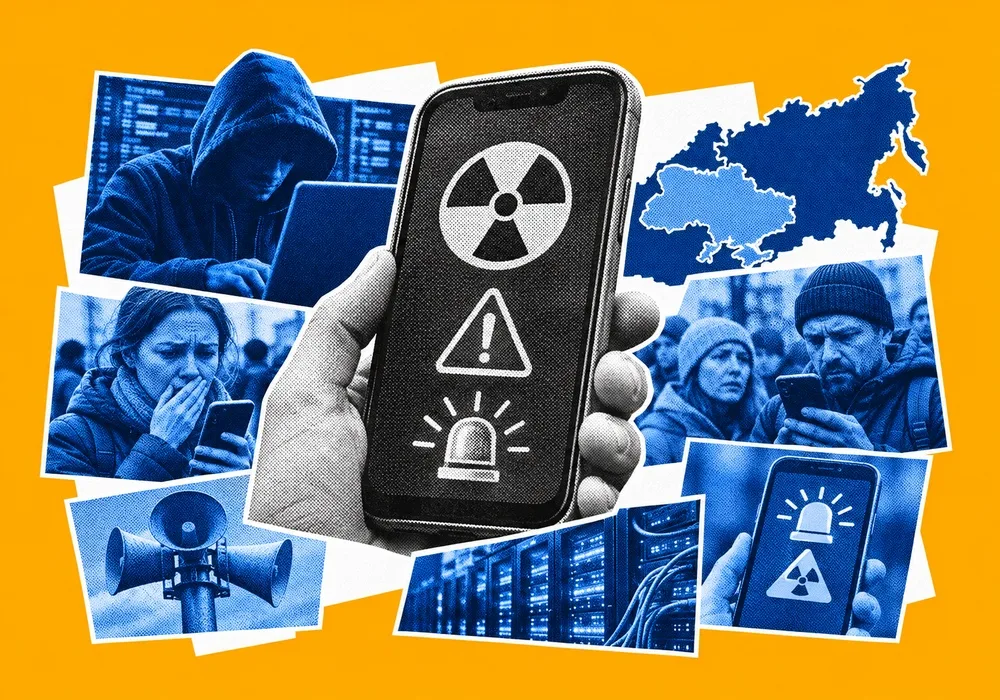
Cyberattacks targeting emergency notification applications in Russia and Ukraine triggered false warnings about nuclear, radiation and chemical threats. The incidents exposed vulnerabilities in digital emergency infrastructure and demonstrated how cyber operations can exploit public fear during wartime.
Russian citizens received alarming notifications about an alleged nuclear attack during the night of 1–2 November after unknown attackers compromised the mobile application of the Russian Ministry of Emergency Situations (MChS). The incident followed a similar attack against Ukraine’s Air Alert application earlier in the evening, when users were confronted with fabricated warnings about radiation, chemical hazards and military threats.
The Russian ministry confirmed that its application had experienced a massive cyberattack, allowing unauthorised actors to distribute false information to users. According to the ministry, specialists were working to eliminate the vulnerability and restore normal functionality. The incident was reported during the early hours of 2 November, with recovery efforts continuing at approximately 04:00 Moscow time.
The fraudulent notifications claimed that nuclear warheads carried by P1-SUN systems had been launched against all Russian regions. Recipients were instructed to stockpile food for three weeks and seek shelter in basements. The messages were deliberately alarming and presented the alleged attack as an immediate national emergency, using the authority of an official government application to lend credibility to fabricated information.
The choice of P1-SUN was particularly notable. The system is associated with Ukrainian interceptor drones developed by SkyFall, which are designed to counter Russian unmanned aerial vehicles. Its inclusion in a fictitious nuclear attack notification added a military reference to the deception, potentially making the message appear more plausible to recipients familiar with the war.
The Russian ministry subsequently stated that the national emergency notification system continued operating normally and that the compromise of its mobile application had not affected the broader infrastructure. Officials emphasised that the application was only one component of the country's emergency communication arrangements. Nevertheless, the incident demonstrated that a service carrying official government branding could be exploited to disseminate information capable of triggering panic.
The Attack on Ukraine’s Air Alert Application
The Russian incident came after Ukraine’s Air Alert application was compromised on the evening of 1 November. Around 22:50 Kyiv time, users began receiving notifications about alleged radiation and chemical hazards, street fighting and a purported nuclear threat associated with Russia’s Oreshnik missile system.
Some of the notifications were written in Russian and included links to suspicious Telegram channels. The messages claimed that a nuclear alert would be issued across Ukraine and presented the alleged threat as an imminent development. Their appearance in an application routinely used by civilians to monitor Russian missile and drone attacks made the incident particularly sensitive.
Ukraine’s Air Force quickly denied that any radiation threat existed. Officials urged citizens to remain calm and rely on verified information published through official military channels. The Centre for Countering Disinformation also warned users against following suspicious links or spreading unverified notifications.
The application’s developers subsequently confirmed that unauthorised interference had occurred. Push notifications were disabled, and the service was temporarily suspended while specialists investigated the incident. The disruption affected a platform that has become an important component of civilian safety during Russia’s full-scale invasion.
Ukraine’s State Emergency Service and Ministry of Digital Transformation emphasised that the national warning infrastructure remained operational. Information about air raid alerts continued to be distributed through regional administrations and other established communication channels. Kyiv authorities also confirmed that the city’s digital services and street-level warning systems were functioning normally.
The distinction between the compromised application and the broader national infrastructure was essential. Although the application was temporarily unavailable, the incident did not mean that Ukraine had lost its ability to issue genuine emergency warnings.
Two Attacks, One Night and Unanswered Questions
The close timing of the incidents immediately raised questions about whether the attacks were connected. Ukraine’s application was compromised on the evening of 1 November, while Russia’s emergency application was targeted during the following night. Both incidents involved fabricated threats, exploited emergency communication platforms and used notifications intended to provoke an immediate reaction from civilians.
However, the available information does not establish that the attacks were coordinated or carried out by the same actors. The identity of those responsible for the Russian breach has not been independently confirmed, while the circumstances surrounding the Ukrainian incident remain subject to investigation. The sequence of events alone is insufficient to establish operational links between the two operations.
The Russian incident was also reported to have extended beyond the ministry’s mobile application. According to media reports citing the Russian emergency authorities and regional sources, false notifications were distributed through regional MChS channels on the MAX messaging platform. This potentially widened the reach of the attack and demonstrated the risks associated with multiple communication services relying on interconnected administrative systems.
The reported scale of the incidents remains difficult to establish. Neither the precise number of affected users nor the full extent of the compromised infrastructure has been publicly clarified. The absence of verified attribution also limits the ability to determine whether the operations were intended primarily as psychological warfare, retaliation, disruption or a combination of objectives.
Nevertheless, the incidents reveal a shared vulnerability: emergency communication platforms are highly visible public services whose credibility depends on users trusting the information they receive.
The Weaponisation of Civilian Fear
Emergency alerts occupy a particularly sensitive position in public communication. Unlike ordinary news notifications, they are designed to trigger immediate behavioural responses. A warning about a missile strike, chemical contamination or nuclear danger may cause people to leave their homes, seek shelter, contact relatives or alter their movements without waiting for additional confirmation.
This makes emergency notification systems attractive targets for cyber operations seeking to influence civilian behaviour. A successful attack does not necessarily require the destruction of infrastructure or the theft of sensitive information. Simply introducing false information into a trusted channel can disrupt daily life and create uncertainty about whether genuine threats are being communicated.
The psychological consequences may be particularly significant in Ukraine, where civilians have spent years responding to real missile and drone attacks. Repeated exposure to emergency warnings already places considerable pressure on public confidence and routine life. A fabricated nuclear alert exploits precisely this environment, forcing users to distinguish between legitimate threats and malicious interference at a moment when hesitation can have serious consequences.
In Russia, the incident also exposed the potential consequences of distributing fabricated emergency information through an official government service. The notifications were not merely an isolated online rumour: they appeared through a platform associated with the state institution responsible for responding to emergencies. This could undermine public confidence in the ministry’s communication channels and raise questions about the reliability of other official digital services.
The wider risk is alert fatigue. If users repeatedly receive false warnings, they may eventually become less responsive to genuine emergencies. Even when a system is restored, the psychological effects of a breach can persist beyond the technical recovery of the application.
Digital Infrastructure and National Resilience
The incidents highlight the increasingly important role of cybersecurity in civilian protection. Emergency communication systems are now integrated into broader digital infrastructure, connecting government agencies, regional administrations, mobile applications and messaging platforms. Their convenience and reach make them valuable, but their interconnected nature also creates opportunities for malicious interference.
The attacks demonstrate why digital emergency services require security measures beyond ordinary application protection. Authentication, access control, monitoring of unusual notification activity and the ability to rapidly suspend compromised channels are essential to preventing unauthorised messages from reaching the public. Equally important is the capacity to verify information before it is distributed through official services.
Redundancy remains another central requirement. Mobile applications should complement rather than replace independent warning mechanisms, including sirens, broadcasting systems, official websites and established communication channels. The ability to continue issuing verified alerts when one digital platform is compromised is a fundamental component of emergency preparedness.
For Ukraine, the incident reinforces the need to protect services that have become part of everyday civilian life during the war. The application’s temporary disruption demonstrated how dependent users have become on digital tools for receiving information about threats. For Russia, the breach exposed vulnerabilities in a state-operated platform and illustrated how even government-controlled communication systems can be exploited to distribute fabricated information.
The attacks also carry implications beyond the two countries. European governments increasingly rely on digital infrastructure to communicate during emergencies, including military threats, extreme weather events, infrastructure disruptions and public security incidents. The possibility of malicious actors manipulating these systems represents a challenge for civil protection authorities and national cybersecurity agencies.
Protecting Trust in Emergency Communication
The immediate consequences of the attacks were limited by official intervention and the availability of alternative communication channels. Ukraine’s authorities denied the fabricated threats and directed citizens towards verified sources, while Russia’s emergency ministry confirmed the breach and initiated recovery measures. Neither incident established that a genuine nuclear or radiation emergency had occurred.
The longer-term challenge is more complex. Restoring an application’s technical functionality does not automatically restore public confidence in its notifications. Authorities must demonstrate that emergency systems are secure, that compromised channels can be isolated quickly and that citizens have reliable alternatives when digital services fail.
The incidents also underline the importance of clear communication during cybersecurity crises. Authorities need to distinguish between the compromise of an individual application and the disruption of an entire emergency infrastructure, avoiding both unnecessary panic and misleading reassurance. Public trust depends on timely explanations that identify what has been affected, what remains operational and where verified information can be obtained.
The attacks against Ukrainian and Russian emergency applications illustrate how cyber operations can target the relationship between governments and their citizens rather than conventional military infrastructure. By exploiting systems designed to protect civilians, attackers can transform routine emergency notifications into instruments of psychological pressure.
The central security challenge is therefore not simply preventing another application breach. It is ensuring that emergency communication remains credible when the systems delivering it become targets themselves.
Sources: Kyiv Independent, Interfax