
Belarus Border Drills: Why Minsk Is Testing a Faster Command Model Near NATO and Ukraine

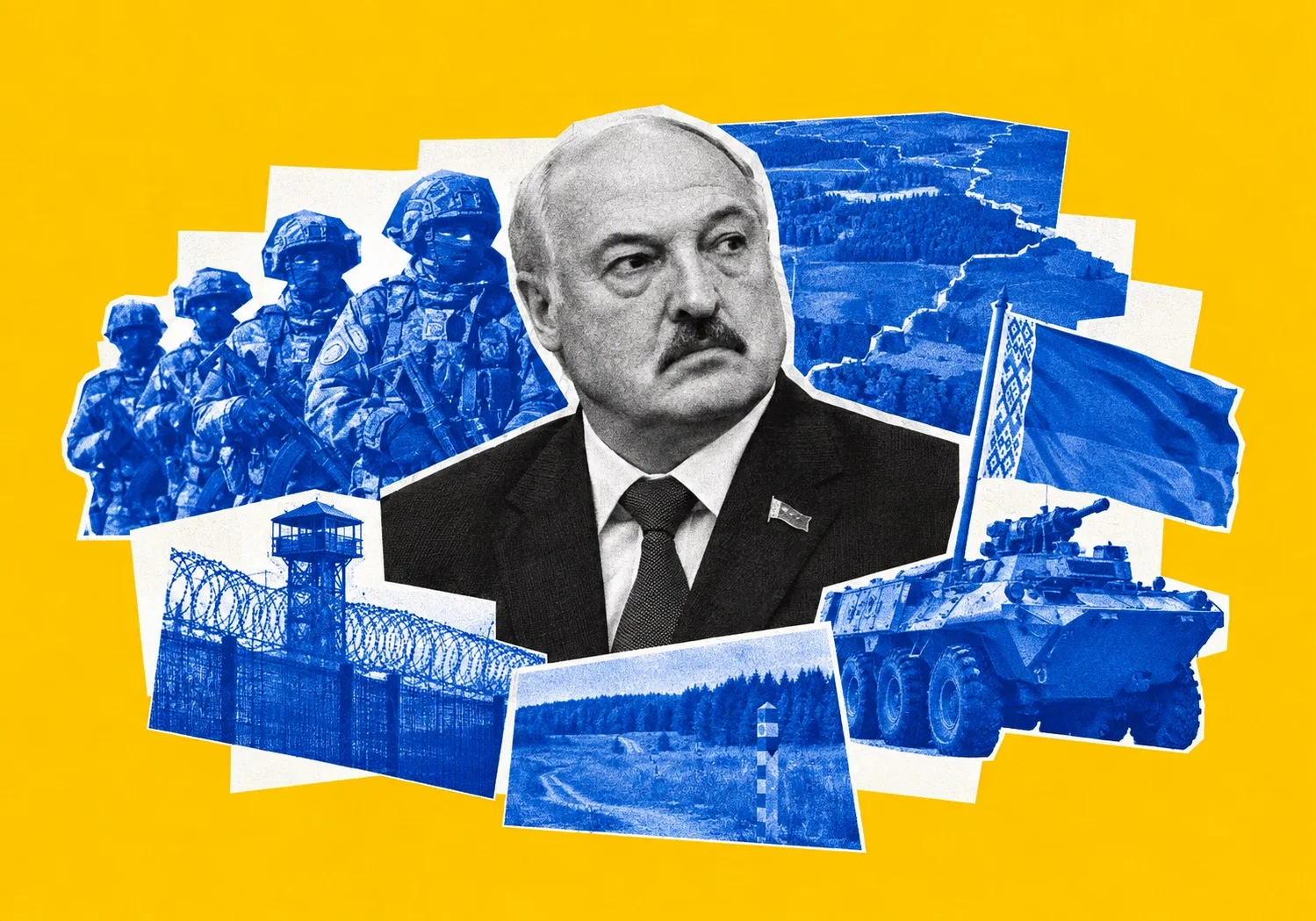
As Belarus launches four-day military exercises near its borders with Lithuania, Poland, and Ukraine, the real story is not troop numbers, but operational speed. Led by Chief of the General Staff Pavel Muraveyko, the Western Operational Command is using lessons from the war in Ukraine to cut decision-making cycles and test dispersed "cluster" headquarters. Coinciding with a NATO jet scramble over a drone incident in Lithuania, the drills highlight how sub-threshold readiness poses a new crisis-management challenge for NATO’s eastern flank.
While there is no evidence that the airspace incident was deliberately connected to the Belarusian exercise - and Lithuanian intelligence reports no immediate elevated military threat - the coincidence illustrates the broader friction along the border. Even when individual actions remain below the threshold of a major military escalation, their accumulation steadily increases the risk of miscalculation.
The real change is happening inside the command system
The most revealing element of the Belarusian exercise is not the number of battalions taking part. It is the attempt to make the military command structure faster and harder to disrupt.
The Western Operational Command is testing so-called “cluster” command posts, rapid relocation of headquarters and resilient communications. The stated objective is to reduce operational preparation timelines by 50–60 per cent compared with previous standards.
That is a significant operational ambition. In modern warfare, headquarters and communications networks have become targets in their own right. The ability to locate, relocate and reconnect command elements quickly can determine whether a force retains control after its communications infrastructure or command posts come under pressure.
Belarus is therefore testing a military bureaucracy designed to behave less like a static hierarchy and more like a distributed system.
The exercise also places decision-making under compressed time constraints. That matters because shortening the interval between detecting a threat, assessing it and issuing orders can improve military responsiveness without necessarily requiring a larger standing force.
For NATO neighbours, the implication is uncomfortable. A force that can move and reorganise quickly is harder to assess through traditional observation of troop concentrations. The military capability being developed is not simply the ability to deploy more soldiers, but the ability to generate usable combat power faster.
Ukraine’s war is becoming a training manual
The exercise explicitly incorporates experience from modern armed conflicts. Its scenario includes countering UAVs and light-engine aircraft, deploying Belarusian organic drone systems, searching for and neutralising sabotage and reconnaissance groups, protecting borders under martial-law conditions, and restoring combat capability after disruption.
These are not abstract additions to a training programme. They correspond to some of the operational problems that have become central to the war in Ukraine.
The prominence of UAVs is particularly important. Drones have changed surveillance, targeting and battlefield awareness, while also creating a persistent challenge for air-defence systems and command structures. Belarus is training both sides of that problem: how to employ its own unmanned systems and how to defend against an opponent's.
The same applies to command-post survivability. The emphasis on camouflage, relocation and communications resilience indicates an understanding that modern forces cannot assume that headquarters will remain hidden or that established communications will remain available.
Counter-sabotage operations fit the same pattern. The exercise trains units to respond to enemy sabotage and reconnaissance groups and illegal armed formations while simultaneously preparing for border-control and martial-law scenarios.
The broader shift is therefore doctrinal rather than numerical. Minsk is using the experience of contemporary warfare to reduce the time needed to turn information into action and to make its command system more resilient when conventional military infrastructure is under pressure.
Geography makes the exercise harder to dismiss
The locations give these experiments a particular strategic weight.
The Gozhsky training ground in the Hrodna region is close to Lithuania and the Suwalki Gap vector. The Brestsky training ground is about 15km from the Polish border and roughly 150km from Ukraine. Ruzhansky is around 60km from Poland and about 40km from Ukraine.
The Western Operational Command is responsible for the Hrodna and Brest regions, covering border directions facing Poland and Lithuania as well as areas close to Ukraine. These are not remote training areas. They sit on some of the most sensitive military geography in eastern Europe.
That does not make a defensive exercise an offensive operation. Muraveyko has explicitly rejected claims that Belarus is preparing attacks on neighbouring states, calling such assertions baseless.
But geography changes the consequences of even routine readiness activity. A command exercise conducted hundreds of kilometres from a potential confrontation zone is primarily a training problem. A similar exercise conducted close to NATO borders also becomes an intelligence and crisis-management problem for neighbouring states.
The question is consequently not whether Belarus is attacking anyone. It is whether its forces are becoming capable of acting more quickly in a region where even ambiguous movements can generate military reactions.
The Vienna Document problem
Belarus says the exercise remains below the thresholds that would require mandatory notification under the OSCE Vienna Document 2011. The stated number of personnel and major weapons systems does not exceed the relevant limits, and there is currently no independent verification of the exact force composition.
The rules exist to improve confidence and transparency around military activity. But their effectiveness depends partly on the assumptions behind them: that significant military preparations will generate observable signals early enough for neighbouring states to assess them.
A force posture that remains below notification thresholds can comply formally while still producing useful military effects.
That is particularly relevant when the objective is not to practise the movement of a very large formation but to refine command procedures, communications, dispersed headquarters and rapid decision-making. A smaller force can still test how quickly an operational command responds, relocates and integrates supporting elements.
This creates a different transparency problem from the classic large-scale exercise. The concern is not necessarily that Belarus is concealing an army-sized offensive formation. It is that the traditional indicators of military activity may reveal less about how quickly that force could become operational.
The Vienna Document was designed around measurable military activity. Belarus’s current exercise is also testing something less easily measured: readiness.
Lukashenko is turning readiness into a continuing requirement
The September exercise did not appear in isolation. On September 11, Alexander Lukashenko ordered a comprehensive inspection of the armed forces, extending the assessment through mobilisation readiness and instructing commanders to evaluate capabilities under modern warfare conditions.
Earlier phases examined tank, motorised rifle and artillery units. The current exercise moves the emphasis towards the operational command itself.
That progression matters. It connects tactical readiness with the machinery required to turn tactical units into a functioning military operation.
The spring readiness verification involving the Western Operational Command had already set a target of cutting operational decision-making time by 50–60 per cent. The September exercise is therefore testing a line of development that predates the current manoeuvres rather than introducing an entirely new concept.
For Belarusian commanders, the benefit is practical: more data on how dispersed headquarters, communications, UAVs and combat-support systems perform under compressed timelines.
For Moscow, the development is potentially useful without requiring a large new Russian ground-force deployment in Belarus. A more responsive Belarusian military maintains pressure on NATO’s eastern flank and on Ukraine’s northern border through readiness rather than sheer mass.
Friction without escalation
The simultaneous military activity in Lithuania and the UAV incident show why this model creates a difficult security environment.
Lithuania is conducting exercises near Belarus while Belarus is running its own manoeuvres nearby. A drone then crosses into Lithuanian airspace from Belarusian territory, prompting NATO fighters to scramble. Lithuania is preparing a diplomatic protest, while its intelligence services see no immediate elevated military threat.
None of those facts, individually, establishes a deliberate escalation strategy.
The strategic difficulty is that sub-threshold activity does not need to be deliberately escalatory to create pressure. Repeated military manoeuvres, compressed readiness cycles, airspace incidents and heightened border surveillance can narrow the margin for error.
The important change is therefore not that Belarus has suddenly demonstrated an ability to launch an offensive against Poland or Lithuania. The available evidence does not establish that. It is that Minsk is systematically testing how quickly its military command can function under the conditions of modern conflict while keeping the exercise itself within established transparency thresholds.
That creates a new problem for the countries watching the Belarusian border. The critical question becomes less about how many troops are visible today and more about how much operational readiness can be generated without producing the traditional warning signs on which regional security planning has relied.
And that is precisely where the boundary between a routine exercise and a genuine change in posture becomes harder to see.