
Bank of England Holds Rates as Energy Shock Raises Risk of Renewed Inflation

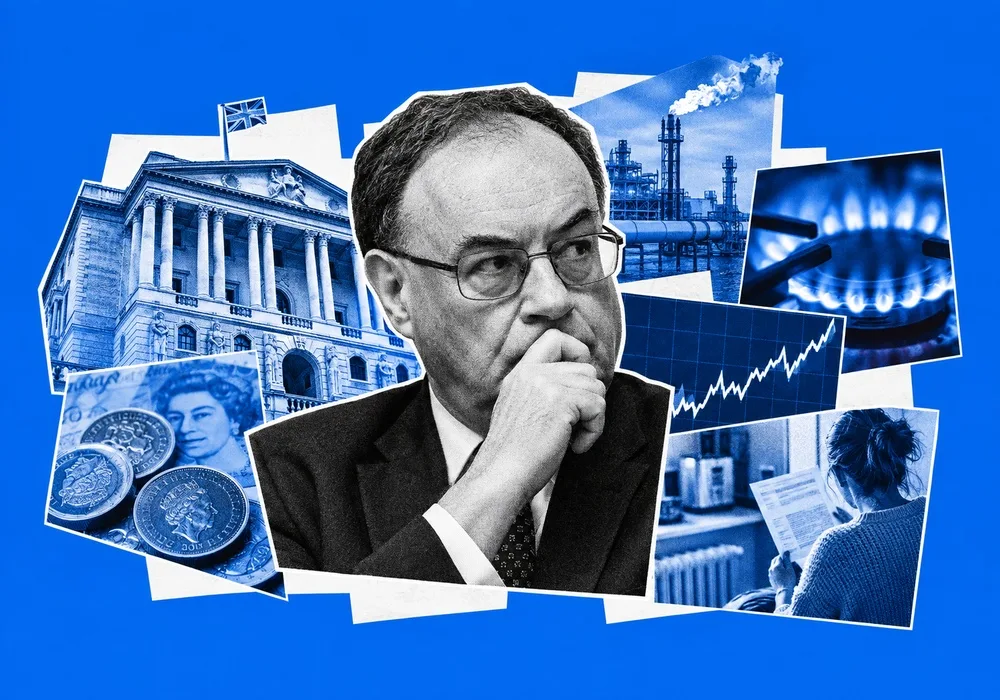
The Bank of England has held its benchmark rate at 3.75%, but warned that UK inflation could rise above 4% in early 2027 as prolonged energy-price volatility threatens to make the current inflation shock more persistent.
The Bank of England has kept its benchmark interest rate at 3.75%, but its latest decision signals a growing risk that monetary policy could tighten again as higher energy prices push UK inflation further above target.
The Monetary Policy Committee voted 6-3 to leave Bank Rate unchanged on September 17. Three members — Megan Greene, Catherine L Mann and Huw Pill — backed an immediate 0.25 percentage-point increase to 4%, reflecting concerns that the latest energy shock could become embedded in domestic prices and wages.
The decision comes as the UK economy faces a difficult combination of elevated inflation, weaker labour-market conditions and higher borrowing costs. Consumer price inflation reached 3.1% in August, up from 2.9% in July and well above the Bank's 2% target. The Bank now expects inflation to rise to around 3.75% in the final quarter of 2026 and slightly above 4% in the first quarter of 2027 if current energy prices persist.
Energy Shock Pushes Inflation Forecast Higher
The main source of uncertainty is the prolonged conflict in the Middle East and its impact on global energy markets. Since the Bank's July forecast, Brent crude prices have risen by around 36%, while UK wholesale gas prices have increased by 78%. By September 14, Brent had reached about $106 per barrel and UK wholesale gas had risen to 207 pence per therm.
The immediate effect has already appeared in household costs. Around 0.7 percentage points of the 1.1-point gap between August inflation and the Bank's 2% target was attributed to the direct impact of higher energy prices, particularly motor fuels. Services inflation, however, remained at 3.4%, unchanged from July and down significantly from 4.5% in March.
The concern for policymakers is therefore less about the initial increase in energy costs than about what happens next. If expensive fuel, gas and electricity remain elevated for long enough, businesses may begin passing higher costs through to a wider range of goods and services, while workers may seek higher wages to compensate for the loss of purchasing power.
So far, the Bank sees limited evidence that this second-round process has become established. But policymakers warned that the longer the energy shock persists, the greater the probability that it will spread through wage and price-setting.
The Rate-Cut Cycle Is Now Under Pressure
The September decision marks a significant change in the balance of risks facing the Bank. Earlier in 2026, the direction of travel for UK monetary policy had been towards lower borrowing costs as inflation appeared to be easing. The latest energy shock has complicated that trajectory.
The three MPC members who voted for a rate increase argued that the expected inflation surge could coincide with the period when companies and workers negotiate 2027 wages. They also pointed to stronger-than-expected economic activity and signs that some of the slack in the labour market may already have peaked.
The majority, however, judged that existing financial conditions were already sufficiently restrictive to contain inflationary pressure for now. Mortgage and business borrowing costs have risen since the conflict began, while labour-market weakness continues to limit employers' incentives to raise wages aggressively.
The Bank's own assessment illustrates the tension. UK GDP grew by 0.4% in the second quarter, slightly stronger than previously expected, while July monthly GDP also increased by 0.4%. The Bank subsequently raised its estimate for third-quarter growth to 0.4%, from 0.1% in its July projection. At the same time, unemployment stood at an estimated 4.9% in the three months to July, indicating that the labour market remains softer than before the energy shock.
This leaves policymakers balancing two opposing risks: tightening too early could weigh further on an already fragile economy, while waiting too long could allow a temporary energy shock to become a more persistent inflation problem.
Governor Andrew Bailey made the potential policy response explicit. The Bank said that if energy-price volatility continues for longer, the likelihood of raising Bank Rate to bring inflation back to 2% would increase.
Food Prices Add Another Layer of Uncertainty
Energy is not the only external pressure being monitored by the Bank. Policymakers also highlighted risks to food prices from the combination of geopolitical disruption, adverse weather and potential El Niño effects.
There has been some relief on this front so far. The Bank's agents expect annual food inflation to be around 4% at the end of 2026, compared with expectations of 6-7% earlier in the year. But the MPC warned that this moderation could partly reflect temporary buffers, such as companies absorbing higher costs through margins, existing energy reserves or hedging arrangements.
If those buffers are exhausted while energy prices remain elevated, some of the inflationary pressure could simply appear later rather than disappear. The Bank therefore expects indirect effects from the energy shock to become more important over the coming months.
The broader global environment adds further uncertainty. The MPC noted that strong demand for AI-related technology and components was contributing to price pressures in some sectors, while disruptions linked to conflicts and weather could affect agricultural and fertiliser markets.
A New Approach to the Bank's Bond Holdings
The September meeting also brought a major change in how the Bank of England plans to unwind the government bonds accumulated through its quantitative easing programme.
The MPC unanimously agreed to reduce the stock of UK government bonds held for monetary-policy purposes to zero by 2034. The remaining portfolio will be reduced at an average pace of £46 billion a year, combining £20 billion of annual sales with bonds that mature naturally.
The Bank's holdings have already fallen substantially from their peak of around £895 billion in February 2022 to about £488 billion in September 2026. Over the past year alone, the stock declined by £70 billion, including £21 billion through active gilt sales.
Under the new framework, the Bank will retain £120 billion of the longest-dated gilts as backing for current and future banknote issuance. Of the remaining £368 billion, £222 billion is expected to disappear through maturities, while £146 billion will ultimately be sold.
The Bank will also pause active gilt sales for the time being. The change is designed to make the process more predictable and reduce the risk that quantitative tightening itself destabilises already volatile government bond markets.
Pressure Ahead of the UK Budget
The Bank's warning comes at a sensitive point for the UK government, with the autumn Budget scheduled for October 28.
Higher inflation and the possibility of renewed rate increases could complicate fiscal planning by keeping government borrowing costs elevated. At the same time, weaker labour-market conditions and higher household borrowing costs limit the room for policies that could further stimulate demand.
For businesses and households, the immediate message is that the September decision does not guarantee that rates will remain at 3.75%. The next MPC meeting is scheduled for November 5, and the Bank has made clear that future decisions will depend heavily on whether the energy shock begins to generate broader wage and price pressures.
The central issue for UK monetary policy has therefore shifted from whether inflation is falling quickly enough to whether an external energy shock can remain contained. For now, the Bank is choosing to wait rather than raise rates immediately, but the three dissenting votes and the revised inflation outlook show how quickly the policy debate has changed.
If energy prices remain elevated, the pressure on the Bank to respond is likely to increase. If the shock fades and domestic wage and price pressures remain contained, policymakers will retain more room to keep rates unchanged while the economy adjusts. The September decision leaves both paths open, with the duration of the energy shock now central to the UK's monetary-policy outlook.
Sources: Bank of England, The Economic Times