
Bank of England Forced Towards November Rate Hike as Energy Inflation Risks Mount

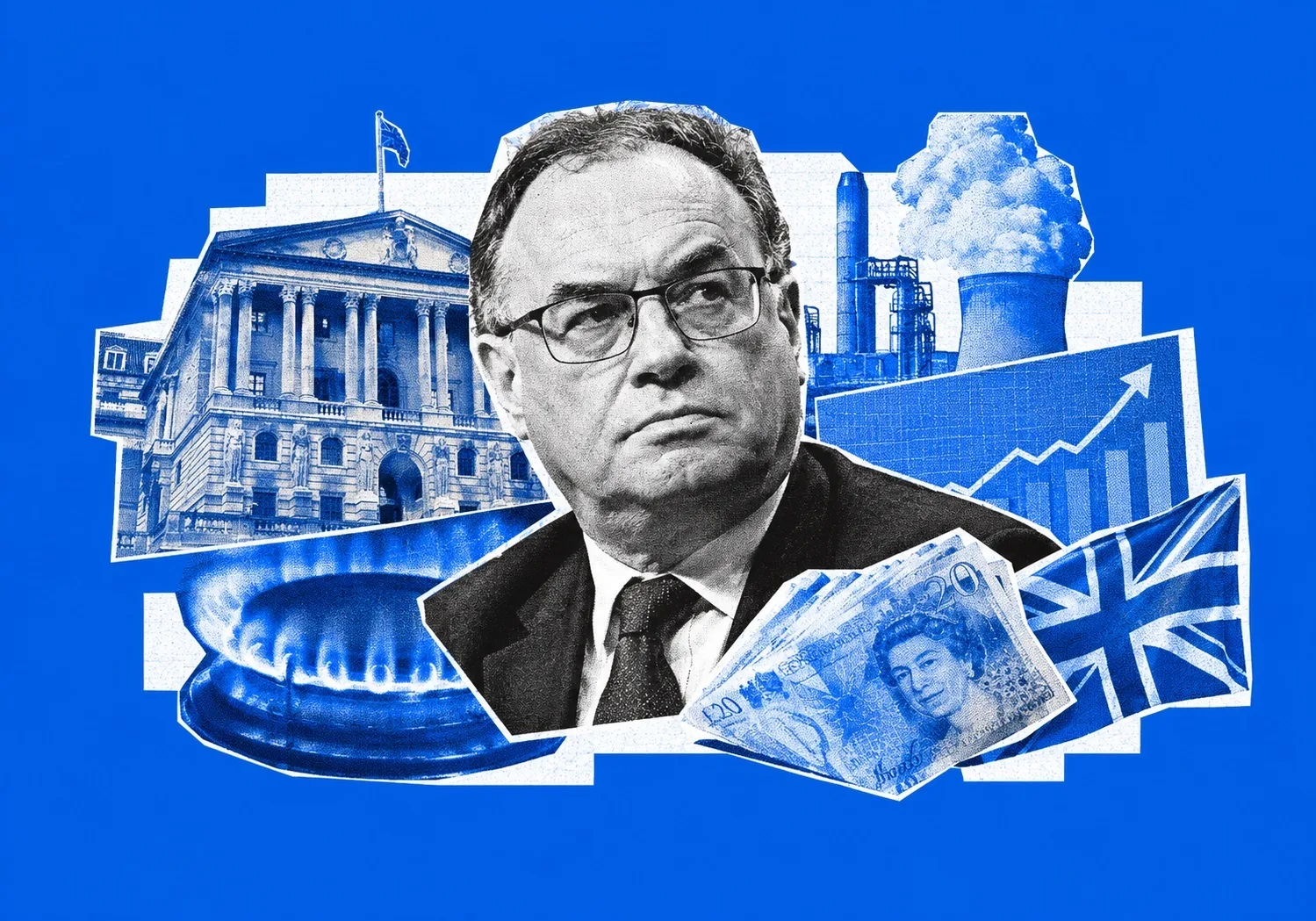
The Bank of England is edging towards its first interest rate increase in more than three years, with markets pricing in an 80% to 92% chance of a rate hike from 3.75% to 4% on November 5. Driven by energy price shocks from the war involving Iran, the central bank faces a difficult balancing act: curbing imported inflation above 4% while the UK economy rapidly loses momentum.
Markets have responded sharply to this structural dilemma. The probability assigned to a November increase has risen from roughly two-thirds in mid-September to between 80% and 92% by October 6, depending on the measure. Derivatives are also pricing a further increase to 4.25% in December, while several major investment banks expect rates to reach that level by early 2027.
The remarkable part is not simply the size of the expected move. It is the reason for it.
Inflation is forcing the Bank's hand
The September 17 policy meeting already contained the warning.
The Monetary Policy Committee voted 6–3 to keep the Bank Rate at 3.75%. Catherine Mann, Huw Pill and Megan Greene voted for an immediate increase to 4%. Governor Andrew Bailey was among those who preferred to wait, but the dissent was significant: three of nine policymakers were already prepared to tighten before the latest inflationary pressure had fully worked through the economy.
Since then, the case for the hawks has strengthened.
UK consumer price inflation reached 3.1% in August, well above the Bank's 2% target. Economists' September estimate stands at 3.5%, while the Bank has warned that inflation could exceed 4% in early 2027.
Much of the pressure is coming from energy.
The conflict involving Iran has disrupted global energy markets, increasing crude oil, diesel and fuel costs. In Britain, those increases arrive at precisely the point when the Ofgem energy price cap is rising for the final quarter of 2026. Food inflation is also expected to reach about 4% by the end of this year, with the Food and Drink Federation warning that it could rise as high as 7% in 2027.
For the Bank, this creates a problem that conventional monetary policy handles badly.

Higher interest rates can restrain demand. They cannot produce more oil, lower wholesale energy prices or prevent a geopolitical conflict from raising transport costs. Yet if policymakers leave rates unchanged while an external price shock continues to spread through the economy, there is a risk that a temporary energy problem becomes a broader inflation problem.
That is why the expected tightening looks pre-emptive rather than growth-driven.
The economy is slowing anyway
The contradiction at the heart of the decision is that Britain does not appear to be suffering from an overheating economy.
Growth is weakening into 2027. That has encouraged institutions such as the OECD and Oxford Economics to argue that the Bank should resist further increases. Their case is straightforward: monetary policy is already restrictive at 3.75%, medium-term inflation should eventually fall, and another increase risks worsening an economic slowdown that is already under way.
The opposing camp is looking at the inflation path rather than the growth figures.
Investment banks including Bank of America, Citi, Barclays, UBS and J.P. Morgan are among those expecting rates to reach 4.25% by early 2027. The market is increasingly positioned for the same outcome.
The disagreement is therefore not simply about whether inflation is high. Both sides accept that it is.
The question is whether the Bank should respond to inflation that is largely being generated outside Britain before it becomes entrenched inside the domestic economy.
That distinction matters. If the energy shock fades, higher rates could prove unnecessarily damaging. If it persists, waiting could force the Bank into even more aggressive tightening later.
The September vote shows that the MPC is already divided over which risk is greater.
A budget between the Bank and the markets
The timing of the government's fiscal plans adds another layer of uncertainty.
Andy Burnham's administration is due to deliver its first budget on October 28, exactly one week before the MPC meets. The Bank will therefore have only a short period in which to assess whether government measures are likely to add to demand, alter borrowing requirements or change the inflation outlook.
That makes the November decision unusually sensitive to the relationship between fiscal and monetary policy.
A government seeking to support households or economic activity while inflation is rising could make the Bank's task harder. Fiscal expansion can sustain demand at the very moment monetary policymakers are trying to contain it. Higher gilt yields and increased government debt-servicing costs would then become part of the same policy problem.
The Bank has already stopped its Quantitative Tightening programme, adding an unusual feature to the emerging policy mix.
It is preparing to raise the price of money through interest rates while simultaneously ending the process of shrinking its balance sheet. That reflects a more complicated environment in which inflation control cannot be considered separately from conditions in sovereign debt markets.
The Bank is no longer simply deciding how much to slow the economy.
It is balancing inflation, government borrowing conditions and financial stability at the same time.
Households will feel the shift before November
Financial markets have already begun transmitting the expected policy change into the real economy.
HSBC and NatWest have raised prices on fixed-rate mortgage products as lenders anticipate tighter monetary policy. For borrowers approaching the end of fixed-rate deals in late 2026 and 2027, the change in expectations therefore matters even before the MPC formally votes.
This is one reason the Bank cannot treat a rate increase as an abstract technical adjustment.
A quarter-point move may look modest at the central-bank level. Its effects accumulate through mortgage refinancing, business borrowing and household spending. For homeowners rolling over debt at higher rates, the adjustment arrives precisely when energy and food bills are also under pressure.
Small businesses face the same squeeze from another direction. Higher financing costs can discourage investment while weaker household demand reduces revenue. The result is a particularly difficult combination: monetary policy becomes more restrictive even as the economy becomes less capable of absorbing the restriction.
Savers and cash investors would benefit from higher deposit rates, while sterling could receive support from the improved interest-rate differential. But those gains are unevenly distributed.
For heavily indebted households and businesses, the policy reversal is much more direct.
Britain's problem is becoming Europe's problem
The UK's dilemma is not entirely British.
The Federal Reserve and the European Central Bank have also moved towards tighter policy as geopolitical and energy pressures challenge earlier expectations of monetary easing. Major Western central banks are discovering that the assumptions behind the post-pandemic normalisation cycle are becoming less reliable.
The vulnerability is structural.
Three years of monetary tightening cannot insulate an economy from an external energy shock. Nor can the end of balance-sheet tightening eliminate the inflationary consequences of disrupted commodity markets. If energy, food and supply chains remain exposed to geopolitical conflict and other external pressures, central banks may repeatedly find themselves responding to inflation they did not create.
That changes the nature of monetary policy.
The period in which central banks could focus predominantly on domestic demand, employment and conventional inflation cycles is giving way to a more defensive model. Policymakers must now account for geopolitical risks that can move from a battlefield to an energy market, from an energy market to transport costs, and from there into household prices.
The danger for Britain is that this defensive posture arrives as growth is weakening.
The Bank of England can raise rates to prevent imported inflation from becoming persistent. It cannot raise them enough to make oil cheaper. It can try to protect inflation expectations, but it cannot determine the duration of the conflict driving the original shock.
That leaves policymakers with a narrow choice between two unpleasant outcomes: tolerate inflation for longer or accept deeper economic weakness.
The November 5 meeting will therefore be about more than whether the Bank Rate reaches 4%. It will test whether the Bank still has enough policy room to fight an external inflation shock without turning a slowing British economy into a recession.
And with the government's budget arriving just seven days earlier, the Bank will be making that calculation while watching not only prices and growth, but also the bond market's judgement of Britain's fiscal direction.
Sources: Bank of England, Morningstar, BBC