
After the Greenland Deal: Why Europe Has 3 to 5 Years to Achieve Military Autonomy

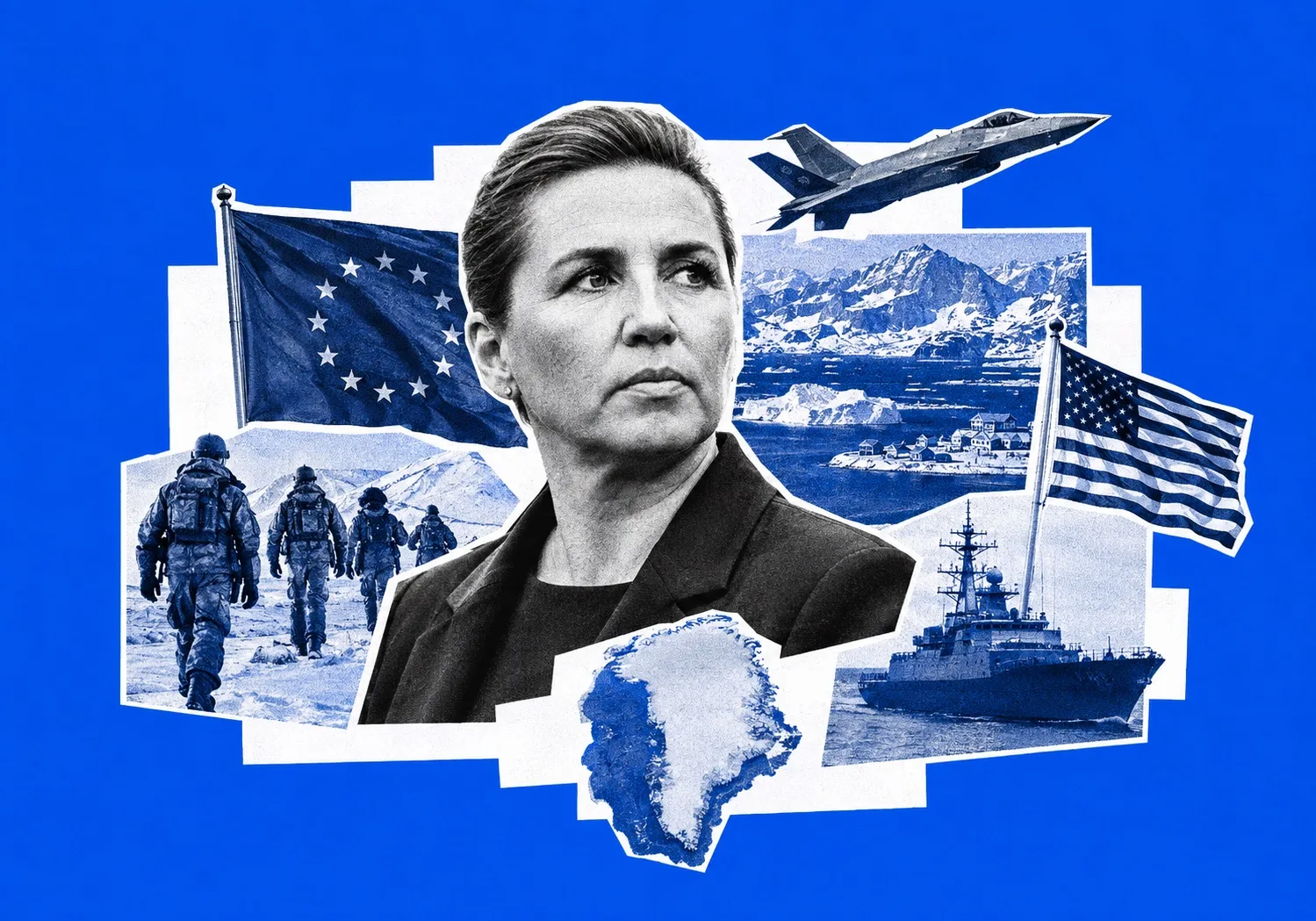
The September 2026 US-Denmark agreement on Greenland preserved Danish sovereignty, but it permanently altered the transatlantic alliance. As Washington expands its Arctic military footprint, European leaders are facing an urgent deadline: build independent defence capabilities within 3–5 years or remain dangerously vulnerable to American strategic pressure.
For Mette Frederiksen, Denmark’s prime minister, the outcome of the Greenland dispute is precisely why Europe can no longer treat military autonomy as a long-term aspiration.
The crisis was bigger than Greenland
The dispute began with Donald Trump’s renewed demand in January 2026 that the United States acquire Greenland, justified by American security concerns over Russia and China. Copenhagen and Nuuk rejected the demand. Washington then threatened tariffs against European countries resisting its position.
For European governments, the problem was not simply an extraordinary disagreement over an autonomous territory. The threat exposed a vulnerability at the centre of the post-war security system: what happens when the principal guarantor of an alliance begins using coercion against one of its members?
Frederiksen warned in January that an American military assault on a NATO ally would effectively destroy NATO and the security structures built after the Second World War. Eight European leaders subsequently issued a joint declaration defending territorial integrity and Greenland’s status under Danish and Greenlandic jurisdiction. France, the UK and other European powers also expanded military exercises and deployments in the Arctic.
The European Union prepared its Anti-Coercion Instrument, turning what had initially been a bilateral territorial dispute into a confrontation with implications for the EU’s ability to resist economic pressure from its own principal security partner.
That was the moment the argument over European strategic autonomy changed character.
For years, greater European defence capacity had been discussed in terms of burden-sharing, spending targets and distant capability goals. Frederiksen instead argued that Europe should be able to defend itself within three to five years, rejecting timelines stretching to 2035 as dangerously slow.
The distinction matters. A distant target allows governments to reconcile strategic ambition with industrial, budgetary and political constraints. A three-to-five-year deadline does not.
Washington won bases without taking Greenland
The September agreement is, in narrow strategic terms, a substantial gain for the United States.
Washington obtains permanent access, basing and overflight rights throughout Greenland, even if the territory eventually becomes independent. It will establish two additional military bases in southern and eastern Greenland and modernise Pituffik, the existing US space and early-warning facility in the northwest.
It also secures a degree of control over the strategic environment around the island. Non-NATO states cannot establish military bases, while sensitive Russian and Chinese investments or installations can be blocked without American consent.
The United States therefore achieves much of what it needs militarily without formally acquiring the territory it had demanded.
That distinction is important. The agreement allows Washington to strengthen its position in one of the Arctic’s most strategically sensitive areas while avoiding the consequences of outright annexation.
For Copenhagen, however, the calculation is different. Denmark can point to the preservation of sovereignty and the rejection of territorial acquisition as a diplomatic success. Emmanuel Macron has said the arrangement respects international law and Danish sovereignty.
Both interpretations can be true.
Denmark prevented the outcome it considered most dangerous, while the United States secured a significantly stronger military position.
The more complicated position belongs to Nuuk.
Greenland’s sovereignty has acquired a strategic price
Greenlandic self-determination remains formally intact, but the agreement introduces a powerful constraint on what that autonomy can mean in practice.
Greenlandic politicians have raised concerns that decisions about foreign investment will now be subject to an American veto where Washington considers national security at stake. That matters for a territory seeking greater economic and political independence, because access to outside capital is part of the foundation of economic self-government.
The agreement therefore creates an uncomfortable contradiction.
Greenland’s political future remains formally its own to determine, yet the strategic environment in which that future is negotiated has become more tightly controlled by the United States.
Russia and China are effectively excluded from a significant part of Greenland’s strategic and economic future. Washington, meanwhile, gains a permanent institutionalised role in deciding which outside actors can participate.
For Greenland, that is a different kind of constraint from territorial loss, but it is still a constraint.
Europe’s vulnerability is now measurable
The most important consequence of the crisis may not be found in the Arctic at all.
Frederiksen has repeatedly identified two particularly serious European dependencies: strategic intelligence and nuclear deterrence. These are precisely the capabilities that cannot be created quickly by simply increasing defence budgets.
European states can order more conventional weapons, expand forces and increase military exercises. Building an independent intelligence architecture capable of replacing American strategic capabilities is a much larger undertaking. Nuclear deterrence presents an even more difficult problem.
This is why the three-to-five-year timetable should be read less as a literal promise that Europe can reproduce every American capability within five years and more as a political deadline for eliminating the most dangerous dependencies.
The Greenland crisis has made that deadline concrete.
Europe does not need to become independent of the United States in every aspect of defence. It needs enough independent capacity to prevent a political rupture with Washington from becoming an immediate military vulnerability.
That is a narrower, but more realistic, definition of strategic autonomy.
It also changes the meaning of European rearmament. The issue is no longer simply whether NATO members spend enough. It is whether European countries possess the industrial capacity, intelligence systems, command structures and strategic capabilities to act when American support is uncertain.
NATO is becoming a framework, not an assumption
The paradox of the Greenland crisis is that European strategic autonomy does not necessarily mean abandoning NATO.
Frederiksen’s position has been the opposite. She has called for collective Arctic security under NATO while simultaneously arguing that Europe must become capable of defending itself.
That points towards a different transatlantic model.
The old assumption was that European security was ultimately guaranteed by American power, with NATO providing the institutional framework. The emerging model is more complicated: NATO remains the central security architecture, but European states increasingly need capabilities that allow them to operate without relying entirely on Washington.
The Greenland agreement itself illustrates this tension. The United States is strengthening its military footprint while European governments are trying to ensure that American power remains embedded in a broader institutional framework rather than becoming a purely bilateral instrument.
That is a much less comfortable alliance.
It also explains why the Greenland dispute resonated so strongly in European capitals. If American power can be used to pressure Denmark over Greenland, European governments have to consider what guarantees actually mean when political interests diverge sharply.
The three-to-five-year test
Frederiksen’s timeline now faces its hardest test.
The political case for rapid European rearmament is stronger than it was before the Greenland confrontation. The institutional case is clearer too. The EU demonstrated that it could prepare economic countermeasures through the Anti-Coercion Instrument, while European governments showed a willingness to coordinate politically and militarily around the Arctic.
But political urgency does not automatically produce military capability.
The Greenland crisis has exposed the dependency. Closing it requires Europe to build the capacity to gather strategic intelligence independently, sustain credible deterrence, coordinate military action and maintain the industrial base needed for prolonged defence.
Those tasks cannot be solved by declarations.
Nor can they comfortably be postponed to the next decade.
The September agreement has therefore produced an unusual outcome. Washington leaves Greenland with more military access than before; Copenhagen retains its sovereignty; Nuuk retains formal self-determination but faces tighter limits on strategic economic choices. And Europe, having watched the dispute unfold, has been given a deadline that is harder to ignore than any previous defence timetable.
Three to five years is no longer simply Mette Frederiksen’s preferred horizon. It is the period in which Europe has to find out whether NATO can remain a credible alliance when its European members are no longer prepared to make their security entirely conditional on American power.