
US-Greenland Deal Preserves Danish Sovereignty While Expanding Washington’s Arctic Role

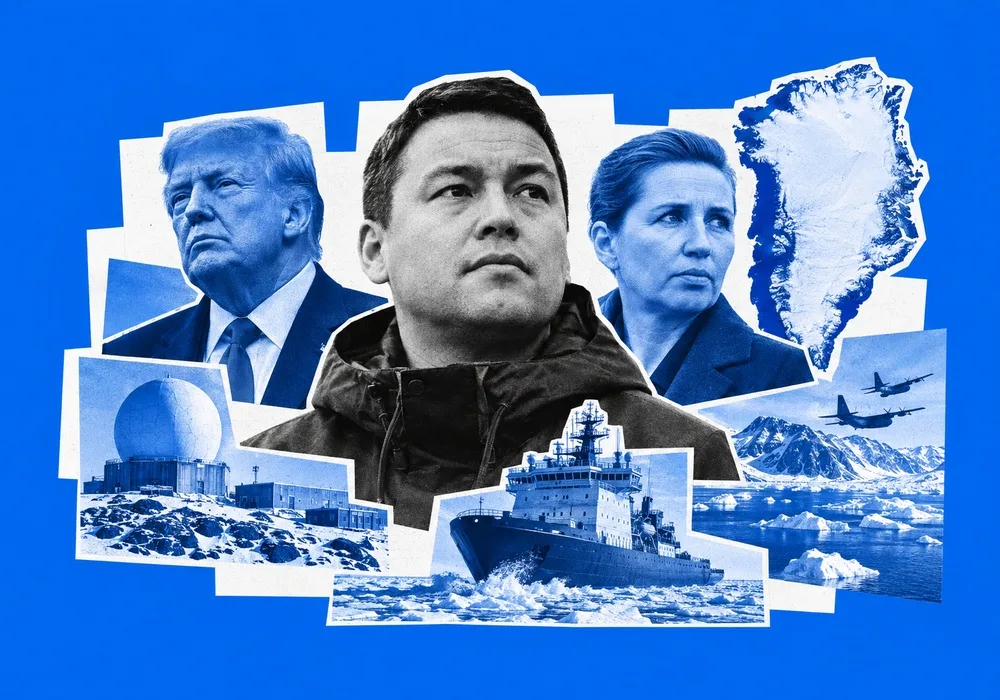
The United States, Denmark and Greenland are preparing to sign a security agreement that would significantly expand Washington’s military role on the Arctic island while preserving Danish sovereignty and Greenlandic self-determination. The deal comes after months of tension over Trump’s demands for greater US control of Greenland.
The United States, Denmark and Greenland have reached an agreement to strengthen security in the Arctic and North Atlantic, paving the way for a significantly expanded American military presence on the strategically important island. At the same time, Copenhagen and Nuuk have stressed that the arrangement will not transfer sovereignty over Greenland to Washington or undermine the Greenlandic people’s right to self-determination. The agreement is expected to be signed during the UN General Assembly in New York next week and will then have to go through the necessary parliamentary procedures before entering into force.
The announcement comes after months of tension between the United States and Denmark over Greenland’s future. Donald Trump had repeatedly argued that American control of the island was necessary for US national security and had previously raised the possibility of acquiring the territory. The new framework stops short of that objective, but gives Washington a much broader security role in Greenland and seeks to prevent rival powers from establishing a military or sensitive economic presence there.
A compromise on Greenland’s security
The exact contents of the agreement have not yet been made public, leaving important questions about how the new security arrangement will work in practice. Reuters reported that the undisclosed elements include the scale of the future US military presence and whether Washington would receive any formal powers relating to foreign policy or Greenland’s natural resources. Trump, meanwhile, has described the agreement as giving the United States “permanent control” over security and other American needs on the island.
Danish and Greenlandic authorities have used significantly different language. Danish Prime Minister Mette Frederiksen said the agreement recognises the sovereignty and territorial integrity of the Kingdom of Denmark as well as the Greenlandic people’s right to self-determination. Greenland’s Prime Minister Jens-Frederik Nielsen similarly said the agreement recognises Greenland’s interests and its place in international cooperation.
This distinction will be central to the political and legal debate that follows. The emerging arrangement appears to provide Washington with a substantially stronger and potentially long-term military position without changing the formal status of Greenland. It therefore represents a shift from the earlier confrontation over whether the United States could acquire the island towards negotiations over how far American security responsibilities and military access can extend while Danish sovereignty remains in place.
Why Washington wants a stronger position
Greenland occupies a critical position between North America and Europe and is increasingly important to the security architecture of the Arctic and North Atlantic. The island is already home to the US Pituffik Space Base, which supports American missile-warning, space-surveillance and other strategic capabilities. Its location also makes Greenland relevant to monitoring activity across the Arctic approaches to North America and the North Atlantic routes connecting the United States and Europe.
The negotiations have therefore focused on giving Washington greater freedom to use Greenland for defence purposes. Reuters reported before the agreement that the US and Denmark had discussed arrangements that could allow Greenlandic territory to support the Trump administration’s proposed Golden Dome missile-defence system, while also considering measures aimed at limiting Chinese influence on the island. The final agreement is expected to establish a broader framework for American military activity while restricting the ability of US adversaries to establish bases or make sensitive investments in Greenland.
Trump has said that adversaries would not be allowed to establish military bases or deploy forces on Greenland and would be prevented from making sensitive investments without Washington’s approval. The wording points to an agreement designed not simply to increase the American military presence but also to shape who can operate economically and strategically on the island. However, the extent of these restrictions and the mechanisms through which they would be enforced will only become clear once the agreement is published.
The Arctic is becoming a NATO security priority
The agreement comes as the Arctic and High North are becoming increasingly important to NATO’s collective defence planning. Seven of the eight Arctic states are NATO members, and the Alliance has expanded military activity in the region in response to a changing security environment. NATO launched Arctic Sentry in February 2026 as part of efforts to strengthen deterrence and defence across the High North, while Finland and Sweden’s membership has further reinforced the Alliance’s position in the region.
Greenland is particularly important because of its position within the North Atlantic defence system. Its territory provides strategic depth between North America and Europe and is relevant to surveillance, air defence, maritime security and early-warning capabilities. A larger US military presence could therefore become part of a wider NATO effort to strengthen the northern flank rather than functioning solely as a bilateral American-Danish arrangement.
The timing also coincides with a meeting of NATO’s Military Committee in Copenhagen on 18–19 September, where the Alliance’s 32 Chiefs of Defence are discussing collective deterrence and defence, military capabilities, innovation and support for Ukraine. NATO has welcomed the Greenland agreement, saying it would help advance security, stability and cooperation in the region.
Russia and China remain part of the equation
The agreement also reflects the growing competition surrounding the Arctic. Russia has maintained extensive military infrastructure across its Arctic territory, while China has sought a larger economic and diplomatic role in the region. For Washington, preventing either country from developing a strategic foothold in Greenland is becoming increasingly connected to the defence of North America and the wider North Atlantic.
The reported restrictions on foreign military bases and sensitive investments are therefore an important part of the emerging framework. They would give the United States and its allies a stronger position against potential Chinese or Russian involvement while allowing Greenland to remain formally within the Danish realm. Reuters reported that limiting Chinese influence was among the issues discussed during the negotiations before the agreement was reached.
For Europe, the arrangement also raises a broader question about the distribution of security responsibilities in the Arctic. Denmark remains responsible for the defence and foreign-policy framework of the Kingdom, while the United States is seeking a more permanent operational role. The agreement could consequently deepen transatlantic military cooperation in the High North while simultaneously giving Washington greater strategic leverage in a territory whose political future remains a matter for Greenlanders.
Greenland’s political position remains decisive
Greenland’s participation is particularly important because the island has extensive self-government and its own political institutions, while questions of sovereignty and international defence remain connected to the Kingdom of Denmark. Nuuk has repeatedly insisted that Greenland cannot simply be treated as an object of negotiations between Copenhagen and Washington. The new agreement’s explicit recognition of Greenlandic interests and the right to self-determination is therefore politically significant.
The agreement does not resolve the separate question of Greenland’s eventual constitutional future. Greenland has its own political debate over relations with Denmark and the possibility of independence, but the security arrangement is being negotiated within the existing framework of the Kingdom. Its provisions could therefore become relevant even if Greenland’s constitutional status changes in the future, depending on the final legal text.
For Copenhagen, the agreement offers a way to strengthen Arctic defence while maintaining the sovereignty of the Kingdom. For Nuuk, it provides a framework in which Greenland’s security interests are explicitly recognised. For Washington, it creates a path towards a stronger and potentially permanent military role without requiring a transfer of territory.
From territorial dispute to security partnership
The agreement marks a significant change from the diplomatic crisis that followed Trump’s repeated demands for greater US control over Greenland. Those demands had created tension between Washington and Copenhagen and raised concerns about the impact on relations within NATO. The new arrangement instead places American military access at the centre of negotiations, separating the question of strategic control from formal ownership of the territory.
The decisive details will come with the publication and signing of the agreement. Until then, it remains unclear exactly how extensive the American military presence will become, what restrictions will apply to foreign investment and whether any additional authority will be granted to Washington. The Danish government has confirmed that the agreement will require parliamentary procedures before it can enter into force.
What is already clear is that Greenland is becoming a more central part of the Western security architecture in the Arctic. The United States is moving towards a long-term military role on the island, Denmark is seeking to preserve its sovereignty and Greenland is securing explicit recognition of its own interests and right to self-determination. The final agreement will determine how those three positions are translated into practical security arrangements across one of the most strategically important regions of the North Atlantic.
Sources: Danish Prime Minister’s Office, NATO