Top news

Oct 30, 2026, 09:30 AM UTC

← Latest news

01
ContinuingAI-generated
US strikes Iranian targets on Larak Island as negotiations stall

US strikes Iranian targets on Larak Island as negotiations stall

US airstrikes targeted Iranian missile launchers on Larak Island as Qatari-mediated talks face hurdles over Tehran's demands and new US compensation claims.

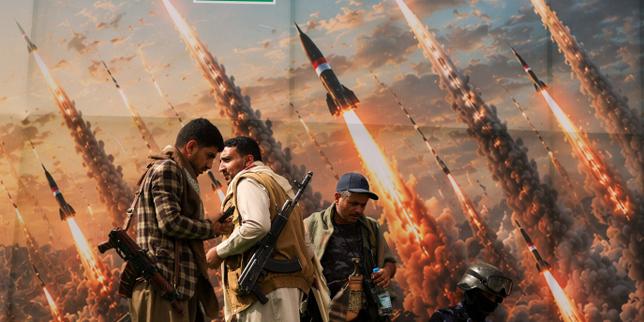
Tensions between the United States and Iran persist as military actions accompany delicate diplomatic talks. US Central Command reported conducting strikes against two missile launchers on Larak Island in the Strait of Hormuz, marking Washington's first direct strikes on Iranian territory in a month. Iranian state media confirmed the deaths of six naval personnel during the operation.

Concurrently, Qatari-brokered negotiations continue. Iranian Foreign Minister Abbas Araghchi outlined Tehran's demands to US envoy Steve Witkoff, requiring an immediate end to the US naval blockade, the unfreezing of Iranian assets, and a complete cessation of regional hostilities to reopen the Strait of Hormuz. However, prospects for a swift resolution were further diminished after US President Donald Trump announced plans to seek financial compensation from Tehran for past attacks, adding a fresh obstacle to the negotiations.

Sources: Le Figaro, Le Monde, Le Soir, Libération, RTBF Info.
Read more
02
ContinuingAI-generated
Ukrainian service members highlight administrative strains as Ministry of Defense expands training

Ukrainian service members highlight administrative strains as Ministry of Defense expands training

Ukrainian soldiers report personnel fatigue, supply gaps, and inequitable award distribution, while the Defense Ministry advances specialized medical training.

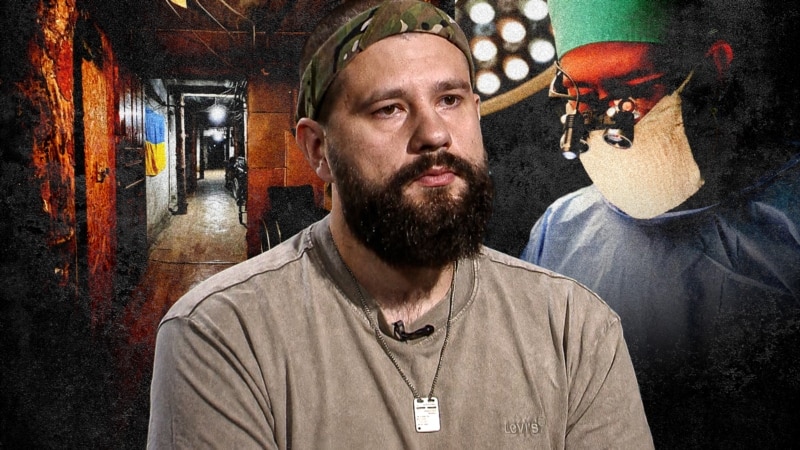
Ukrainian military personnel and recent investigative reports have brought attention to deep-seated operational, administrative, and logistical strains within the armed forces. Combat surgeon Bohdan Zhuravel warned that long deployments without rotations are driving extreme exhaustion among service members, leaving frontline medics and infantry without adequate relief. Meanwhile, drone company commander Yuriy Butusov stated that decentralized supply chains force officers to independently secure basic necessities for their units due to an absence of official logistical support. Additionally, research published by Ukrayinska Pravda exposed structural inequality in military recognitions, noting that medals are predominantly allocated to command headquarters rather than lower-ranking soldiers.

In response to medical challenges, Ukraine's Ministry of Defense announced the completion of the "Tryzub" international combat surgery course. Defense officials intend to establish a specialized trauma competence center to standardize advanced emergency care across frontline units.

Sources: Liga net, NV, Радіо Свобода, Українська правда

Read more
03
ContinuingAI-generated
Emergency services respond to fatal rail and road accidents in Spain and Turkey

Emergency services respond to fatal rail and road accidents in Spain and Turkey

Emergency services in Spain and Turkey are responding to a series of transport disasters, including a high-speed train collision that killed 64 people.

Rescue personnel and police in Spain and Turkey are managing the aftermath of multiple severe transport incidents.

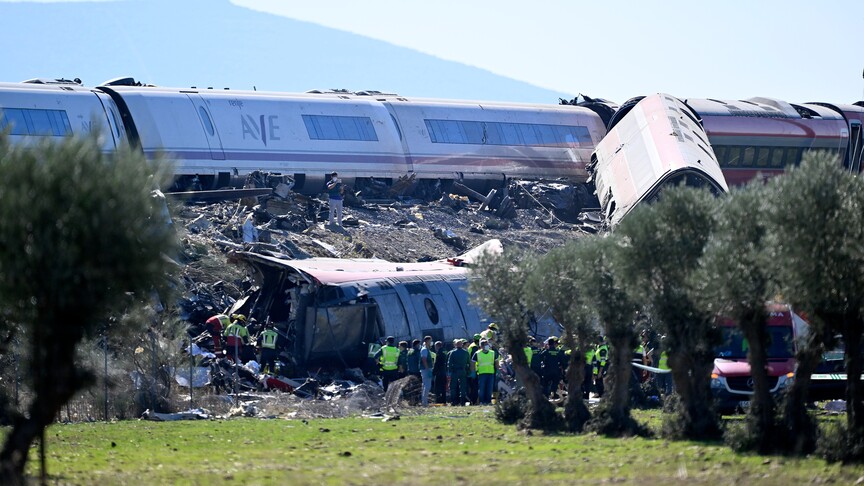
In central Spain, a high-speed Renfe train traveling from Madrid to Sevilla collided with another train near Los Yebenes in Toledo province. Emergency officials reported that two train carriages rolled down a slope, leaving 64 people dead.

In Turkey, local authorities launched investigations into several road collisions. A head-on crash between two cars in Ankara's Polatlı district killed three people and injured four. In Isparta province, a midibus carrying seasonal agricultural workers struck a heavy goods vehicle, injuring 17 passengers. A separate freight vehicle collision caused one fatality and three injuries. Local authorities continue to evaluate the circumstances surrounding each crash.

Sources: Anadolu Ajansı (Anadolu Agency), Bianet, Cumhuriyet, TRT Haber (Turkish Radio and Television Corporation)

Read more
04
ContinuingAI-generated
Ukrainian prosecutor general targets anti-corruption chief Semen Kryvonos

Ukrainian prosecutor general targets anti-corruption chief Semen Kryvonos

Prosecutor General Ruslan Kravchenko accused NABU director Semen Kryvonos of forgery, prompting anti-corruption agencies to reject the claims as political pressure.

Ukraine's Prosecutor General Ruslan Kravchenko announced he signed a notice of suspicion against Semen Kryvonos, director of the National Anti-Corruption Bureau of Ukraine (NABU). Kravchenko accused Kryvonos of document forgery for financial gain and orchestrating a fake adoption to avoid legal liability.

In response, NABU and the Specialized Anti-Corruption Prosecutor’s Office (SAP) stated Kryvonos was not officially served with a notice. The agencies characterized Kravchenko's actions as an attempt to obstruct investigations into a criminal network involving current and former lawmakers, alongside Presidential Office officials.

Following his video statement, Kravchenko reportedly left the country in an official vehicle. President Volodymyr Zelenskyy subsequently urged parliament to expedite Kravchenko’s removal from office.

Sources: NEXTA, OCCRP, The Insider, Радіо Свобода, Українська правда.

Read more
05
ContinuingAI-generated
Swedish daily details aerial weapon mechanics in Russia-Ukraine conflict

Swedish daily details aerial weapon mechanics in Russia-Ukraine conflict

Swedish daily Dagens Nyheter outlined the operational distinctions between ballistic missiles, cruise missiles, and drones in the Russia-Ukraine conflict.

Swedish newspaper Dagens Nyheter published an analysis detailing the operational differences between ballistic missiles, cruise missiles, and drones used in the ongoing war between Russia and Ukraine.

The report explains that ballistic missiles travel along high-altitude trajectories before descending at high speeds, presenting severe interception challenges. Meanwhile, low-flying cruise missiles exploit terrain features to bypass radar detection, and drone swarms are routinely deployed to exhaust defense stockpiles and saturate monitoring systems.

Countering these varied aerial threats requires integrated, multi-layered air defense networks capable of tracking targets across distinct altitudes, speeds, and radar profiles.

Sources: Dagens Nyheter

Read more
Share