
Top news

Oct 29, 2026, 04:30 PM UTC

← Latest news

01
ContinuingAI-generated
Lula secures reelection in Brazil as Bolsonaro challenges tight runoff result

Lula secures reelection in Brazil as Bolsonaro challenges tight runoff result

Luiz Inácio Lula da Silva has won Brazil's presidential election with 51.78% of the vote, as challenger Flávio Bolsonaro requests the annulment of the final outcome.

Brazilian electoral authorities have confirmed incumbent President Luiz Inácio Lula da Silva's reelection in a tight presidential runoff against challenger Flávio Bolsonaro. Lula secured 51.78% of the vote compared to Bolsonaro's 48.22%.

The final hours of voting were marked by confusion after municipal transit shortages prompted Lula to warn that voters were being "prevented from voting," leading electoral judges to grant a two-hour voting extension. Following the declaration of official results, Bolsonaro formally submitted a petition seeking the annulment of the election outcome. The request is currently under review by the Superior Electoral Court as political tension remains high across the country.

Sources: Le Figaro, Le Monde, Le Soir, Libération, RTBF Info.
Read more
02
ContinuingAI-generated
US strikes Iranian targets as diplomatic talks over Strait of Hormuz face hurdles

US strikes Iranian targets as diplomatic talks over Strait of Hormuz face hurdles

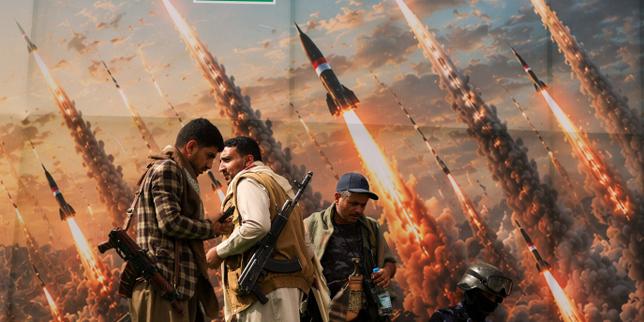
The US launched air strikes on Larak Island while diplomatic negotiations through Qatar continue, with Iran setting terms for reopening the Strait of Hormuz and Donald Trump demanding compensation.

The United States has launched air strikes against Iranian military targets on Larak Island in the Strait of Hormuz, marking the first direct attacks on Iranian territory in a month. U.S. Central Command stated the operations targeted missile launchers, while Iranian media reported that six naval personnel were killed in the strikes.

Despite the military escalation, diplomatic efforts mediated by Qatar continue. Iranian Foreign Minister Abbas Araghchi outlined Tehran's demands to U.S. envoy Steve Witkoff to reopen the Strait of Hormuz, including an immediate end to the American naval blockade, the release of frozen assets, and a complete cessation of hostilities.

However, diplomatic prospects face new obstacles after U.S. President Donald Trump announced plans to demand financial compensation from Tehran for past attacks, further complicating potential negotiations.

Sources: Le Figaro, Le Monde, Le Soir, Libération, RTBF Info.
Read more
03
ContinuingAI-generated
Ukrainian military faces internal administrative criticism amid new medical training drive

Ukrainian military faces internal administrative criticism amid new medical training drive

Ukrainian military personnel have raised concerns over administrative flaws and supply issues while defense authorities advance specialized medical training.

Ukrainian military figures and recent studies have raised concerns over systemic administrative issues within the armed forces, while defense authorities move to improve combat medical training.

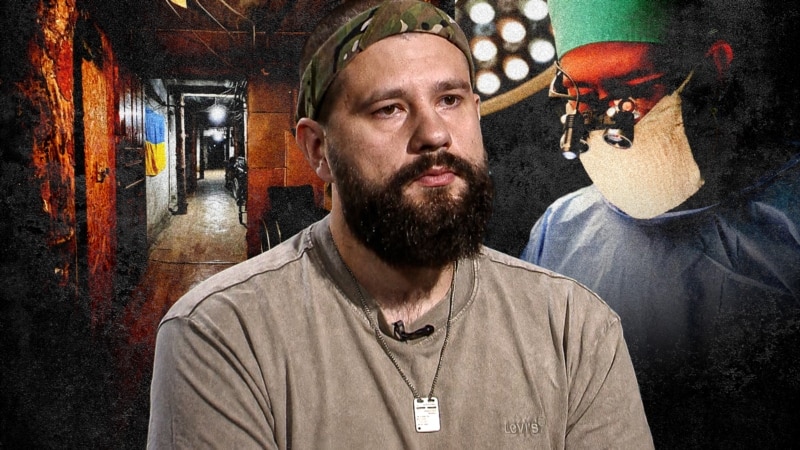
Frontline surgeon Bohdan Zhuravel warned that an absence of troop rotations leaves service members severely exhausted, accusing leadership of neglecting soldiers' needs. Meanwhile, UAV unit commander Yuriy Butusov reported a total lack of designated administrative responsibility for frontline supply delivery, forcing local leaders to secure logistics independently. Separately, a study published by Ukrayinska Pravda revealed that military commendations are overwhelmingly directed toward headquarters staff rather than rank-and-file combatants.

In response to operational demands, Ukraine’s Ministry of Defense announced the completion of "Tryzub," an international combat surgery training program. Defense officials plan to establish a dedicated combat trauma competence center to standardize medical preparation for doctors serving near the front line.

Sources: Liga net, NV, Радіо Свобода, Українська правда

Read more
04
ContinuingAI-generated
Swedish analysis details distinct aerial threats in Russia-Ukraine conflict

Swedish analysis details distinct aerial threats in Russia-Ukraine conflict

A Swedish media analysis breaks down the technical differences and defense challenges of ballistic missiles, cruise missiles, and drones in the Russia-Ukraine war.

An analysis published by Swedish newspaper Dagens Nyheter has detailed the operational characteristics and defense challenges of aerial weapons deployed in the conflict between Russia and Ukraine. The report categorizes airborne threats into ballistic missiles, cruise missiles, and uncrewed aerial vehicles.

According to the publication, ballistic missiles present severe interception difficulties due to their extreme velocity and steep descending trajectories. Cruise missiles avoid detection by navigating at low altitudes along terrain contours. Meanwhile, uncrewed aerial vehicles are primarily deployed in saturation tactics to exhaust air defense stockpiles.

The report concludes that effectively countering these varied systems requires integrated, multi-layered air defense networks capable of responding to targets operating at vastly different speeds, altitudes, and radar profiles.

Sources: Dagens Nyheter

Read more
Share