Top news

Oct 29, 2026, 03:30 PM UTC

← Latest news

01
Christine Lagarde to step down as ECB president in February 2027

Christine Lagarde to step down as ECB president in February 2027

European Central Bank President Christine Lagarde has announced she will step down from her role on 7 February 2027, eight months ahead of her term's official end.

European Central Bank President Christine Lagarde announced on Thursday that she will step down early from her position on 7 February 2027, eight months before her eight-year term officially expires in October 2027.

Lagarde stated that serving the institution had been a matter of great pride. European Council President António Costa acknowledged her announcement, thanking her for her leadership. Following the decision, attention has turned to potential successors, with reports identifying former Bank of Spain governor Pablo Hernández de Cos as a candidate in the succession race. Additional reporting suggested Lagarde may be considering a future role at the World Economic Forum.

Sources: Canarias7, Diário de Notícias, El Mundo, La Repubblica, La Vanguardia
Read more
02
ContinuingAI-generated
Emergency services investigate fatal transport accidents in Spain and Turkey

Emergency services investigate fatal transport accidents in Spain and Turkey

Authorities in Spain and Turkey have launched investigations into a series of fatal rail and road accidents that left dozens dead and injured.

Authorities in Spain and Turkey are conducting investigations following a series of deadly transport incidents across both countries.

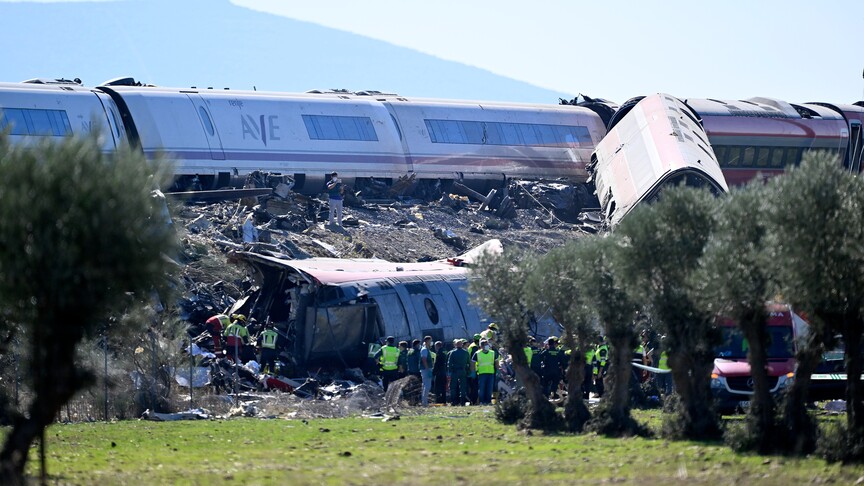
In Spain, a high-speed train traveling from Madrid to Sevilla collided with another train near Los Yebenes in Toledo province, leaving 64 people dead after two carriages derailed down a slope. Emergency responders worked at the site to recover victims and assist survivors.

Meanwhile, multiple road crashes were reported in Turkey. A head-on collision between two cars in Ankara's Polatlı district resulted in three fatalities and four injuries. In Isparta province, a midibus transporting seasonal agricultural workers struck a heavy lorry from behind, injuring 17 passengers. A separate collision involving two freight vehicles caused one death and left three others injured.

Local authorities have opened formal inquiries to determine the causes of each accident.

Sources: Anadolu Ajansı (Anadolu Agency), Bianet, Cumhuriyet, TRT Haber (Turkish Radio and Television Corporation)

Read more
03
ContinuingAI-generated
US and Chinese leaders discuss Ukraine during Xi Jinping's state visit

US and Chinese leaders discuss Ukraine during Xi Jinping's state visit

US President Donald Trump hosted Chinese President Xi Jinping at the White House for bilateral talks on Ukraine, Middle East security, and global stability.

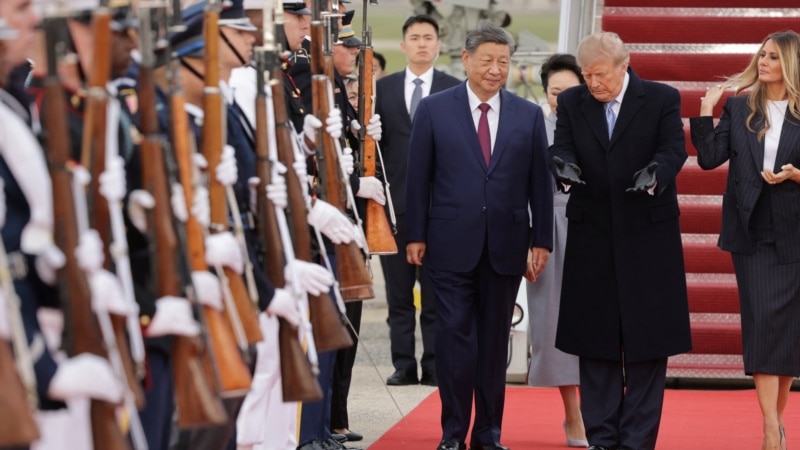
Chinese President Xi Jinping conducted a three-day state visit to the United States, marking his first official state visit to the country in over a decade. US President Donald Trump greeted the Chinese leader upon his arrival at the aircraft, a diplomatic gesture similar to his reception of Russian President Vladimir Putin in Alaska last year.

During bilateral talks at the White House, the leaders addressed key international security issues, including the war in Ukraine, Middle East conflicts, and stability on the Korean Peninsula. The meetings followed requests from Ukrainian President Volodymyr Zelenskyy asking Washington to press Beijing into using its influence over Moscow toward de-escalation. Analysts note that Beijing could seek economic or trade concessions from Washington in exchange for any shift regarding its stance on Russia.

Sources: Liga net, NV, Radio Svoboda, Ukrainska Pravda.

Read more
04
ContinuingAI-generated
UN reaches consensus on autonomous weapons definition as European militaries expand AI

UN reaches consensus on autonomous weapons definition as European militaries expand AI

UN members agreed on defining autonomous weapons in Geneva, while Germany and NATO advance AI military tools and sovereign software platforms.

In Geneva, 128 United Nations member states agreed on a formal definition for autonomous weapon systems, marking an initial step toward potential regulation. Following the consensus, the UN and the International Committee of the Red Cross warned that machine-targeted attacks on humans risk "crossing a moral red line."

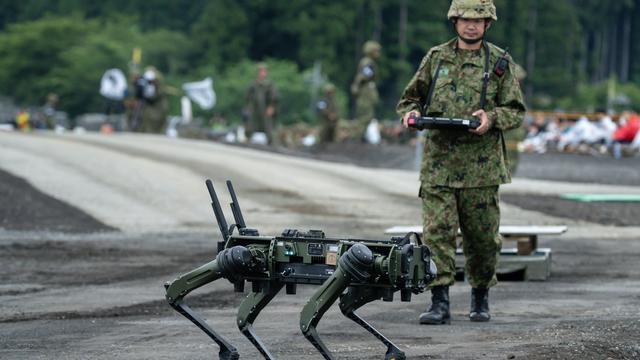
Concurrently, military AI integration is progressing across Europe. German defense documents indicate that semi-autonomous systems may operate without step-by-step human control in specific scenarios, though a ministry spokesperson stressed that "the decision on the use of military force remains with humans." Germany also rejected software from US provider Palantir, choosing to build an in-house AI analysis tool instead. Meanwhile, Ukraine and NATO have jointly created two AI applications to forecast enemy drone routes and assist artillery planning.

Sources: Correctiv, Der Spiegel, Der Standard, Die Zeit, Hartpunkt

Read more
Share