
Top news

Oct 26, 2026, 11:00 PM UTC

← Latest news

01
ContinuingAI-generated
Netanyahu rejects US Gaza peace plan until Hamas disarms

Netanyahu rejects US Gaza peace plan until Hamas disarms

Israeli Prime Minister Benjamin Netanyahu rejected a US-backed 15-point Gaza peace plan, demanding the full disarmament of Hamas before any military withdrawal.

Israeli Prime Minister Benjamin Netanyahu has formally rejected the 15-point Gaza peace proposal backed by US President Donald Trump, insisting Israeli forces will not withdraw until Hamas is completely disarmed.

In televised remarks, Netanyahu stated that "Israel rejects the 15-point document" and emphasized that military forces "will not carry out any withdrawal until Hamas is genuinely disarmed." The announcement marks a public rift with Washington, which had recently hailed the initiative after Hamas signaled agreement.

Despite the political disagreement, Israeli offensive actions in Gaza have largely paused following diplomatic pressure from the United States. Netanyahu faces delicate domestic political maneuvering ahead of national elections scheduled for 27 October, balancing demands from his far-right coalition partners against pressure from the US administration.

Sources: Cyprus Mail, France24, STV News, The Guardian, The Herald.
Read more
02
ContinuingAI-generated
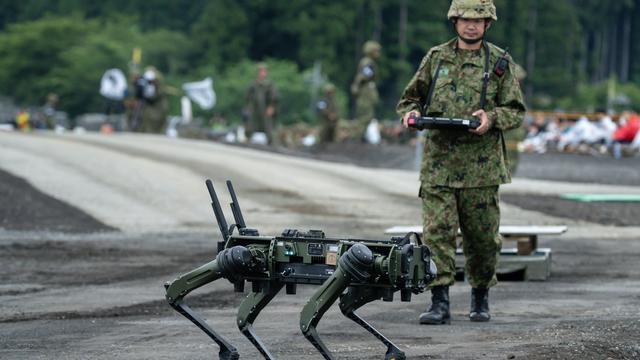
Nations agree on autonomous weapons definition as Western militaries advance AI

Nations agree on autonomous weapons definition as Western militaries advance AI

128 nations in Geneva agreed on a definition for autonomous weapons, as Western militaries push forward with sovereign AI systems and battlefield applications.

International efforts to regulate military artificial intelligence reached a milestone as 128 nations in Geneva agreed on a standardized definition for autonomous weapons systems. The consensus follows joint warnings from the United Nations and the International Committee of the Red Cross regarding automated targeting. Meanwhile, Western armed forces are expanding operational AI capabilities. Germany’s Defence Ministry confirmed that semi-autonomous systems may execute operational steps independently, maintaining that "the decision on the use of military force remains with humans." Germany also rejected US vendor Palantir in favor of developing a proprietary data analysis platform. Concurrently, Ukraine and NATO have jointly created two AI tools designed to predict enemy drone routes and optimize artillery targeting.

Sources: Correctiv, Der Spiegel, Der Standard, Die Zeit, Hartpunkt

Read more
03
ContinuingAI-generated
Ukrainian anti-corruption chief targeted by outgoing prosecutor general amid high-level probe

Ukrainian anti-corruption chief targeted by outgoing prosecutor general amid high-level probe

NABU and SAP investigate presidential office officials while facing allegations from outgoing Prosecutor General Kravchenko, who reportedly left Ukraine.

Ukrainian anti-corruption agencies are investigating an alleged criminal network involving current and former lawmakers alongside senior officials within President Volodymyr Zelenskyy's office. The National Anti-Corruption Bureau (NABU) and the Specialized Anti-Corruption Prosecutor's Office (SAP) announced the probe amid an escalating dispute with the Prosecutor General's Office.

Outgoing Prosecutor General Ruslan Kravchenko recently stated he signed a notice of suspicion against NABU Director Semen Kryvonos, accusing him of forging documents for financial gain and arranging a sham adoption. NABU and SAP denied that Kryvonos received any official notice, describing the claims as an effort to obstruct investigations into top government figures.

Following his public statement, Kravchenko reportedly departed Ukraine in a government vehicle, leading President Zelenskyy to urge parliament to expedite the prosecutor general's removal.

Sources: NEXTA, OCCRP, Radio Svoboda, The Insider, Ukrainska Pravda.

Read more
04
ContinuingAI-generated
Dagens Nyheter analyzes aerial weapon tactics in Russia-Ukraine conflict

Dagens Nyheter analyzes aerial weapon tactics in Russia-Ukraine conflict

Dagens Nyheter details the distinct operational capabilities and defensive challenges of ballistic missiles, cruise missiles, and drones in the Russia-Ukraine war.

Swedish daily Dagens Nyheter has outlined the operational characteristics and defensive challenges associated with key aerial weapon systems used in the ongoing conflict between Russia and Ukraine.

The analysis highlights that ballistic missiles present the most acute defense hurdle due to their high speeds and steep trajectories, which severely limit interception windows. Cruise missiles present a different threat by flying at low altitudes and maneuvering around terrain features to evade radar detection. Meanwhile, uncrewed aerial vehicles are increasingly deployed in dense swarms designed to saturate and exhaust defensive missile inventories.

To effectively counter these diverse aerial capabilities, the report underscores the necessity of a multi-tiered, integrated air defense strategy.

Sources: Dagens Nyheter

Read more
05
ContinuingAI-generated
Lithuanian president calls for proactive border defense amid security concerns

Lithuanian president calls for proactive border defense amid security concerns

Lithuanian President Gitanas Nausėda urged citizens to view border security measures as vital precautions amid regional tensions and internal defense challenges.

Lithuanian President Gitanas Nausėda has urged the public to view increased military deployment near the border with Russia as a necessary precaution rather than a cause for alarm. Speaking in an interview, Nausėda emphasized that early preparation is key to preventing potential provocations, remarking that "it is better to observe even excessive caution" than to react after an incident occurs.

Nausėda also addressed several challenges within the national defense sector, acknowledging that Lithuania's air defense remains imperfect and citing delays in joint drone manufacturing initiatives with Ukraine. Additionally, he voiced concern over internal friction between defense leadership and warned that a recent controversy surrounding a defense ministry social gathering could cause long-lasting reputational damage.

Sources: 15min, LSM

Read more
Share