Top news

Oct 19, 2026, 03:00 PM UTC

← Latest news

01
ContinuingAI-generated
US officials deny ammunition shortages as watchdog points to gaps

US officials deny ammunition shortages as watchdog points to gaps

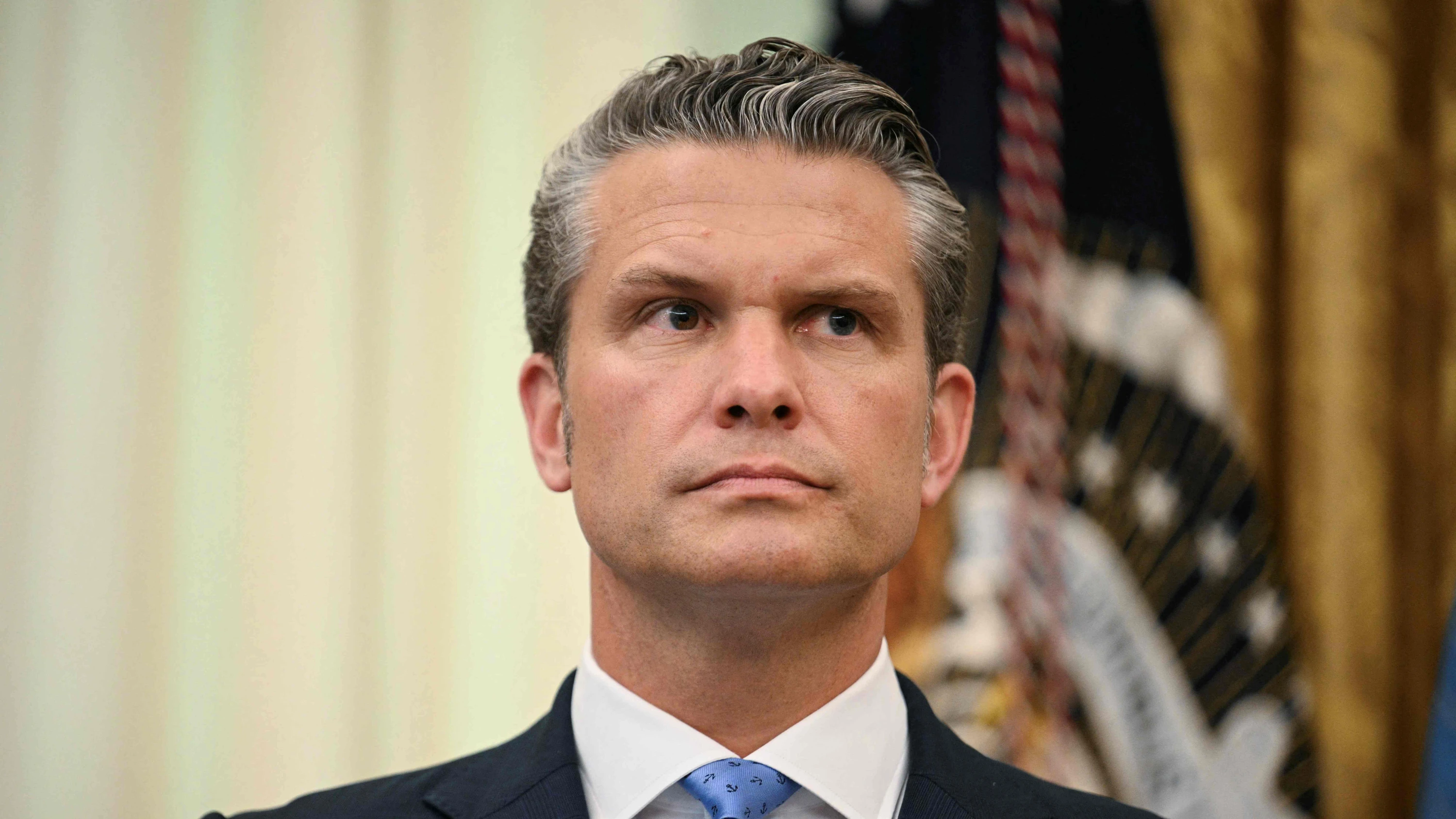
US President Donald Trump and Defense Secretary Pete Hegseth denied reports of ammunition shortages, despite a Pentagon watchdog report identifying strategic stockpile gaps.

United States President Donald Trump and Defense Secretary Pete Hegseth have rejected media reports indicating that American military ammunition reserves are dangerously low due to the conflict with Iran. Writing on Truth Social, Trump insisted the military maintains "huge amounts of 'munition'" and threatened those leaking inventory details with long prison sentences. Hegseth similarly dismissed claims published by outlets including CNN regarding depleted defense stockpiles.

However, a Department of Defense inspector general report submitted to Congress acknowledged "strategic stock gaps and bottlenecks" resulting from military engagements. While the administration maintains that defense supplies remain robust, watchdog findings highlight operational strain and supply constraints.

Sources: Die Zeit, FAZ, ORF, Tagesschau
Read more
02
ContinuingAI-generated
Trump and Xi hold White House talks on Ukraine and global security

Trump and Xi hold White House talks on Ukraine and global security

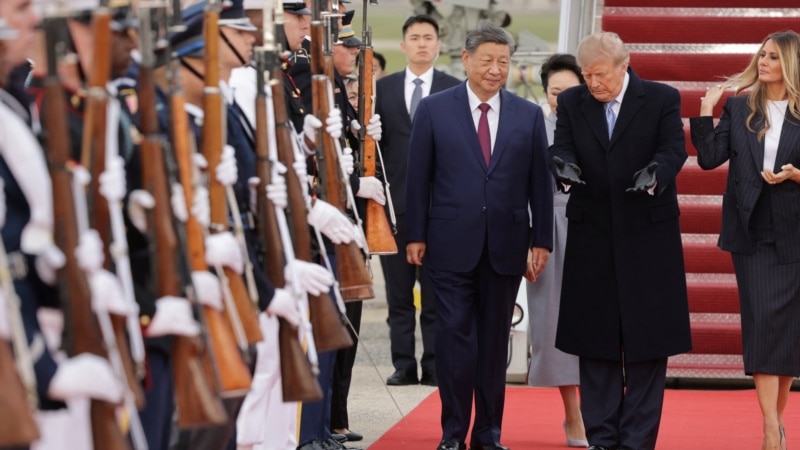
US President Donald Trump hosted Chinese leader Xi Jinping at the White House to discuss Ukraine, Middle East tensions, and Korean Peninsula stability.

US President Donald Trump welcomed Chinese leader Xi Jinping to Washington for a three-day state visit, marking Xi's first state visit to the United States in over a decade. Discussions at the White House focused on key international security issues, including the war in Ukraine, regional stability on the Korean Peninsula, and escalating tensions in the Middle East.

The high-level meeting followed a request from Ukrainian President Volodymyr Zelenskyy, who asked Washington to urge Beijing to leverage its influence over Moscow to facilitate de-escalation. Observers noted that Trump extended a rare diplomatic gesture by greeting Xi directly at his aircraft upon arrival. Chinese foreign ministry statements confirmed that bilateral talks covered major international and regional matters of mutual concern.

Sources: Liga net, NV, Радіо Свобода, Українська правда

Read more
03
ContinuingAI-generated
Ukrainian service members raise concerns over administrative and supply issues

Ukrainian service members raise concerns over administrative and supply issues

Ukrainian personnel highlight operational, administrative, and logistical challenges facing frontline troops, calling for reforms to rotation, supply, and mobilization policies.

Ukrainian service members and commentators have voiced growing frustration over administrative, logistical, and equity issues within the country's armed forces.

Frontline surgeon Bohdan Zhuravel stated that prolonged service without rotations leaves troops feeling marginalized compared to civilians. In supply operations, drone company commander Yuriy Butusov observed that unit leaders must secure essential equipment independently due to a lack of institutional accountability.

Additionally, an investigation published by Ukrainska Pravda revealed inequities in the military awards system, noting that commendations are often disproportionately retained by headquarters staff rather than frontline soldiers. Addressing mobilization concerns, service member Pavlo Kazarin urged reforms to deferment policies and military medical commissions to restore fairness.

Sources: Liga net, NV, Radio Svoboda, Ukrainska Pravda

Read more
04
ContinuingAI-generated
Swedish analysis details distinct aerial threats in Ukraine conflict

Swedish analysis details distinct aerial threats in Ukraine conflict

Swedish newspaper Dagens Nyheter outlines the key operational differences and air defense challenges between ballistic missiles, cruise missiles, and attack drones in Ukraine.

Swedish daily Dagens Nyheter has published a detailed guide examining the primary aerial weapon systems used in the war between Russia and Ukraine, explaining the distinct defensive challenges each poses.

The analysis highlights three core threat categories: high-speed ballistic missiles, low-flying cruise missiles, and uncrewed attack drones. Ballistic missiles travel on high-altitude trajectories before re-entering at extreme speeds, giving air defense operators minimal reaction time. Cruise missiles fly at low altitudes, utilizing terrain masking to evade radar detection. Meanwhile, long-range attack drones are frequently deployed in swarms to saturate radar networks and exhaust costly interceptor stockpiles.

The assessment concludes that counteracting these airborne threats requires integrated, multi-layered air defense networks capable of responding to high-speed, low-altitude, and saturation tactics simultaneously.

Sources: Dagens Nyheter

Read more
Share