Top news

Oct 11, 2026, 10:30 PM UTC

← Latest news

01
ContinuingAI-generated
UN defines autonomous weapons as Germany updates AI military doctrine

UN defines autonomous weapons as Germany updates AI military doctrine

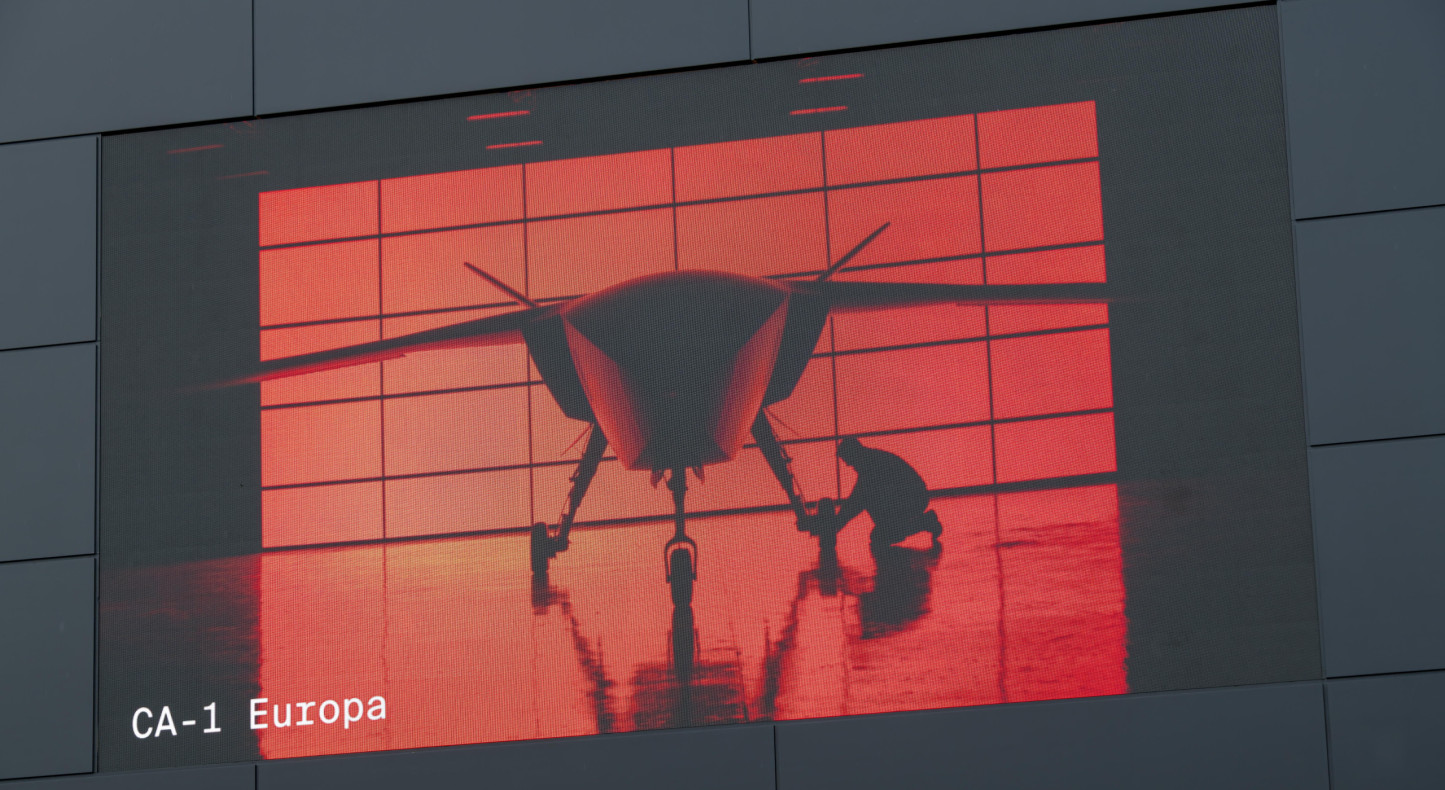
UN states agreed on a definition for autonomous weapons amid warnings over AI capabilities, while Germany clarified human control guidelines and rejected software from Palantir.

In Geneva, 128 UN member states established a formal definition for lethal autonomous weapons, marking an initial step toward international regulation. The consensus coincided with a joint warning from the UN and the International Committee of the Red Cross, cautioning that humanity is "dangerously close to crossing a moral red line" if machines autonomously target people.

Meanwhile, national defense strategies are adapting to emerging technologies. Germany's Defense Ministry confirmed that while human command over military force remains mandatory, weapons may utilize partially autonomous capabilities in specific operational settings. Additionally, the Bundeswehr rejected intelligence software from US vendor Palantir, opting to develop a proprietary AI data-analysis platform to preserve technological sovereignty.

Sources: Correctiv, Der Spiegel, Der Standard, Die Zeit, ESUT.

Read more
02
ContinuingAI-generated
Russian frontline advances stall as Moscow targets Ukrainian energy grid

Russian frontline advances stall as Moscow targets Ukrainian energy grid

Russian territorial gains in Ukraine remained virtually stagnant through late September, while Moscow intensified long-range strikes against key energy infrastructure ahead of winter.

Frontline movements in Ukraine remained minimal through late September, contradicting official Russian claims of major gains. Mapping data from independent monitors showed negligible net territorial changes over four weeks, even as Russian forces captured roughly 133 square kilometers in August. Ukrainian counterattacks have reclaimed territory in key sectors, including over 745 square kilometers near Oleksandrivka since January.

With ground progress stalled, Moscow has escalated long-range strikes targeting Ukraine's energy and heating infrastructure ahead of winter. Ukrainian Prime Minister Serhij Koreckyj stated recent bombardment on Kyiv's grid was the largest since last spring. Ukrainian air defense efficiency dropped from 92 percent in May to 83 percent in September amid intensifying aerial raids.

Sources: Deník N, Ekonomický deník, Respect, Seznam Zprávy.

Read more
03
ContinuingAI-generated
Historical analyses identify 1989 as catalyst for modern multipolar order

Historical analyses identify 1989 as catalyst for modern multipolar order

Historical retrospectives identify 1989 as a global turning point, shaping the modern multipolar world through key events in Europe, Asia, and the Middle East.

Historical retrospectives continue to frame 1989 as the foundational year of 21st-century global geopolitics. While European memory remains centered on the fall of the Berlin Wall and the collapse of state socialism across Eastern Europe, historians emphasize that events outside the West were equally transformative.

In Asia, the Chinese government's crackdown at Tiananmen Square preserved single-party governance, setting the stage for state-led economic expansion that elevated China into a global superpower. Meanwhile, the Soviet withdrawal from Afghanistan signaled Moscow's waning international influence, accelerating the collapse of the USSR and ending Cold War bipolarity. Together, these concurrent developments dismantled the post-World War II balance of power and established the multipolar system defining contemporary international affairs.

Sources: Die Presse

Read more
04
ContinuingAI-generated
Swedish report details key aerial threats in Russia-Ukraine conflict

Swedish report details key aerial threats in Russia-Ukraine conflict

A Swedish analysis details how ballistic missiles, cruise missiles, and drones present unique defensive challenges in the Russia-Ukraine conflict.

Swedish publication Dagens Nyheter has detailed the operational characteristics of primary aerial weapon systems used in the Russia-Ukraine war, emphasizing the distinct defensive challenges each presents. According to the overview, ballistic missiles reach extreme altitudes before diving at high velocities, leaving defenders with minimal reaction windows. In contrast, low-flying cruise missiles exploit geographical terrain to evade early radar detection. Additionally, low-cost attack drones are frequently launched in waves to saturate tracking networks and exhaust costly interceptor stocks. Effective protection against these combined threat vectors requires multi-layered, integrated air defense systems capable of countering diverse trajectories and speeds.

Sources: Dagens Nyheter

Read more
05
ContinuingAI-generated
Fed official advocates US rate hikes as Swedish lenders adjust Riksbank forecasts

Fed official advocates US rate hikes as Swedish lenders adjust Riksbank forecasts

Dallas Fed President Lorie Logan called for further US rate hikes, while Swedish lenders Nordea and SBAB updated their forecasts for upcoming Riksbank policy adjustments.

Federal Reserve Bank of Dallas President Lorie Logan stated that the US central bank needs to raise short-term interest rates by at least 0.5 percentage points. Logan noted that this increase is necessary to achieve a "slightly restrictive" stance and return inflation to its 2% target.

Meanwhile, Swedish financial institutions have updated their projections for the Riksbank's benchmark rate. Nordea brought forward its expected timeline for rate increases, forecasting the policy rate will reach 2.25% and remain stable through 2028, driven by domestic economic expansion and global monetary policy shifts. Separately, state-owned lender SBAB revised its outlook, now predicting rate hikes in December and February rather than its previous November timeline.

Sources: Dagens Industri, Svenska Dagbladet, Sydsvenskan.

Read more
Share
