Top news

Oct 11, 2026, 04:30 PM UTC

← Latest news

01
ContinuingAI-generated
UN reaches consensus on autonomous weapons definition as Germany develops AI strategy

UN reaches consensus on autonomous weapons definition as Germany develops AI strategy

128 UN member states agreed in Geneva on defining autonomous weapons, while Germany moves to develop in-house AI platforms for military data analysis.

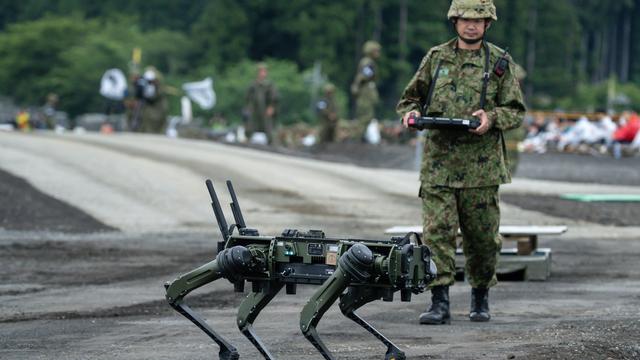
International efforts to regulate lethal autonomous weapons advanced in Geneva as 128 UN member states agreed on a formal definition for such systems. The milestone comes alongside warnings from the UN and the International Committee of the Red Cross, which cautioned that humanity is "dangerously close to crossing a moral red line" if machines autonomously target people.

Concurrently, national defense strategies are adapting to AI capabilities. Germany's Defense Ministry clarified that ultimate command over military force remains with human operators, though weapon systems may employ partially autonomous functions in specific operational contexts. To ensure technological sovereignty, the Bundeswehr rejected software from US vendor Palantir, opting to develop an in-house AI platform for real-time intelligence analysis.

Sources: Correctiv, Der Spiegel, Der Standard, Die Zeit, ESUT.

Read more
02
ContinuingAI-generated
Russian frontline momentum stalls in September as energy strikes intensify

Russian frontline momentum stalls in September as energy strikes intensify

Russian ground operations in Ukraine have stalled despite claims of success from Moscow, while long-range strikes against Kyiv's energy grid escalate ahead of winter.

Russian ground operations across the Ukrainian frontline have largely stalled, contradicting official claims from Moscow. Independent assessments from the Institute for the Study of War and DeepState show virtually no net territorial change over four weeks in September. While Finnish analysts at the Black Bird Group noted Russian gains of roughly 133 square kilometers in August, Ukrainian counterattacks reclaimed significant territory, particularly near Oleksandrivka where Ukrainian forces report liberating more than 745 square kilometers since January.

Concurrently, Moscow has intensified its long-range strike campaign against Ukraine's energy grid ahead of winter. Ukrainian Prime Minister Serhij Koreckyj confirmed that recent bombardments targeting Kyiv's power and heating facilities represent the largest assault on energy infrastructure since spring. The strikes come as Ukrainian air defense interception rates fell from 92 percent in May to 83 percent in September.

Sources: Deník N, Ekonomický deník, Respect, Seznam Zprávy.

Read more
03
ContinuingAI-generated
Historical analysis positions 1989 as pivotal turning point in modern geopolitics

Historical analysis positions 1989 as pivotal turning point in modern geopolitics

Historical assessments highlight 1989 as a pivotal turning point that reshaped global geopolitics, from the fall of the Berlin Wall to Tiananmen Square and Afghanistan.

Recent historical assessments highlight 1989 as a pivotal year that fundamentally reshaped global geopolitics and laid the groundwork for the 21st century. While Western commentary frequently centers on the fall of the Berlin Wall and the collapse of European communism, historical analysis emphasizes that simultaneous developments in Asia and the Middle East carried equal long-term significance.

In China, the military crackdown at Tiananmen Square reinforced single-party rule, enabling a state-directed economic framework that fueled the nation's emergence as a superpower. Concurrently, the Soviet Union's military withdrawal from Afghanistan signaled a sharp decline in Moscow's international stature, accelerating the dissolution of the USSR and ending Cold War bipolarity. Analysts contend these concurrent developments dismantled the post-World War II balance of power, establishing the multipolar system that defines international relations today.

Sources: Die Presse

Read more
04
ContinuingAI-generated
Swedish media outlet outlines aerial weapon tactics in Russia-Ukraine conflict

Swedish media outlet outlines aerial weapon tactics in Russia-Ukraine conflict

Swedish newspaper Dagens Nyheter has published a technical overview examining the aerial weapons utilized in the Russia-Ukraine war.

Swedish newspaper Dagens Nyheter has published an explanatory guide analyzing the primary aerial weaponry deployed in the war between Russia and Ukraine. The report details the distinct operational characteristics of ballistic missiles, cruise missiles, and uncrewed aerial vehicles, explaining the specific tactical challenges each poses to air defense networks.

Ballistic missiles travel at extreme altitudes and descend at high velocities, limiting target identification and interception windows. Conversely, cruise missiles fly low along landscape contours to evade radar detection. Additionally, swarms of low-cost attack drones are frequently used to saturate defensive positions and exhaust supplies of expensive interceptor munitions. The analysis concludes that defending against these combined vector threats requires integrated, multi-layered air defense systems capable of responding at various altitudes and speeds.

Sources: Dagens Nyheter

Read more
05
ContinuingAI-generated
Donald Trump and Pete Hegseth reject reports of US ammunition shortages

Donald Trump and Pete Hegseth reject reports of US ammunition shortages

US President Donald Trump and Defense Secretary Pete Hegseth rejected reports of ammunition shortages, despite a Pentagon watchdog citing stock gaps.

United States President Donald Trump and Defense Secretary Pete Hegseth have rejected media reports alleging that military operations against Iran caused severe ammunition shortages. Writing on Truth Social, Trump asserted that the military maintains "huge amounts of 'ammunition'" and threatened individuals leaking sensitive information with lengthy prison sentences. The official pushback follows reporting by American outlets, including CNN and The Washington Post, suggesting missile deficits influenced operational decisions regarding further strikes.

However, an independent Pentagon watchdog report submitted to the United States Congress contradicted official statements, citing "strategic stock gaps and bottlenecks" caused by the ongoing conflict. The document detailed financial expenditures, operational damage, and inventory constraints, highlighting a divide between administration claims of unlimited reserves and oversight findings.

Sources: Die Zeit, FAZ, ORF, Tagesschau

Read more
Share