Top news

Oct 9, 2026, 10:00 PM UTC

← Latest news

01
ContinuingAI-generated
Slovenian football figures reflect on careers and Maribor-Olimpija derby

Slovenian football figures reflect on careers and Maribor-Olimpija derby

Aleš Čeh and Jan Mlakar shared insights on their careers and the Maribor-Olimpija derby, highlighting team allegiances and rivalries.

Former Slovenian national team captain Aleš Čeh and forward Jan Mlakar have reflected on their careers and the enduring rivalry between Olimpija Ljubljana and Maribor.

Čeh, who captained Slovenia's national team and spent over a decade as an assistant coach to Srečko Katanec—including seven years working in Asia—expressed strong ties to Olimpija and Austrian side Grazer AK, while emphasizing his respect for Maribor.

Meanwhile, 27-year-old Ljubljana native Mlakar has returned to Maribor for a third spell. Addressing his roots, Mlakar stated that he "was never close to Olimpija" and voiced confidence in Maribor's leadership. Mlakar observed that while Olimpija is currently experiencing a crisis, a derby match presents an opportunity for a struggling side to turn its fortunes around.

Sources: Delo, Siol.net

Read more
02
ContinuingAI-generated
Historians mark 1989 as global turning point for modern order

Historians mark 1989 as global turning point for modern order

Analysts mark 1989 as the pivotal year shaping modern geopolitics through key events in Europe, China, and Afghanistan.

Historical analyses continue to emphasize the year 1989 as the foundational moment of the contemporary international order. While the fall of the Berlin Wall and the collapse of communist regimes across Eastern Europe remain central to Western narratives, experts stress that parallel events reshaped global governance elsewhere.

In China, the military crackdown on protests in Tiananmen Square cemented single-party rule alongside state-guided economic modernization. Simultaneously, the Soviet Union's withdrawal from Afghanistan highlighted Moscow's waning strategic power, accelerating the collapse of the Eastern Bloc. Analysts argue these intersecting developments dismantled Cold War bipolarity, laying the groundwork for today's multipolar global landscape.

Sources: Die Presse

Read more
03
ContinuingAI-generated
Russian frontline progress stalls in September as strikes target Ukraine's power grid

Russian frontline progress stalls in September as strikes target Ukraine's power grid

Russian ground offensives yielded minimal territorial gains in September as Moscow intensified long-range attacks on Ukraine's energy grid ahead of winter.

Russian offensive operations in Ukraine stalled through September, yielding minimal territorial changes despite claims of progress from Moscow. Mapping by the Institute for the Study of War and DeepState indicated near-zero net shifts over four weeks, while Finnish analysts from Black Bird Group recorded limited Russian gains of 133 square kilometers in August. Meanwhile, Ukrainian forces executed counterattacks near Oleksandrivka, reclaiming over 745 square kilometers since January.

With ground momentum slowing, Moscow escalated long-range strikes against Ukraine's energy grid ahead of winter. Ukrainian Prime Minister Serhij Koreckyj stated recent attacks targeting the Kyiv region were the largest since spring. The strikes coincided with a drop in Ukrainian air defense interception rates to 83 percent in September from 92 percent in May.

Sources: Deník N, Ekonomický deník, Respect, Seznam Zprávy.

Read more
04
ContinuingAI-generated
UN states agree on autonomous weapon definition as Germany builds sovereign AI

UN states agree on autonomous weapon definition as Germany builds sovereign AI

Global talks in Geneva established a definition for autonomous weapons, while Germany moves to develop independent military AI systems.

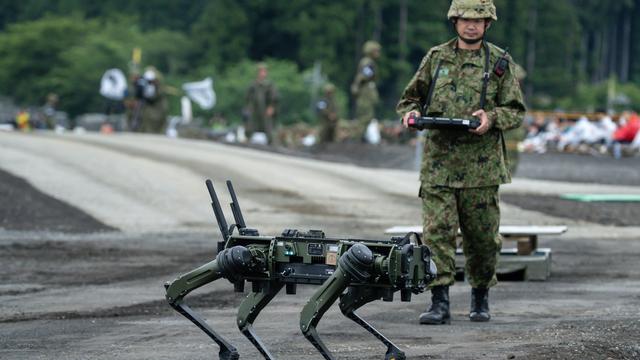
International efforts to regulate military technology advanced in Geneva, where 128 states established a formal definition for autonomous weapon systems. The agreement occurred alongside warnings from international bodies that machine-controlled targeting threatens a "moral red line." In parallel, Germany's Defense Ministry confirmed that while decisions regarding force remain under human oversight, specific weapon functions may operate autonomously based on context. Seeking technological independence, the German military declined software from US supplier Palantir in favor of developing its own proprietary AI data analysis system. Security analysis underscores that maintaining independent decision-making capabilities is increasingly critical for preserving national sovereignty.

Sources: Correctiv, Der Spiegel, Der Standard, Die Zeit, ESUT.

Read more
05
ContinuingAI-generated
Hungary recovers 2.3 billion forints from toll deal probe

Hungary recovers 2.3 billion forints from toll deal probe

Hungary's government recovered 2.27 billion forints from a toll contract linked to Lőrinc Mészáros and expanded scrutiny to IT businessman Gábor Emőri.

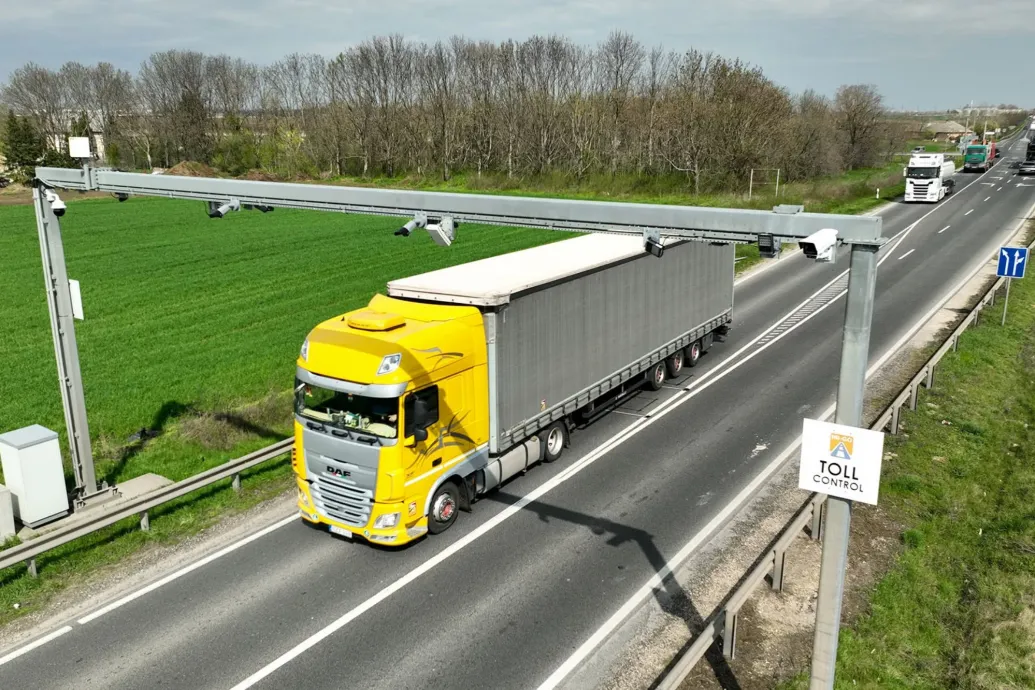
Hungarian Transport Minister Dávid Vitézy announced that a private equity fund associated with businessman Lőrinc Mészáros has reimbursed 2.27 billion forints to the state. The repayment follows an official review of a 64.5 billion forint transaction involving three electronic toll management companies authorized during the tenure of former minister János Lázár.

Following the recovery, Hungarian authorities are widening their scrutiny to focus on IT entrepreneur Gábor Emőri. Having spent twelve years developing and operating the national electronic toll system, Emőri became a primary beneficiary of state technology contracts. Investigators are currently reviewing historical procurement deals to evaluate whether further public funds can be reclaimed.

Sources: 444, HVG, Telex.

Read more
Share