Top news

Oct 9, 2026, 10:00 AM UTC

← Latest news

01
ContinuingAI-generated
Historians frame 1989 as global turning point for modern order

Historians frame 1989 as global turning point for modern order

1989 marked a global turning point through the fall of the Berlin Wall, Tiananmen Square, and the Soviet withdrawal from Afghanistan, establishing today's multipolar world order.

Historical analyses continue to emphasize 1989 as a foundational turning point that shaped the twenty-first century's geopolitical landscape. While Western memory predominantly centers on the fall of the Berlin Wall and the democratic opening of Eastern Europe, scholars note that parallel global events established divergent paths for major powers.

In Asia, the Chinese government's crackdown on Tiananmen Square protests solidified autocratic control while paving the way for state-managed economic expansion. Concurrently, the Soviet withdrawal from Afghanistan signaled Moscow's waning power, accelerating the collapse of the Eastern Bloc. Together, these intersecting developments transformed the Cold War order into today's complex multipolar reality.

Sources: Die Presse
Read more
02
ContinuingAI-generated
Die Linke leads Berlin election polling as recount alters parliamentary seats

Die Linke leads Berlin election polling as recount alters parliamentary seats

Die Linke leads Berlin election polls while a Spandau recount shifts a seat to the AfD and shrinks the state parliament.

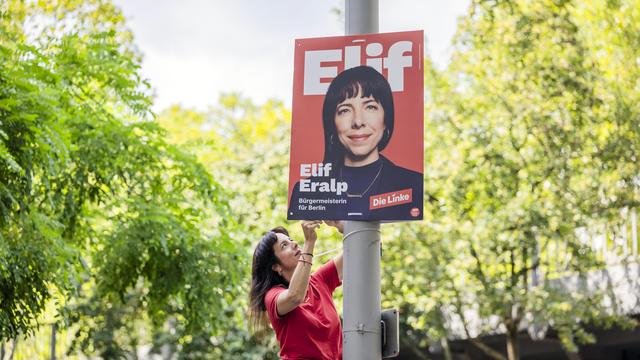
Ahead of Berlin's state election, polling places Die Linke in the lead at 22 percent, driven by strong youth support, ahead of the Christian Democratic Union (CDU) and Alternative for Germany (AfD), both tied at 18 percent.

Reporting highlights contrasting voter dynamics across demographics. While overall voter turnout remains lower among residents with a migrant background, coverage indicates growing interest in the AfD among some young citizens of Turkish origin who cite concerns over public safety, order, and economic stability.

Concurrently, election officials corrected a transmission error in a Spandau constituency. A recount reallocated a direct seat from CDU candidate Bettina Meißner to AfD candidate Tommy Tabor. The correction eliminated overhang mandates, reducing the total size of the Berlin Abgeordnetenhaus by five seats.

Sources: Correctiv, DW, FAZ, Tagesschau, Die Zeit

Read more
03
ContinuingAI-generated
Macron criticizes Gaza diplomacy at UN as Trump defends unilateral policy

Macron criticizes Gaza diplomacy at UN as Trump defends unilateral policy

French President Emmanuel Macron criticized Gaza diplomacy at the UN General Assembly, contrasting with Donald Trump's defense of unilateral foreign policy actions.

French President Emmanuel Macron criticized international diplomatic efforts regarding Gaza during his address to the United Nations General Assembly, calling them a "shameful spectacle." Macron also condemned Israeli actions in the West Bank, drawing strong objections from Israeli officials.

His speech contrasted with U.S. President Donald Trump's address, in which Trump defended his unilateral foreign policy, asserting, "While others talk, I act." Trump threatened to "annihilate" Iran, predicted the collapse of Cuba's government, and highlighted U.S. access to Venezuelan oil reserves.

Meanwhile, on the assembly sidelines, Venezuelan Vice President Delcy Rodríguez requested a bilateral meeting with Spanish Prime Minister Pedro Sánchez to discuss diplomatic relations.

Sources: Canarias7, El Mundo, La Vanguardia

Read more
04
ContinuingAI-generated
Displacement following 1974 invasion in Cyprus sealed island's division

Displacement following 1974 invasion in Cyprus sealed island's division

The mass population displacement following the 1974 Turkish invasion in Cyprus led to the 1975 Third Vienna Agreement, solidifying the island's bizonal division.

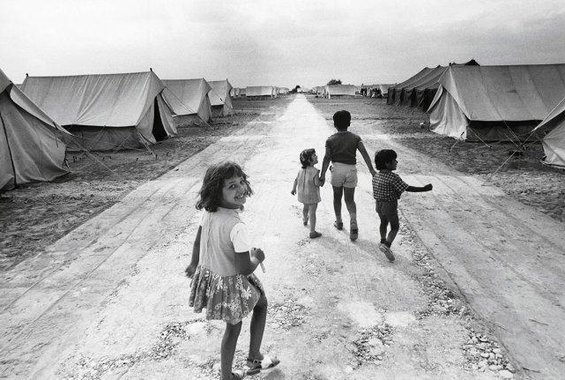
The mass displacement of populations in Cyprus following the Turkish military interventions in July and August 1974 remains one of the largest demographic shifts relative to population size in modern European history.

These population movements led directly to the 1975 Third Vienna Agreement. Although intended as a temporary arrangement to address pressing humanitarian issues and safeguard civilian rights, the agreement effectively sealed the island's bizonal division. Five decades later, the demographic framework created by these forced relocations continues to form the baseline for ongoing diplomatic negotiations regarding the Cyprus problem.

Sources: Phileleftheros

Read more
05
ContinuingAI-generated
Experts begin DNA testing on human remains recovered in northern Kosovo

Experts begin DNA testing on human remains recovered in northern Kosovo

Forensic experts in Kosovo have begun DNA testing to identify the remains of at least 23 conflict victims exhumed in Zubin Potok.

Following the completion of exhumation work in Zubin Potok on August 21, forensic experts have begun DNA identification procedures on the remains of at least 23 individuals suspected to be victims of the 1998–1999 Kosovo conflict.

The operations, conducted across three locations in the northern municipality, were led by Kosovo's Governmental Commission on Missing Persons in coordination with international bodies. The International Commission on Missing Persons (ICMP) is now handling the genetic testing, extracting profiles from recovered bone samples to compare against existing family reference databases.

ICMP Western Balkans head Samira Krehiq noted that locating and exhuming the remains represents only the first phase of a lengthy identification process.

Sources: Gazeta Tema, Koha.

Read more
Share