Top news

Oct 6, 2026, 10:00 PM UTC

← Latest news

01
ContinuingAI-generated
US and Iran exchange warnings following military strikes near coastal towns

US and Iran exchange warnings following military strikes near coastal towns

US President Donald Trump threatened further military strikes on Iran, while Iranian President Masoud Pezeshkian vowed a decisive response.

United States President Donald Trump has warned of potential new military strikes against Tehran following the first direct exchange of fire between the two nations in a month near Bandar Abbas and Sirik. Trump asserted that Iranian leadership is "begging" for a diplomatic agreement with Washington.

Iranian President Masoud Pezeshkian stated that Tehran is not seeking broader military conflict, but warned it will "decisively respond to aggressors." Iranian officials also denied claims that their naval assets suffered major damage, maintaining that forces in the region remain operational. The strikes have further heightened geopolitical tensions across the region.

Sources: CDM (Cafe del Montenegro).
Read more
02
ContinuingAI-generated
Israel rejects US-backed Gaza peace plan until Hamas disarms

Israel rejects US-backed Gaza peace plan until Hamas disarms

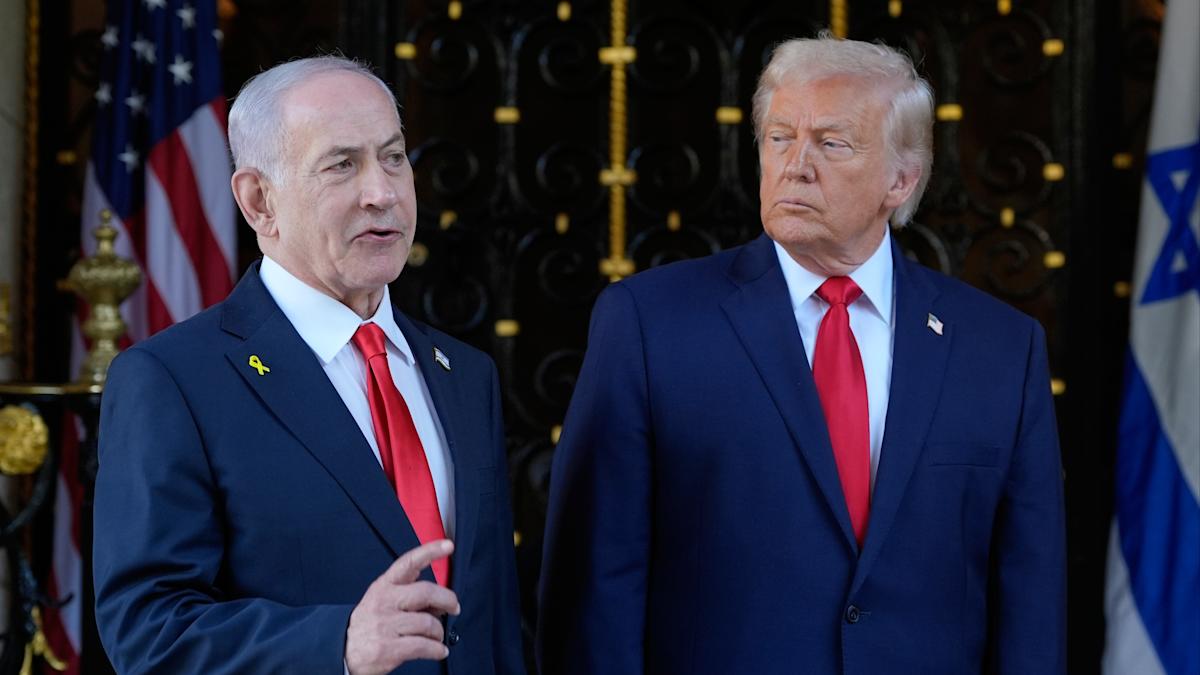
Israeli Prime Minister Benjamin Netanyahu has rejected a 15-point Gaza peace plan endorsed by US President Donald Trump, insisting troops will not withdraw until Hamas fully disarms.

Israeli Prime Minister Benjamin Netanyahu has formally rejected a 15-point Gaza peace proposal endorsed by US President Donald Trump. Speaking in televised remarks, Netanyahu stated that Israel "will not carry out any withdrawal until Hamas is genuinely disarmed" and pledged to continue countering security threats against Israeli forces.

The rejection highlights growing friction between Washington and Jerusalem, even as Israeli military activity in Gaza has slowed under American pressure. Hamas had accepted the framework late last month. Netanyahu's decision comes ahead of Israel's national election scheduled for October 27, as he attempts to balance pressure from far-right coalition partners demanding an uncompromising stance with demands from key international allies seeking progress toward a settlement.

Sources: Cyprus Mail, France24, STV News, The Guardian, The Herald

Read more
03
ContinuingAI-generated
Aleš Čeh and Jan Mlakar weigh in ahead of Slovenian derby

Aleš Čeh and Jan Mlakar weigh in ahead of Slovenian derby

Former Slovenia captain Aleš Čeh and Maribor forward Jan Mlakar discussed their careers and domestic football dynamics ahead of the upcoming derby.

Former Slovenian national team captain Aleš Čeh and Maribor forward Jan Mlakar have shared perspectives on their career trajectories and domestic football dynamics ahead of the upcoming derby between Olimpija Ljubljana and Maribor.

Čeh, who spent over a decade as an assistant coach to Srečko Katanec—including seven years working in Asia—reflected on his transition from playing to management. Despite holding strong personal ties to Olimpija Ljubljana and Austrian side Grazer AK, Čeh expressed continued respect for Maribor.

Meanwhile, Mlakar discussed returning to Maribor for his third spell, expressing confidence in executive leadership under Zlatko Zahovič and Darko Milanič. Addressing the rivalry, Mlakar observed that while Ljubljana is undergoing a rough patch, derby matches remain unpredictable regardless of form.

Sources: Delo, Siol.net

Read more
04
ContinuingAI-generated
How 1989 reshaped the modern global political order

How 1989 reshaped the modern global political order

Analysts view 1989 as a global turning point, as the fall of the Berlin Wall, Tiananmen Square, and the Soviet withdrawal from Afghanistan reshaped international relations.

Historians and political analysts increasingly view the year 1989 as a defining global watershed that shaped modern international relations. While Western narratives often focus on the fall of the Berlin Wall and the subsequent collapse of communist governments across Eastern Europe, other pivotal events simultaneously redefined geopolitical trajectories in Asia and the Middle East.

In China, the government's crackdowns on pro-democracy demonstrations in Tiananmen Square preserved authoritarian political control while enabling rapid economic reform. Concurrently, the retreat of Soviet troops from Afghanistan disrupted regional power balances and hastened the eventual breakup of the Soviet Union. Together, these interconnected developments marked the end of the Cold War's bipolar framework, laying the structural groundwork for today's multipolar global system.

Sources: Die Presse.

Read more
05
ContinuingAI-generated
Swedish daily analyzes aerial weapons shaping the Russia-Ukraine conflict

Swedish daily analyzes aerial weapons shaping the Russia-Ukraine conflict

A Swedish media guide details the operational mechanics of ballistic missiles, cruise missiles, and drones in the Russia-Ukraine war.

Swedish newspaper Dagens Nyheter has outlined the primary aerial weapon systems deployed in the ongoing conflict between Russia and Ukraine, explaining the technical challenges they pose to modern air defense systems.

The analysis details the operational differences between ballistic missiles, which fly on high-altitude arcs at rapid speeds, and low-altitude cruise missiles that maneuver below radar coverage to evade detection. Furthermore, the report examines the widespread use of uncrewed aerial vehicles, which forces air defense networks to manage low-cost, high-volume threats alongside advanced missile systems.

According to military analysts, successfully intercepting these distinct airborne threats requires a sophisticated, multi-tiered defense strategy capable of tracking multiple speeds, altitudes, and attack vectors simultaneously.

Sources: Dagens Nyheter

Read more
Share