
Top news

Oct 6, 2026, 04:00 PM UTC

← Latest news

01
ContinuingAI-generated
Slovenian football figures Čeh and Mlakar reflect on careers and club dynamics

Slovenian football figures Čeh and Mlakar reflect on careers and club dynamics

Former Slovenian national team captain Aleš Čeh and striker Jan Mlakar have shared insights into their coaching transitions and domestic league prospects.

Former Slovenian national team captain Aleš Čeh and forward Jan Mlakar have reflected on their respective football careers and the current landscape of Slovenian domestic football.

Čeh, who captained the national squad during its qualifying era under manager Srečko Katanec, discussed his transition to coaching. After over a decade as an assistant coach, including seven years in Asia, Čeh reiterated his ties to Olimpija Ljubljana and Grazer AK, alongside his respect for Maribor.

Concurrently, 27-year-old striker Jan Mlakar outlined his third return to Maribor. Mlakar expressed strong confidence in club leadership under Zlatko Zahovič and Darko Milanič ahead of the derby against Olimpija Ljubljana, observing that derby matches remain inherently unpredictable regardless of opposition form.

Sources: Delo, Siol.net
Read more
02
ContinuingAI-generated
Russia and Ukraine trade heavy strikes as NATO operates near Kaliningrad

Russia and Ukraine trade heavy strikes as NATO operates near Kaliningrad

Russia launched missile strikes on Kyiv while Ukrainian drones hit Russian oil facilities, alongside US-led NATO activity near Kaliningrad.

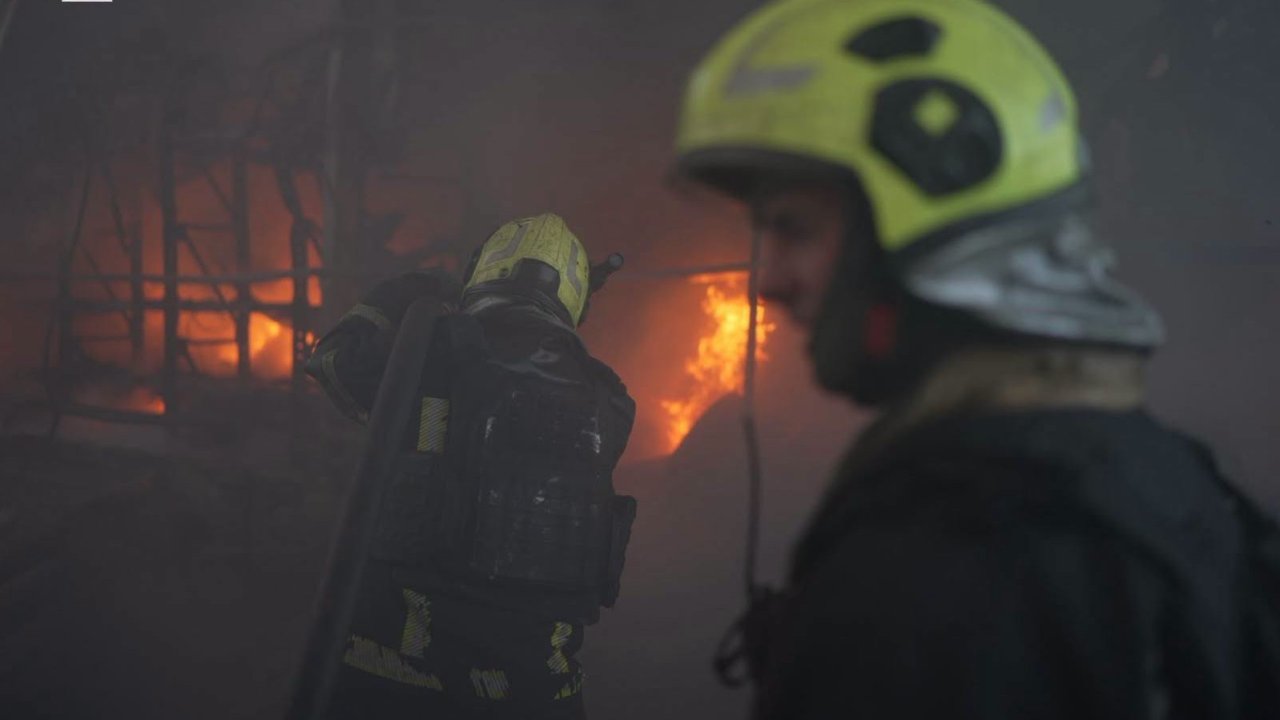
Cross-border attacks between Russia and Ukraine escalated following the departure of American envoys from Kyiv. Russian forces launched ballistic missiles at the Ukrainian capital, killing at least two people and injuring six others. The attack followed earlier Russian drone strikes on a British American Tobacco factory in northern Ukraine.

In response, Ukrainian long-range drones targeted industrial infrastructure in Russia's Saratov and Samara regions. Samara Governor Vyacheslav Fedorishev stated air defenses intercepted dozens of drones, though a fire erupted at the Kuibyshev oil refinery.

Concurrently, NATO forces conducted US-led military operations around Russia's Kaliningrad exclave, featuring American and Norwegian fighter jets, reconnaissance aircraft, and Polish ground troops. NATO officials maintained that the alliance remains defensive and continuously works to improve operational capabilities.

Sources: Investor.bg, Mediapool, Nova TV

Read more
03
ContinuingAI-generated
German authorities investigate more than 100 suspected foreign sabotage cases

German authorities investigate more than 100 suspected foreign sabotage cases

German authorities and intelligence services are investigating over 100 incidents of foreign state-sponsored sabotage, including drone overflights and a foiled airport attack linked to Russia.

German law enforcement and intelligence services are examining more than 100 cases of suspected foreign state-sponsored sabotage across the country. According to official reports and media investigations, reported incidents range from unauthorized drone overflights above military facilities and critical infrastructure to rail disruptions, severed undersea cables, and coordinated disinformation campaigns.

Investigators tracking a thwarted August attempt to detonate an explosive drone near Ukrainian transport planes at Leipzig/Halle Airport have linked the operation's logistics directly to an operative from Russia's military intelligence service, the GRU. Concurrently, domestic intelligence agency heads warned during a parliamentary hearing that foreign operatives may be caching weapons inside German territory. Officials stress that Moscow's broader hybrid warfare strategy aims to destabilize democratic institutions, disrupt critical supply chains, and deepen social divisions.

Sources: Correctiv, Der Standard, DW, FAZ, Tagesschau

Read more
04
ContinuingAI-generated
Historical analyses highlight 1989 as pivotal turning point for modern geopolitics

Historical analyses highlight 1989 as pivotal turning point for modern geopolitics

Historical analyses identify 1989 as a crucial global turning point, connecting the fall of the Berlin Wall, Tiananmen Square, and Afghanistan to today's multipolar world.

Historical analyses continue to identify the year 1989 as a crucial global turning point that laid the foundation for 21st-century international relations. While European collective memory primarily associates the period with the fall of the Berlin Wall and the collapse of communist regimes, concurrent global developments fundamentally reshaped international dynamics beyond the West.

In Asia, the Chinese leadership's suppression of pro-democracy protests in Tiananmen Square solidified autocratic control while paving the way for targeted economic modernization. Meanwhile, the Soviet military withdrawal from Afghanistan dismantled regional alliances and accelerated the dissolution of the USSR. Analysts emphasize that these simultaneous historical shifts ended the bipolar Cold War structure, giving rise to today's multipolar global order.

Sources: Die Presse.

Read more
05
ContinuingAI-generated
Swedish media analysis details aerial threats in Russia-Ukraine conflict

Swedish media analysis details aerial threats in Russia-Ukraine conflict

Dagens Nyheter examines the operational differences between ballistic missiles, cruise missiles, and drones in the war between Russia and Ukraine.

Swedish daily Dagens Nyheter has published an explanatory guide examining the distinct aerial weapons utilized in the war between Russia and Ukraine, highlighting why modern air defense remains exceptionally challenging.

The analysis contrasts high-speed ballistic missiles, which travel at extreme altitudes before striking targets, with terrain-hugging cruise missiles designed to bypass radar detection networks. It also underscores the tactical role of uncrewed aerial vehicles, which are frequently deployed in large swarms to saturate and exhaust defensive surface-to-air systems.

Military experts cited in the overview emphasize that counteracting these varied airborne vectors demands an integrated, multi-layered defense architecture capable of monitoring diverse trajectories, altitudes, and speeds concurrently.

Sources: Dagens Nyheter

Read more
Share

