Top news

Oct 6, 2026, 04:00 AM UTC

← Latest news

01
ContinuingAI-generated
UN reaches consensus on autonomous weapons definition as Germany pursues sovereign military AI

UN reaches consensus on autonomous weapons definition as Germany pursues sovereign military AI

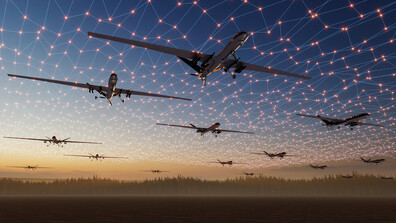
UN member states have established a consensus definition for autonomous weapons, while Germany clarifies its military AI doctrine and rejects US tech vendor Palantir.

At a conference in Geneva, 128 United Nations member states established a consensus definition for autonomous weapon systems, marking an initial step toward global regulation. However, representatives from the UN and the International Committee of the Red Cross warned that allowing machines to autonomously target humans risks crossing a "moral red line."

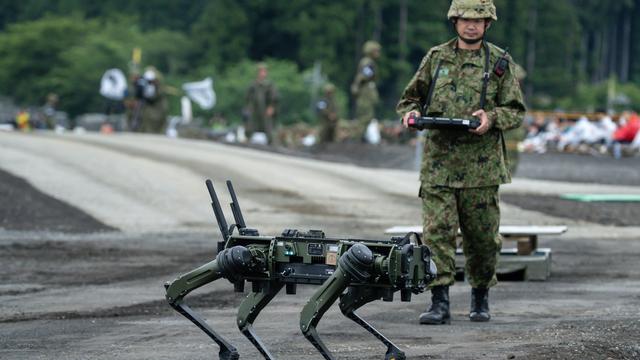
Simultaneously, Germany’s Ministry of Defence clarified that while human command retains ultimate authority over military force, certain semi-autonomous functions may operate without real-time human involvement in specific scenarios. To maintain data sovereignty, the Bundeswehr declined to adopt software from US vendor Palantir, opting to develop a proprietary AI data analysis system instead. Defense analysts stressed that sovereign AI capabilities remain vital for strategic military autonomy.

Sources: Correctiv, Der Spiegel, Der Standard, Die Zeit, ESUT.

Read more
02
ContinuingAI-generated
Slovenian football figures Aleš Čeh and Jan Mlakar reflect on careers and upcoming derby

Slovenian football figures Aleš Čeh and Jan Mlakar reflect on careers and upcoming derby

Former Slovenian national team captain Aleš Čeh and forward Jan Mlakar have shared insights on their careers and Maribor's upcoming derby against Olimpija.

Former Slovenian national team captain Aleš Čeh and forward Jan Mlakar have provided updates on their respective career paths in domestic football.

Čeh, a prominent figure during Slovenia's qualification era under former manager Srečko Katanec, reflected on his transition into coaching. Having spent more than a decade as an assistant coach—including seven years working in Asia—Čeh discussed his affection for Olimpija Ljubljana and Austrian side Grazer AK, while emphasizing his continued respect for rival Maribor.

Concurrently, 27-year-old forward Jan Mlakar highlighted his third return to Maribor. Expressing full confidence in club management under Zlatko Zahovič and Darko Milanič, Mlakar previewed the upcoming derby against Olimpija. He noted that despite Olimpija navigating an internal crisis, derby matches remain inherently unpredictable, leaving the opposition with little to lose.

Sources: Delo, Siol.net

Read more
03
ContinuingAI-generated
US military strikes Iranian oil tankers and targets near Strait of Hormuz

US military strikes Iranian oil tankers and targets near Strait of Hormuz

US forces launched strikes against Iranian commercial tankers and military targets near the Strait of Hormuz following missile attacks on American warships.

The United States military has expanded its operations against Iranian assets near the Strait of Hormuz following escalated maritime confrontations. According to US Central Command, American forces launched strikes against three Iranian oil tankers and multiple military targets after the Islamic Revolutionary Guard Corps fired ballistic missiles at two US warships and attempted to deploy naval mines. US military officials confirmed that the naval mines were successfully neutralized.

The direct targeting of commercial vessels represents a notable escalation in the ongoing conflict. Analysts noted that the confrontation highlights a shift toward fifth-generation warfare, marked by deliberate attacks on critical energy infrastructure and supply networks. US President Donald Trump warned of severe consequences and further strikes on Iranian power grids and infrastructure if disruptions to commercial shipping persist, declaring that "very little will remain of Iran" if attacks continue.

Sources: Investor.bg, Mediapool, Nova TV

Read more
04
ContinuingAI-generated
Historians re-examine 1989 as a global turning point beyond Europe

Historians re-examine 1989 as a global turning point beyond Europe

Analysts argue 1989 was a global turning point, as events in Berlin, Beijing, and Afghanistan collectively laid the groundwork for today's multipolar world.

Historians and political analysts are increasingly framing 1989 as a pivotal year that established the foundations of twenty-first-century global politics. While Western memory primarily focuses on the fall of the Berlin Wall and the decline of European communism, global perspectives underscore simultaneous developments in Asia and the Middle East that reshaped the international order.

In China, the violent suppression of pro-democracy protests in Tiananmen Square consolidated the ruling communist party's political dominance while paving the way for unprecedented economic modernization. Meanwhile, the Soviet Union's military departure from Afghanistan altered regional security dynamics and hastened the collapse of the Soviet state. Analysts argue that these concurrent events marked a fundamental shift away from Cold War bipolarity toward the multipolar system observed today.

Sources: Die Presse.

Read more
05
ContinuingAI-generated
Dagens Nyheter details aerial weapon capabilities and defense hurdles in Ukraine

Dagens Nyheter details aerial weapon capabilities and defense hurdles in Ukraine

A Swedish media overview breaks down how ballistic missiles, cruise missiles, and drones present distinct operational challenges for air defenses in Ukraine.

Swedish publication Dagens Nyheter has outlined the distinct operational mechanisms and tactical challenges posed by aerial weapons used in the Russia-Ukraine war. The analysis compares ballistic missiles, cruise missiles, and drones, emphasizing why integrated air defense systems face significant hurdles.

Ballistic missiles move at extreme speeds along high arcs, offering minimal warning time, whereas low-flying cruise missiles evade radar detection by utilizing terrain contours. Meanwhile, uncrewed aerial vehicles provide an inexpensive means to saturate air defense networks through swarm tactics. Military analysts emphasize that effectively neutralizing these combined aerial threats requires a multi-layered defensive framework capable of monitoring and targeting varied altitudes and speeds simultaneously.

Sources: Dagens Nyheter

Read more
Share