Top news

Oct 5, 2026, 08:30 PM UTC

← Latest news

01
ContinuingAI-generated
Spain sets snap general election for November 29 after housing bill defeat

Spain sets snap general election for November 29 after housing bill defeat

Spanish Prime Minister Pedro Sánchez has called a snap general election for November 29 following parliament's rejection of key housing legislation.

Spanish Prime Minister Pedro Sánchez has officially called a snap general election for November 29 following the defeat of key housing legislation in parliament.

Speaking from the Moncloa Palace, Sánchez declared that his administration requires a "much broader progressive majority" to push forward its legislative agenda. The announcement follows escalating national protests over rising rent costs and housing affordability, which culminated in opposition and regional allies rejecting two government decrees.

Political parties moved swiftly into campaign mode following the decision. The main opposition Popular Party displayed a large banner reading "At last" at its Madrid headquarters, while regional Catalan parties accused Sánchez of manipulating the housing crisis for electoral advantage. Despite the dissolution of parliament, the Cabinet intends to table updated housing decrees on Tuesday.

Sources: Canarias7, Expresso, Infodefensa, La Vanguardia, ORF

Read more
02
ContinuingAI-generated
EU links Ukrainian protection rights to military duties as Czech domestic disputes rise

EU links Ukrainian protection rights to military duties as Czech domestic disputes rise

New EU rules tie Ukrainian temporary protection status to military service as the Czech Republic addresses labor fraud and domestic disputes over official visits to Kyiv.

New European Union regulations extending temporary protection for displaced Ukrainians through March 2028 have taken effect, conditioning residency status on compliance with Ukrainian military service duties.

Simultaneously, domestic friction surrounding Ukraine-related policy has intensified in the Czech Republic. Law enforcement launched a specialized task force, Kobra 26, to combat fraudulent staffing agencies and tax evasion involving Ukrainian workers, which officials estimate costs the state billions of korunas annually.

At the political level, Czech diplomatic engagements have sparked internal disputes. Deputy Parliamentary Speaker Barbora Urbanová traveled to Kyiv after the parliamentary organizing committee previously rejected her official trip request. Additionally, General Staff Chief Miroslav Hlaváč awaits defense ministry authorization to attend an upcoming high-level military conference in Ukraine alongside European peers.

Sources: Ekonomický deník, iROZHLAS, Respect, Seznam Zprávy

Read more
03
ContinuingAI-generated
Rising public skepticism and tax risks accompany AI expansion in Italy

Rising public skepticism and tax risks accompany AI expansion in Italy

A recent survey shows Italian trust in AI has dropped to 49 percent amid growing concerns over job displacement, fiscal imbalances, and industry pushback against state regulation.

Growing economic, fiscal, and regulatory challenges surrounding artificial intelligence are reshaping public perception and policy debates in Italy. According to a recent SWG survey presented at the Chamber of Deputies, Italian trust in AI has fallen to 49 percent from 68 percent in 2020, while public apprehension has climbed to 45 percent.

The shift reflects broader concerns over economic disruption, with estimates attributing roughly 425,000 global job losses to AI over the past three years. Additionally, reporting highlights emerging fiscal risks for Italy's tax authority due to structural tax imbalances created by rapid technological adoption.

Meanwhile, major global AI developers face scrutiny as they lobby to limit government regulatory oversight. Despite widespread domestic skepticism, Italian-heritage leaders, including Anthropic chief executive Dario Amodei, continue to play central roles in driving global tech innovation.

Sources: ANSA, Corriere della Sera, Il Messaggero, Il Sole 24 Ore, La Repubblica.

Read more
04
ContinuingAI-generated
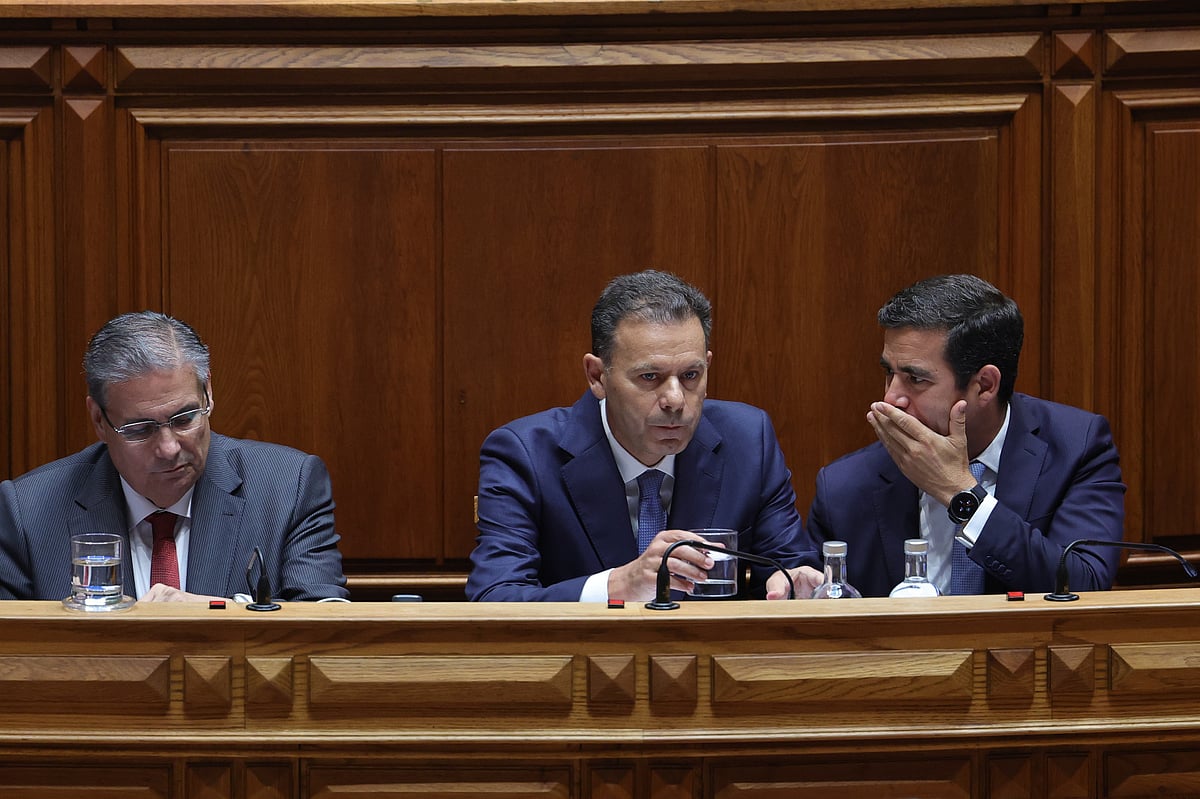
Portuguese parliament rejects Chega censure motion against minority government

Portuguese parliament rejects Chega censure motion against minority government

Portugal's parliament rejected a censure motion brought by Chega against the minority government after opposition Socialists abstained.

Portugal's parliament has rejected a censure motion brought by the far-right Chega party against the minority Democratic Alliance government. The motion, targeting recent controversies surrounding the Minister of Internal Administration, failed after the ruling coalition voted against it and the opposition Socialist Party abstained.

During the debate, Minister of the Presidency António Leitão Amaro criticized Chega for initiating a measure bound for defeat, stating that citizens would make a "political judgment" on the party's tactics. Leitão Amaro also reiterated that the executive continues to govern without a "preferential partner" in parliament. The outcome leaves the minority government intact despite ongoing political pressure and criticism from opposition benches.

Sources: Diário de Notícias (DN), Expresso, RTP (Rádio e Televisão de Portugal)

Read more
05
ContinuingAI-generated
Ursula von der Leyen calls for European independence and security reforms in State of the Union address

Ursula von der Leyen calls for European independence and security reforms in State of the Union address

European Commission President Ursula von der Leyen outlined plans for European strategic independence, defense reforms, and economic competitiveness in her State of the Union speech.

European Commission President Ursula von der Leyen presented her sixth State of the Union address in Brussels, emphasizing the need for European strategic independence amid shifting global dynamics. Speaking alongside Canadian Prime Minister Justin Trudeau, she cautioned that the bloc is simultaneously stronger and more vulnerable than ever.

Addressing challenges involving major powers such as China and the United States, von der Leyen called for a new European security architecture and increased defense industrial capacity. She stressed economic competitiveness, noting, "Europe must be a place where it is easy to do business, easy to invest, and easy to expand."

The address also covered pressing issues such as high energy costs, artificial intelligence regulation, migration reform, and climate adaptation, specifically referencing recent wildfires in Croatia.

Sources: HRT Vijesti, Index, Poslovni dnevnik

Read more
Share