Top news

Oct 5, 2026, 10:30 AM UTC

← Latest news

01
ContinuingAI-generated
German investigators link failed airport drone attack to Russian military intelligence

German investigators link failed airport drone attack to Russian military intelligence

German authorities have linked a failed drone strike at Leipzig/Halle Airport to Russia's GRU intelligence agency amid broader hybrid warfare concerns.

German law enforcement officials have linked a failed August drone attack at Leipzig/Halle Airport directly to Russia's military intelligence service, the GRU. Investigative files indicate a suspected Russian operative acted as the primary logistical coordinator for deploying an explosive device targeting four Ukrainian cargo aircraft. The attack failed when the drone's fuse malfunctioned.

German authorities view the attempt as part of an expanding state-sponsored hybrid warfare campaign. Federal and state police are currently investigating over 100 suspected cases of foreign interference, ranging from drone flights over military installations and railway disruption to undersea cable damage. Domestic intelligence agencies also warn that foreign operatives may have hidden weapons caches within Germany to support potential future acts of sabotage.

Sources: Correctiv, Der Standard, FAZ, ORF, Tagesschau

Read more
02
ContinuingAI-generated
Finnish foreign fighter imprisoned in Russia as reports highlight Russian troop shortages

Finnish foreign fighter imprisoned in Russia as reports highlight Russian troop shortages

A Finnish volunteer fighter has been jailed in Russia, while reports point to severe troop shortages in Moscow's armed forces.

A Finnish citizen in his fifties who previously served as a volunteer fighter for Ukraine has been imprisoned in Russia on mercenary charges, marking the first recorded instance of a Finnish foreign combatant being detained by Russian authorities. The Helsinki resident, publicly identified under the pseudonym "Mikael," was reportedly taken into custody following a subsequent trip to Africa.

Meanwhile, reports highlighting severe manpower shortages within the Russian armed forces have raised questions over potential future conscription drives. According to an interview published by independent Russian outlet Meduza, a conscript named Maksim stated that "hardly any mobilized men are left" following heavy combat losses. The deficit has renewed speculation regarding whether Moscow will initiate a new wave of military mobilization to sustain its war effort.

Sources: Helsingin Sanomat, Iltalehti

Read more
03
ContinuingAI-generated
UN states define autonomous weapons as Germany outlines AI military rules

UN states define autonomous weapons as Germany outlines AI military rules

128 UN member states agreed on defining autonomous weapons as Germany detailed its military AI guidelines and rejected software vendor Palantir.

International discussions on autonomous weapons reached a key landmark in Geneva, where 128 United Nations member states agreed on a common definition for autonomous weapon systems. Following the consensus, the UN and the International Committee of the Red Cross cautioned against crossing "a moral red line" by allowing machines to autonomously target human beings.

Concurrently, Germany's Ministry of Defence clarified its operational guidelines on artificial intelligence. While affirming that ultimate authority over military force remains with human operators, officials confirmed that specific semi-autonomous functions may execute without direct human intervention depending on individual circumstances. To preserve data sovereignty and maintain strategic independence, the Bundeswehr declined to contract American software vendor Palantir, opting instead to build a custom internal AI decision-support platform for military data analysis.

Sources: Correctiv, Der Spiegel, Der Standard, Die Zeit, ESUT.

Read more
04
ContinuingAI-generated
Historical analysis details KGB threats against former Finnish prime minister Liinamaa

Historical analysis details KGB threats against former Finnish prime minister Liinamaa

Political science scholar Alpo Rusi details late Cold War Soviet intelligence operations targeting former Finnish Prime Minister Keijo Liinamaa.

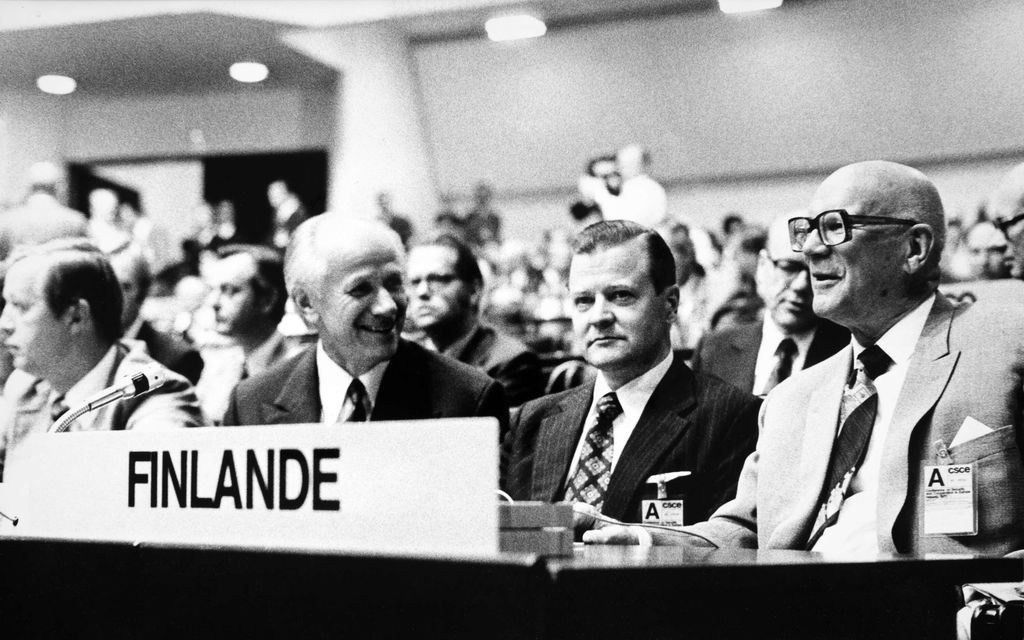
Political science scholar Alpo Rusi has highlighted historical records detailing Soviet intelligence operations targeting former Finnish Prime Minister Keijo Liinamaa during the late Cold War. Writing in Iltalehti, Rusi examined covert pressure exerted by the KGB in the late 1970s and early 1980s as Moscow sought to influence Finnish domestic politics and the presidential succession surrounding President Urho Kekkonen’s final years in office.

Liinamaa, who served as Finland's national conciliator and brief caretaker prime minister, reportedly confided in close associates regarding veiled threats he received prior to his death in 1980. Rusi's analysis illustrates the reach of Soviet operative networks in Helsinki during a critical period of geopolitical alignment in Northern Europe, reflecting broader efforts by Eastern bloc agents to manipulate internal governance.

Sources: Iltalehti.

Read more
05
ContinuingAI-generated
Swedish daily details aerial weapon mechanics and air defense hurdles in Ukraine

Swedish daily details aerial weapon mechanics and air defense hurdles in Ukraine

A Swedish media analysis breaks down the operational differences between ballistic missiles, cruise missiles, and drones in the Russia-Ukraine conflict.

Swedish newspaper Dagens Nyheter has published an overview detailing the operational characteristics of key aerial weapons deployed in the Russia-Ukraine war, along with the distinct challenges they present to modern defensive systems.

According to the analysis, ballistic missiles travel at extreme speeds along high trajectories, leaving minimal reaction time for air defense forces. In contrast, cruise missiles fly at low altitudes to avoid radar detection. Meanwhile, uncrewed aerial vehicles offer a cost-effective option capable of swarming targets to overwhelm defense networks.

Military experts note that addressing these combined aerial threats requires multi-layered defense architectures that can simultaneously track targets operating at varying altitudes and speeds.

Sources: Dagens Nyheter

Read more
Share