Top news

Oct 5, 2026, 07:30 AM UTC

← Latest news

01
ContinuingAI-generated
Russian drone raids strike Kyiv as Moscow targets Ukraine's energy network

Russian drone raids strike Kyiv as Moscow targets Ukraine's energy network

Russian drone strikes hit Kyiv following Moscow's announced campaign against Ukrainian energy infrastructure, while the EU investigates drone sabotage in Germany.

Russian forces launched overnight drone strikes targeting Kyiv, injuring at least one person and damaging civilian areas. The renewed bombardment follows an official announcement from Moscow’s Defence Ministry outlining a campaign aimed at disabling Ukraine’s energy infrastructure.

In response, Ukrainian forces have increased long-range drone strikes against oil refineries inside Russian territory, compelling Moscow to import foreign fuel to meet domestic demand.

Meanwhile, European security officials are investigating suspicious drone activity inside the European Union. German authorities identified two suspects with ties to Moscow following explosive drone incidents near Leipzig. European Commission President Ursula von der Leyen condemned the potential sabotage, warning that the bloc will not tolerate attacks on European Union soil and remains prepared to respond.

Sources: Corriere della Sera, La Repubblica.

Read more
02
ContinuingAI-generated
Dagens Nyheter details aerial weapon systems used in Ukraine war

Dagens Nyheter details aerial weapon systems used in Ukraine war

A Swedish media analysis details how ballistic missiles, cruise missiles, and drones present distinct air defense challenges in the Ukraine war.

Swedish daily Dagens Nyheter has outlined the technical operational differences between key aerial weapons utilized in the Russia-Ukraine war, highlighting the distinct defensive challenges each presents to modern military forces.

According to the analysis, ballistic missiles pose severe threats due to their extreme speeds and high trajectories, which restrict early warning times for targeted areas. Conversely, cruise missiles rely on low-altitude flight paths to evade radar detection systems. Meanwhile, uncrewed aerial vehicles offer cost-effective alternatives capable of swarming targets to overwhelm defensive networks.

Military experts emphasize that mitigating these combined risks demands a complex, multi-tiered air defense architecture capable of simultaneously tracking targets across varying altitudes, speeds, and radar profiles.

Sources: Dagens Nyheter

Read more
03
ContinuingAI-generated
Italian public trust in AI drops as cybersecurity risks and job fears mount

Italian public trust in AI drops as cybersecurity risks and job fears mount

Public trust in AI across Italy has dropped to 49 percent as concerns grow over corporate ransomware attacks, job losses, and tech deregulation.

Recent developments in artificial intelligence continue to stir public concern and cybersecurity risks in Italy, even as Italian-heritage innovators shape the global tech landscape. A recent survey by SWG indicates that Italian trust in AI has declined from 68 percent in 2020 to 49 percent, with public apprehension rising to 45 percent. This shift follows growing debate over economic impacts, including an estimated 425,000 global job losses linked to AI in recent years.

Concurrently, cybersecurity challenges have heightened as Italian businesses increasingly deploy autonomous AI agents. Observers note that improper oversight leaves firms vulnerable to cybercriminals, resulting in 87 percent of targeted domestic companies paying ransoms. Despite these domestic anxieties, prominent figures like Anthropic chief executive Dario Amodei highlight significant Italian contributions to global AI development. Meanwhile, debate persists over major tech firms pushing to curb regulatory oversight by governments.

Sources: ANSA, Corriere della Sera, Il Messaggero, Il Sole 24 Ore, La Repubblica.

Read more
04
ContinuingAI-generated
Trump urges Ukraine to halt refinery strikes as Moscow rejects arms talks

Trump urges Ukraine to halt refinery strikes as Moscow rejects arms talks

US President Trump urged Ukraine to stop drone strikes on Russian refineries, while Moscow ruled out strategic stability talks and experts criticized Washington's diplomatic approach.

US President Donald Trump has urged Ukrainian President Volodymyr Zelenskyy to halt strikes on Russian oil infrastructure, citing concerns over global fuel supplies. Ukraine's ongoing drone campaign against refineries has reduced Russian fuel processing capacity.

At the same time, Moscow rejected prospects for strategic stability talks with the United States. Russia's Foreign Ministry warned that US missile deployments in Europe, including Norway, eliminate conditions for substantive dialogue.

In addition, diplomatic observers expressed concern over Washington's negotiating stance. Former US envoy Donald Jensen and analyst Fareed Zakaria argued that presidential negotiators misjudge Moscow by treating strategic rivalries as commercial business transactions.

Sources: Hospodářské noviny, iROZHLAS, Respect, Seznam Zprávy

Read more
05
ContinuingAI-generated
UN states agree on autonomous weapons definition as Germany outlines AI doctrine

UN states agree on autonomous weapons definition as Germany outlines AI doctrine

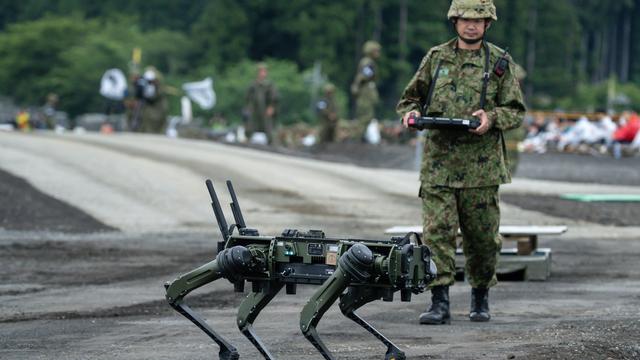
128 UN member states agreed on an official definition for autonomous weapons, while Germany outlined rules for military AI deployment and rejected Palantir for an internal platform.

International discussions on autonomous weapons reached a milestone in Geneva as 128 United Nations member states established a common definition for autonomous weapon systems. The achievement was hailed by Dutch Foreign Minister Tom Berendsen, though the UN and the International Committee of the Red Cross cautioned against crossing "a moral red line" by allowing machines to target humans.

Meanwhile, Germany’s Ministry of Defence clarified its operational guidelines for artificial intelligence. While affirming that ultimate authority over military force remains with human operators, officials confirmed that specific semi-autonomous functions may run without direct human intervention depending on the circumstances. To ensure data sovereignty and retain strategic independence, the Bundeswehr declined to contract American data vendor Palantir, opting to construct a custom internal AI decision-support platform instead.

Sources: Correctiv, Der Spiegel, Der Standard, Die Zeit, ESUT.

Read more
Share