Top news

Oct 4, 2026, 11:00 AM UTC

← Latest news

01
ContinuingAI-generated
Ukrainian military personnel highlight internal logistical and administrative challenges

Ukrainian military personnel highlight internal logistical and administrative challenges

Ukrainian military personnel and commentators have raised concerns over prolonged deployments, supply shortages, unequal award distributions, and mobilization procedures.

Ukrainian military personnel and commentators have raised renewed concerns regarding internal administrative practices, rotation delays, and supply distribution within the armed forces.

Frontline surgeon Bohdan Zhuravel warned that prolonged deployments without rotations are deepening troop exhaustion. Addressing logistical supply, drone unit commander Yurii Butusov told Radio NV that frontline formations frequently lack systematic institutional backing, leaving unit commanders to secure basic equipment independently.

Additionally, an investigation by Ukrainska Pravda highlighted inequities in military commendations, reporting that decorations are routinely prioritized for brigade headquarters personnel rather than frontline combat soldiers. On mobilization, serviceman Pavlo Kazarin informed Liga net that enhancing system fairness requires targeted reforms to medical evaluation commissions and deferment mechanisms.

Sources: Liga net, NV, Радіо Свобода, Українська правда

Read more
02
ContinuingAI-generated
German intelligence links Russian GRU to Leipzig drone plot and ongoing hybrid attacks

German intelligence links Russian GRU to Leipzig drone plot and ongoing hybrid attacks

German authorities link Russia's GRU to a failed drone attack at Leipzig Airport amid over 100 investigations into suspected foreign hybrid warfare.

German authorities are investigating over 100 incidents of suspected state-sponsored hybrid warfare, including drone flights over military sites, railway sabotage, and subsea cable damage. Investigative files cited by media outlets indicate that Russia's military intelligence service, the GRU, was behind a failed August drone attack targeting four Ukrainian cargo aircraft at Leipzig/Halle Airport. According to reports, a Russian national acting as a GRU operative allegedly organized logistics for the explosive-laden drone, which failed to detonate due to a faulty detonator.

Additionally, domestic intelligence officials warned that foreign adversaries are attempting to destabilize democratic institutions, amplify social divisions, and possibly store hidden weapon caches across Germany for future covert attacks.

Sources: Correctiv, Der Standard, FAZ, ORF, Tagesschau

Read more
03
ContinuingAI-generated
UN states define autonomous weapons as Germany pursues proprietary military AI

UN states define autonomous weapons as Germany pursues proprietary military AI

UN members agreed on a definition for autonomous weapon systems in Geneva, while Germany's Bundeswehr clarifies its stance on semi-autonomous functions and proprietary AI development.

At a Geneva conference, 128 United Nations member states agreed on an official definition for autonomous weapon systems, marking a key milestone in international arms control negotiations. The development comes as the UN and the International Committee of the Red Cross warned that machine targeting without human control risks crossing "a moral red line."

Simultaneously, Germany's Ministry of Defence confirmed that while decisions to deploy force remain human, certain AI-assisted semi-autonomous functions may operate without direct human intervention depending on the situation. To maintain technological sovereignty, the Bundeswehr declined to adopt software from US defense vendor Palantir, electing instead to construct an in-house AI data analysis platform to streamline battlefield decision-making.

Sources: Correctiv, Der Spiegel, Der Standard, Die Zeit, ESUT.

Read more
04
ContinuingAI-generated
European Union faces industry pushback and investment delays in defense independence push

European Union faces industry pushback and investment delays in defense independence push

The EU's efforts to reduce military reliance on the US face warnings over cyber risks, slow rearmament, and high air defense costs against cheap drones.

The European Union's strategy to reduce reliance on American military technology is encountering resistance from defense industry officials who warn of heightened cybersecurity risks and operational friction within NATO. Tensions over US policy, trade tariffs, and defense commitments have driven Brussels to seek greater strategic autonomy. However, industry representatives contend that phasing out American hardware and software could weaken European capabilities.

At the same time, an assessment by the European Defence Agency indicates that current rearmament initiatives remain too slow to counter potential threats by 2030. Additionally, experts highlight critical cost imbalances along NATO’s eastern flank, where low-cost reconnaissance and attack drones require costly interceptor missiles. European leaders are now evaluating procurement reforms to address both financial and technological vulnerabilities.

Sources: Belsat, NEXTA, Point, The Insider

Read more
05
ContinuingAI-generated
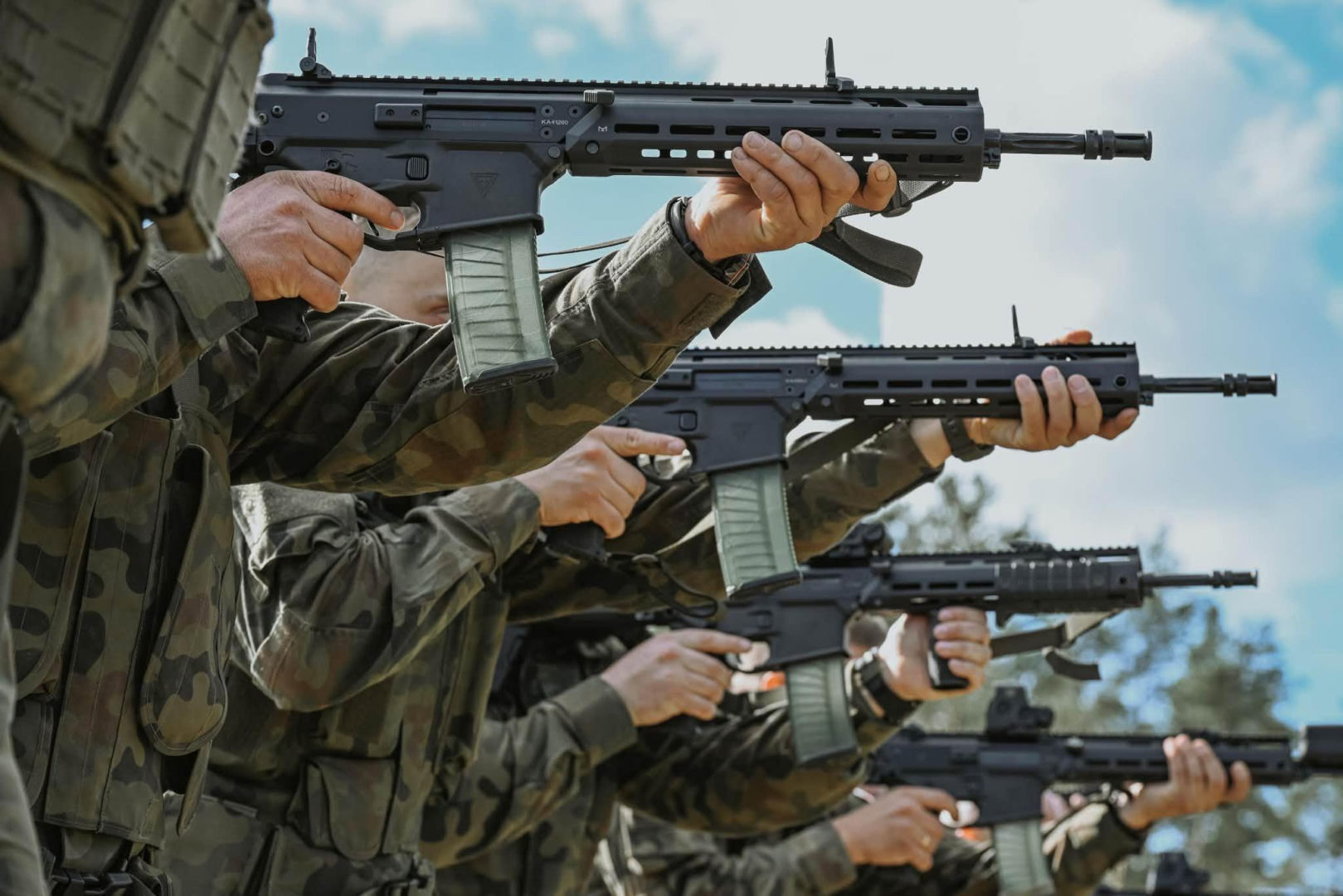
Polish military experts urge systemic reforms to match record defense spending

Polish military experts urge systemic reforms to match record defense spending

Polish analysts warn that record defense spending requires systemic institutional and procurement reforms to build true deterrence against Russia.

Polish military analysts and think tanks are calling for deep structural and procurement reforms to ensure record defense spending translates into genuine combat readiness. Poland’s defense budget is projected to reach 200.1 billion PLN by 2026, or 4.81 percent of GDP, funding major equipment purchases such as F-35 aircraft, tanks, and HIMARS missile systems.

However, defense experts warn that massive hardware investments risk being undermined by institutional bottlenecks, recruitment issues, and inefficient procurement mechanisms. Reports from organizations including Rozwój Plus emphasize that effective deterrence against Russian aggression requires streamlined command structures, improved mobilization systems, and stronger domestic industrial integration alongside weapon acquisitions.

Sources: Defence24, Portal obronny, Rzeczpospolita, TVP info

Read more
Share