Top news

Oct 3, 2026, 08:00 PM UTC

← Latest news

01
ContinuingAI-generated
Iran awaits formal US response on Strait of Hormuz reopening proposal

Iran awaits formal US response on Strait of Hormuz reopening proposal

Tehran is awaiting an official US stance on a plan to reopen the Strait of Hormuz within seven days, even as military confrontations in the corridor escalate.

Tehran announced it is awaiting a definitive position from Washington regarding a proposal to reopen the Strait of Hormuz within seven days, despite US President Donald Trump's public rejection of the plan. Iranian officials stated the strategic maritime corridor will remain closed until key conditions are fulfilled, including ending port blockades, lifting oil sanctions, unfreezing assets, and halting military operations.

Concurrently, military confrontations in the strategic corridor have escalated. US forces initiated night-time naval escorts for oil tankers and launched an attack on Iran's Larak Island. In response, Iranian forces deployed rocket-launched sea mines in the waterway. While mediators attempt to facilitate diplomatic talks, ongoing military actions on both sides heighten risks of further escalation.

Sources: Expresso, Expresso das Ilhas, Jornal Económico, RTP (Rádio e Televisão de Portugal)

Read more
02
ContinuingAI-generated
Von der Leyen outlines priorities for EU security and economic resilience

Von der Leyen outlines priorities for EU security and economic resilience

European Commission President Ursula von der Leyen set out priorities for defense, competitiveness, and climate resilience during her State of the Union address.

In her sixth State of the Union address, European Commission President Ursula von der Leyen outlined key priorities aimed at navigating global instability and economic pressures. She called for a renewed European security framework and decreased reliance on major international powers, including China and the United States. To bolster economic competitiveness, von der Leyen urged reforms to ensure the bloc remains "easy to do business, easy to invest and easy to scale up." Her agenda spans defense expansion, migration reform, artificial intelligence development, and climate resilience, referencing recent wildfires across member states. Canadian Prime Minister Justin Trudeau also attended the session, highlighting transatlantic partnership as the European Union addresses geopolitical challenges and rising energy costs.

Sources: HRT Vijesti, Index, Poslovni dnevnik

Read more
03
ContinuingAI-generated
Military analyses outline technical differences in aerial weapons used in Ukraine war

Military analyses outline technical differences in aerial weapons used in Ukraine war

An overview of the key aerial weapons used in the Russia-Ukraine war and the distinct technical challenges they pose to modern air defense systems.

Military analyses detailing the ongoing conflict in Ukraine continue to emphasize the distinct operational threats posed by different classes of aerial weaponry. Ballistic missiles present severe interception challenges due to their high speeds and steep flight trajectories, which restrict defensive reaction times. Cruise missiles present a contrasting tactical threat by traveling at low altitudes, allowing them to utilize terrain features to avoid radar coverage. Meanwhile, uncrewed aerial vehicles disrupt defensive networks through sheer volume, as massed drone attacks are designed to deplete expensive air defense stockpiles. Experts emphasize that countering these diverse threats necessitates a multi-layered, integrated defensive framework capable of detecting and engaging targets across varying speeds, altitudes, and flight characteristics simultaneously.

Sources: Dagens Nyheter.

Read more
04
ContinuingAI-generated
UN states agree on autonomous weapons definition as Germany eyes AI sovereignty

UN states agree on autonomous weapons definition as Germany eyes AI sovereignty

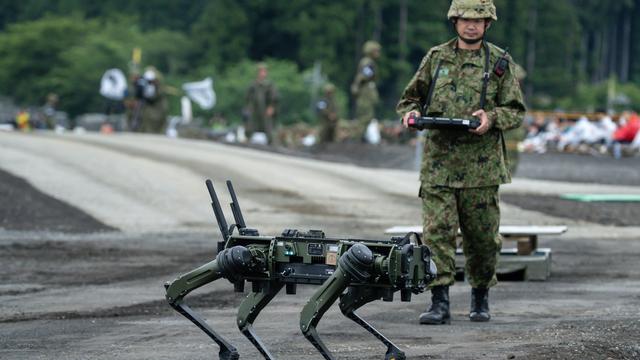
A total of 128 UN member states agreed on a definition for autonomous weapon systems, while Germany announced plans for proprietary military AI infrastructure.

In Geneva, 128 United Nations member states reached a consensus on defining autonomous weapon systems, marking a foundational step toward international regulation. The agreement follows joint warnings from the UN and the International Committee of the Red Cross regarding moral concerns over machines independently targeting humans.

Concurrently, Germany’s Ministry of Defence confirmed updated guidelines allowing certain military hardware to act semi-autonomously under specific conditions, while stressing that "the decision on the use of military force remains with humans." To preserve technological independence, the German military also announced plans to develop a proprietary data analysis system rather than using software from US contractor Palantir. Defense analysts noted that maintaining sovereign AI infrastructure is increasingly critical for real-time operational decision-making.

Sources: Correctiv, Der Spiegel, Der Standard, Die Zeit, ESUT.

Read more
Share